

What Is Cost Modelling for Benchmarking? A Practical Guide
TL;DR: Cost modelling for benchmarking gives organizations a way to analyze and optimize their spending by comparing internal numbers with industry standards. This guide breaks down the essentials, shows real-world use cases, and outlines practical approaches and tools. Your team can make better, data-backed decisions.
What Is Cost Modelling for Benchmarking?
Cost modelling for benchmarking is a structured, data-driven approach to evaluate and optimize an organization's cost structure against industry standards. It translates raw project data into comparable financial structures so teams can align internal costs with external benchmarks. By leveraging robust cost models, organizations can analyze detailed cost components, perform scenario analysis, and support strategic decision making to validate competitiveness and drive financial outcomes.
Effective Cost Model: The Foundation for Benchmarking
A cost model is a structured framework for calculating and analyzing all the costs involved in producing goods or services. An effective cost model gathers input data from reliable internal records, invoices, supplier quotes, or external industry databases, organizing it into logical cost categories, such as direct and indirect costs, overhead costs, and material costs. This provides actionable insights for managing costs and informed decision making.
Understanding Cost Modelling for Benchmarking
If you’ve ever tried to defend why project costs suddenly ballooned or slogged through messy old spreadsheets for answers, you’re not alone. In today’s fast-moving world, unclear cost structures, poorly segmented costs, and lack of reliable cost models can leave teams scrambling, causing missed opportunities and profit margin erosion. Manual workflows and scattered financial records only add to the confusion, limiting the ability to optimize cost allocation and identify cost savings.
With customers demanding clearer breakdowns and increasing project complexity, it’s easy to lose sight of where budgets drift. Without structured cost modelling and industry benchmarks, the chances of optimizing resource allocation or achieving cost reduction are slim.
That’s where cost modeling software like CostOS comes in. By standardizing input data, streamlining cost estimation, and enabling actionable benchmarking, these tools help you spot cost outliers, identify key cost drivers, and unlock valuable insights for strategic planning. Continue reading to discover how cost models and benchmarking can support scenario analysis, optimize resource allocation, and fuel continuous improvement.
Defining Cost Modelling, Benchmarking, and Should Cost Models
At its core, cost modelling involves mapping out exactly where your money goes, segmenting project costs into detailed cost data such as labor costs, material costs, transportation costs, overhead costs, and indirect costs. Incorporating benchmarking means those numbers are measured alongside industry standards, enabling organizations to see whether spending aligns with market conditions.
IPS highlights how cost benchmarking measures your Cost of Goods Sold (COGS) side by side with peers, offering valuable insights into cost drivers, cost optimization, and identifying areas where cost structures deviate from norms. Proper benchmarked cost models normalize data for fair comparisons, adjusting costs for variables like currency, inflation, location, or scope.
When organizations standardize and streamline estimating and benchmarking, integrating AI, BIM, and analytics with cost modeling software like Nomitech’s solutions provides a robust, continuous improvement platform. This approach reveals cost inefficiencies, identifies hidden cost outliers, and validates strategic decisions.
True benchmarking extends beyond final totals to detailed cost breakdown analysis, letting you pinpoint performance gaps, spot cost reduction opportunities, and evaluate cost components.
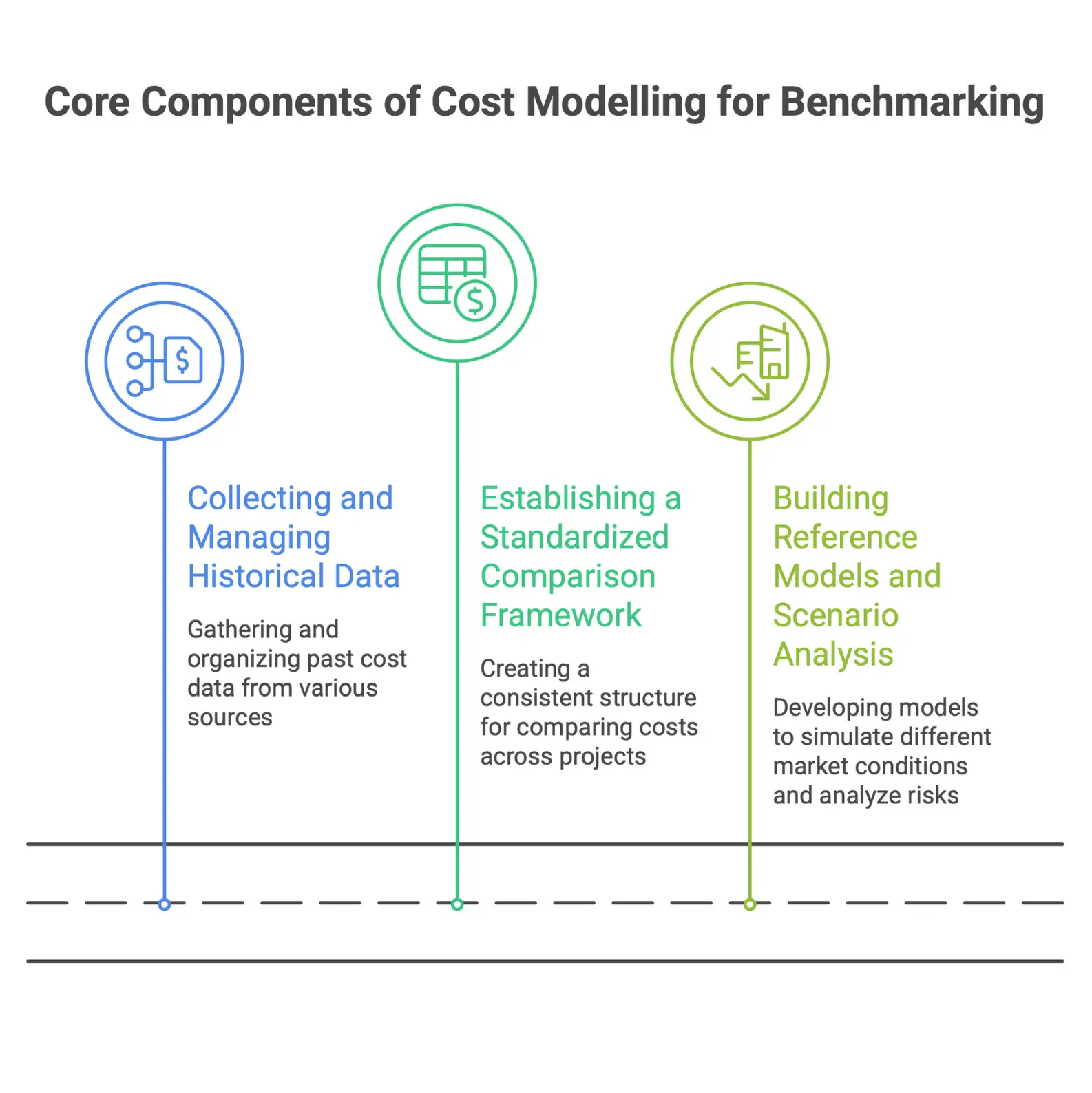
Core Components of Cost Modelling for Benchmarking
Getting cost modelling for benchmarking right requires attention to several areas:
1. Collecting and Managing Historical Data for Accurate Costs
Reliable cost models demand accurate data collection from both internal and external sources. Keep a clean, up-to-date archive of past cost estimates, actual costs, and supplier quotes. Ediphi Help Center shows how cost modeling software can build banks of previous projects, grounding benchmarks and scenario analysis in reality. Regularly updated historical data ensures your models remain relevant amid shifting market conditions.
Solutions like CosMO help collect detailed cost data, gather cost drivers, and allow organizations to access actionable insights for continuous improvement.
2. Establishing a Standardized Comparison Framework
Benchmarking requires normalization, adjusting input data so all comparisons across projects, locations, or times are fair. Establishing a cost breakdown structure using recognized standards, such as NORSOK Z-014, creates transparency in tagging project costs. Consistent cost allocation and classification into direct and indirect costs or segment costs ensures you can trust the comparability of your benchmarks.
3. Building Reference Models and Scenario Analysis
Platforms like Ediphi and Nomitech guide teams in transforming historical project costs into reference models. These enable benchmarking, cost optimization, and scenario analysis, helping organizations simulate various market conditions or operational changes and analyze total cost and cost structures for risk reduction.
An effective cost model supports ongoing scenario analysis, helping test assumptions, conduct sensitivity analysis, and proactively assess financial risks.
When these elements work together, organizations enable proactive cost management, reduce risks from financial surprises, and lay the groundwork for continuous improvement.
Industry Applications and Use Cases for Cost Models
Cost models underpin strategic cost management across many industries, from healthcare and heavy industry to IT and manufacturing. Cost benchmarking and should cost models aren’t generic, they must reflect the sector’s specific challenges, segment costs, and the key cost drivers unique to each field.
Clinical Trials and Healthcare: Managing Complex Cost Structures
In healthcare, cost modeling software and benchmarking are vital for optimizing resource allocation, reducing overspending, and identifying cost savings. The Clinical Trial Risk Tool enables hospitals and pharma companies to analyze clinical trial costs, set realistic budgets, and assess total cost and associated costs on a trial-by-trial basis.
Central to this process is collecting detailed cost data, like charge master lists. Then leveraging cost models to benchmark direct and indirect costs, identify inefficiencies, and reduce cost outliers. This results in more accurate budgets and helps validate competitive pricing strategies, as well as guiding risk reduction.
Oil, Gas, and Heavy Industry: Leveraging Robust Cost Models
Industries with complex projects, such as oil and gas, rely on codified cost modeling structures to drive transparency and actionable insights. Wikipedia points to standardized systems like NORSOK Z-014 for segmenting costs and direct labor, ensuring that benchmarking is actionable and data quality remains high.
By using industry-specific estimating tools and strong cost breakdown structures, organizations improve operational efficiency and risk reduction. These frameworks allow rapid identification of cost outliers, facilitate cost control, and optimize resource allocation.
Tech and IT Services: Cost Benchmarking and Should Cost Analysis
Rapidly evolving fields like IT services use benchmarking and should cost models for more flexible scenario analysis and to set target price points compared to industry benchmarks. MetricNet demonstrates how benchmarking internal project costs, such as service desk labor rates or overhead costs, can increase competitiveness.
When engaging external vendors, performing a granular should cost analysis on supplier quotes is critical. Advisors such as Thinkwgroup use should cost models to break down input data by labor costs, material costs, logistics, and profit margin, ensuring procurement decisions are backed by actionable insights and market conditions.
With accurate cost estimates, organizations can refine service delivery, manage financial risks, and implement strategic sourcing initiatives, underpinned by sound cost modeling software.
Types of Cost Benchmarking Approaches
Companies can select from basic, advanced, or product-focused benchmarking, depending on data availability and business requirements.
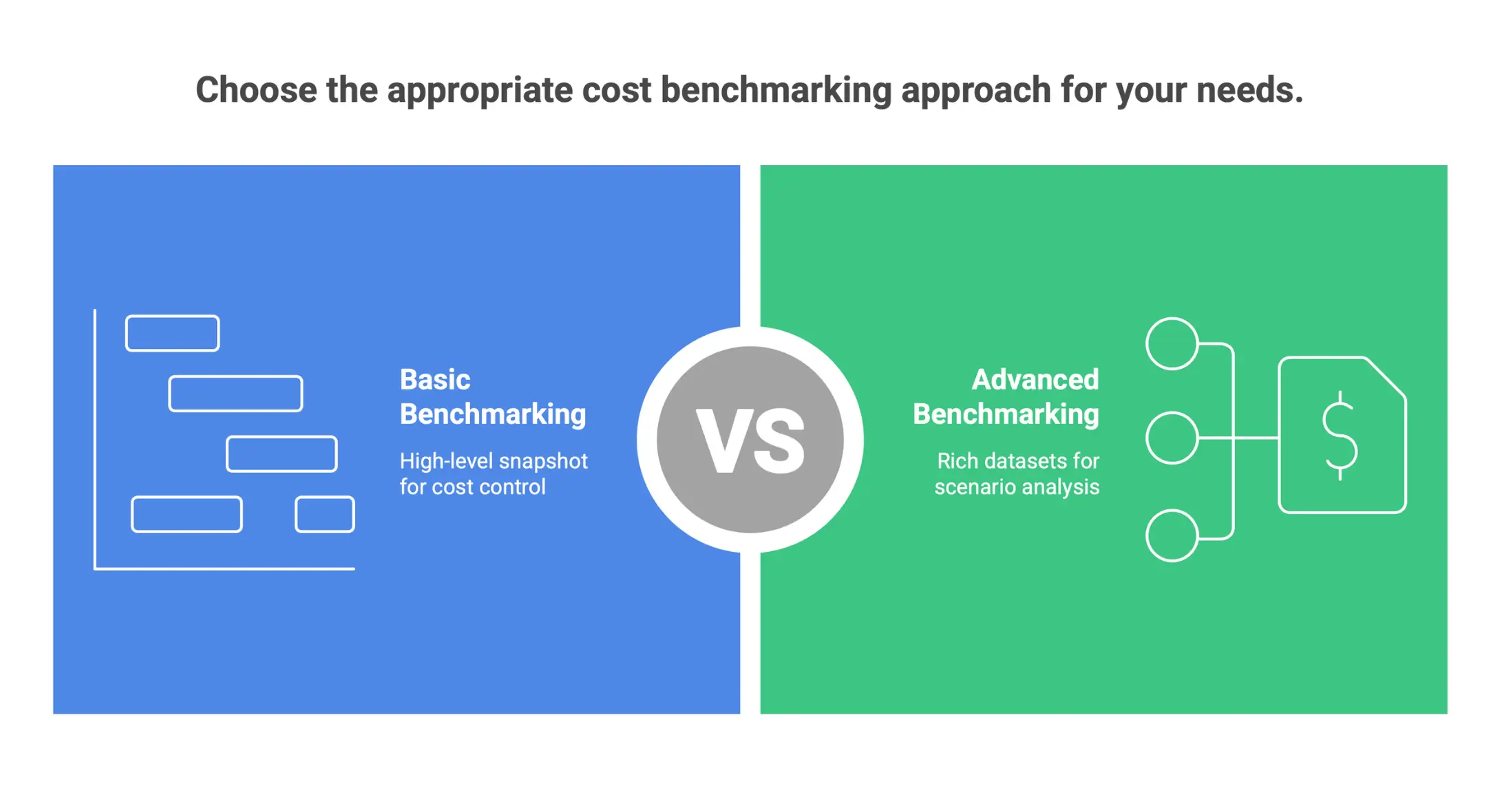
Basic vs. Advanced Cost Benchmarking: Data Depth and Scenario Analysis
Basic benchmarking gives a high-level snapshot for cost control and benchmarking against a narrower set of industry standards. Fastmarkets notes that such approaches may lack detailed cost data or scenario simulation.
Advanced benchmarking, in contrast, leverages rich datasets and robust cost models to:
- Analyze historical data and project costs from previous projects
- Segment costs for accurate scenario analysis and risk reduction
- Test pricing strategies and cost outlier responses under changing market conditions
Adopting flexible, customizable benchmarking software like Nomitech’s provides the agility to support strategic decision making and rapid scenario analysis.
Product Cost Benchmarking: Should Cost Models and Competitive Analysis
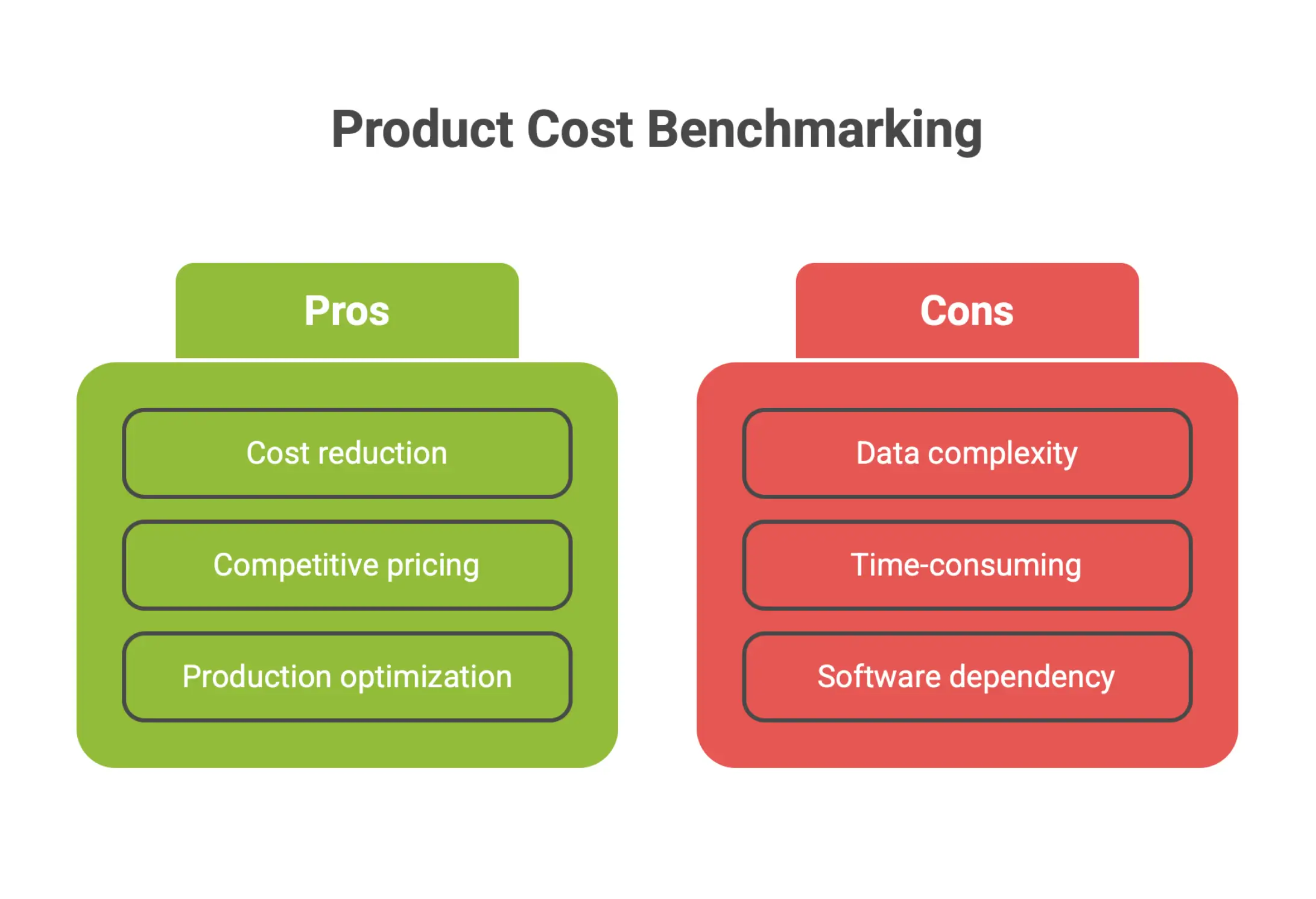
Product cost benchmarking uses should cost models, breaking down every cost component, such as materials, labor rates, or transportation costs, to calculate a product’s true should cost. By integrating cost modeling software, manufacturers and analysts can:
- Uncover opportunities for cost reduction and cost savings
- Benchmark target price and unit price against industry standards
- Inform competitive pricing strategies and optimize production costs
Organizations rely on manufacturing cost estimating tools to improve cost structure visibility and make data driven insights actionable.
Should cost analysis is especially valuable during supplier negotiations, as it estimates a fair price by evaluating all associated costs. This bottom-up methodology examines input data at each stage and serves as the foundation for cost optimization and robust cost models.
Critical Cost Categories and Structuring Data for Meaningful Benchmarking
The backbone of actionable cost benchmarking is the logical structure of cost data and the segmentation of costs.
Why Standard Cost Coding Systems Matter in Cost Modeling
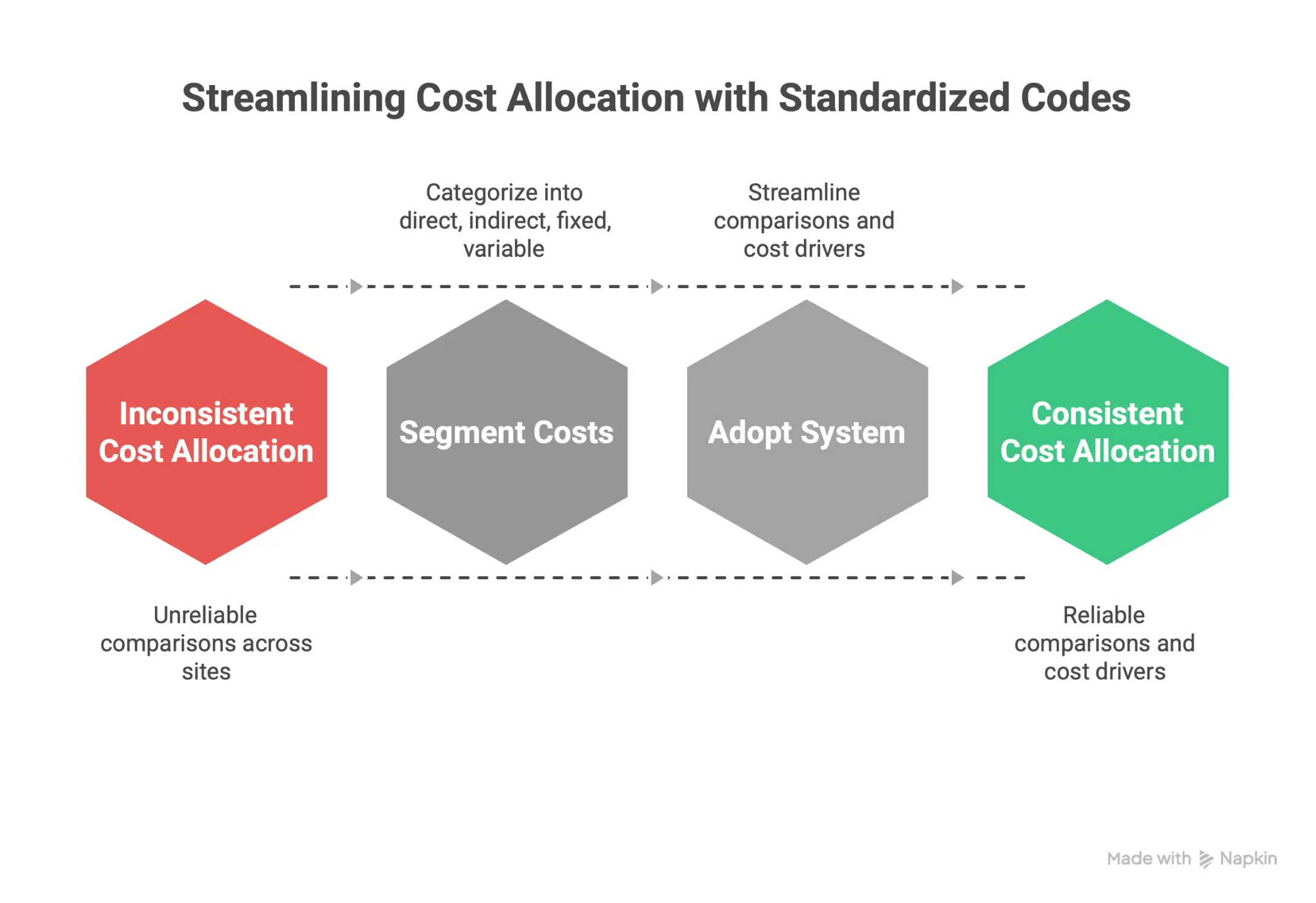
Standardized cost codes make cost allocation clear and benchmarking trustworthy. Whether analyzing direct labor, overhead costs, or material costs, segmenting costs into direct, indirect, fixed, and variable categories is essential. Wikipedia notes that adopting systems like NORSOK Z-014 streamlines:
- Consistent and actionable comparisons across regions or sites
- Reliable identification of cost drivers for cost optimization
- Structured, repeatable cost estimates and scenario analysis
A robust cost breakdown structure Nomitech example simplifies reporting, risk reduction, and enables ongoing continuous improvement as business conditions evolve.
Benefits and Strategic Advantages of Cost Modelling for Benchmarking
Harnessing cost models for benchmarking provides tangible, quantifiable advantages beyond “keeping spend in check.” These structured models deliver actionable insights, improve operational efficiency, and support ongoing financial management.
Cost Optimization: Identifying Areas for Cost Reduction
Cost benchmarking and should cost models shine a light on inefficiencies and hidden costs. By comparing your COGS, segment costs, and key cost drivers with industry benchmarks, you gain data driven insights into where spending should be reduced.
IPS highlights how standardized frameworks and cost modeling software automate detection of cost outliers, set performance goals, and optimize resource allocation for ongoing improvement.
Supporting Pricing Strategies, Sourcing, and Scenario Analysis
Strong cost models and benchmarking provide the data needed for competitive pricing strategies and strategic sourcing. As Tset explains, detailed should cost analysis and robust cost models help organizations:
- Benchmark unit price and target price against current market conditions
- Validate supplier quotes and production costs
- Evaluate alternative sourcing and labor rates for savings opportunities
By integrating scenario analysis, organizations can test varied market conditions, forecast the total cost of ownership, and make informed decisions on pricing, sourcing, and production changes.
Achieving Continuous Improvement and Data Accuracy
Routine benchmarking and cost modeling keep your approach relevant. Regularly updating cost models with accurate data from financial records, supplier quotes, and external benchmarks ensures that budgets and performance goals stay aligned with market realities.
Continuous improvement frameworks provide a feedback loop for refining cost estimates, enhancing financial outcomes, and maintaining a competitive edge.
Enabling Cost Modelling and Benchmarking with Modern Data Tools
Technology has revolutionized benchmarking and cost modeling, improving data availability, input data quality, and analysis capability.
Modern Digital Cost Modeling Software Platforms
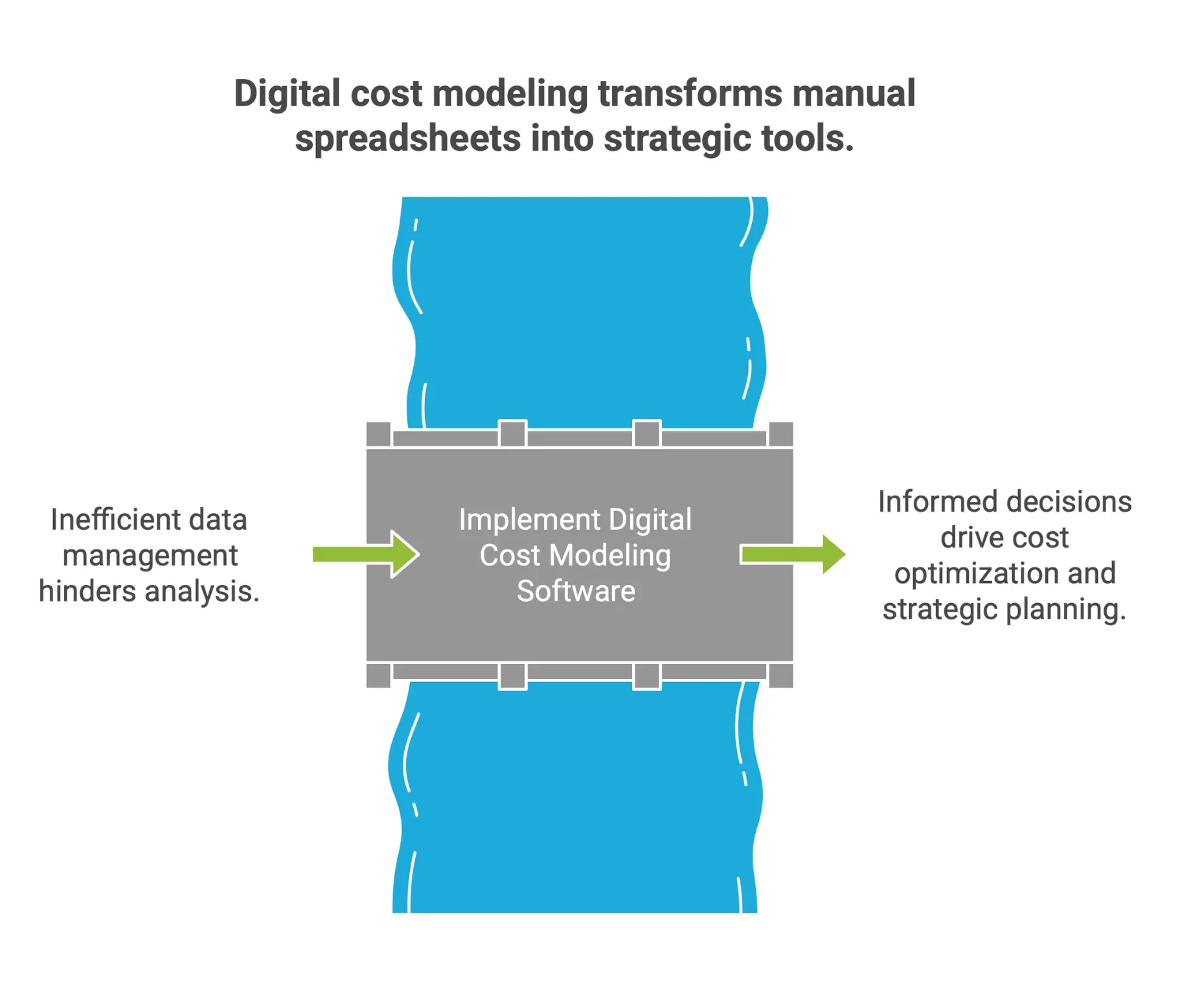
Manual spreadsheets can’t compete with enterprise-grade cost modeling software tools like CostOS, which centralize historical data, automate detailed cost calculations, and allow for advanced scenario analysis. Solutions like Ediphi store financial records from previous projects and enable users to compare actual costs to reliable benchmarks instantly.
With structured data on hand:
- Cost models can test assumptions and pricing strategies
- Past performance informs future cost allocation and modeling costs
- Trends and cost outliers are easy to identify, supporting ongoing strategic decisions
Specialized Tools in Life Sciences and Manufacturing
Generic systems often lack the flexibility to handle sector-specific requirements. For instance, life sciences depend on protocol-driven estimates and compliance-ready models, making tools like the Clinical Trial Risk Tool critical for breaking down direct and indirect costs based on actual study design.
Manufacturing leans on detailed cost modeling software for scenario analysis at the production process stage, examining factors such as labor costs, material costs, and transportation costs to ensure profitability.
Scenario Analysis, Challenges, and Trends in Cost Modelling
Balancing Cost, Accuracy, and Performance
Finding the right balance among accuracy, speed, data availability, and resource allocation is not easy, especially as cost models grow more complex. As arXiv outlines, every framework must weigh:
- What it costs to maintain, collect, and process input data
- The accuracy of cost estimates and scenario analysis
- Performance and timeliness, essential for real-time strategic decision making
The best cost modeling software allows customizable frameworks and regular model validation so organizations can adapt to changing business needs while keeping data accurate and actionable.
Measuring Results and Driving Continuous Improvement
Cost modelling and benchmarking aren’t checkbox exercises. They require ongoing data quality checks and evaluation against industry benchmarks.
Comparing Metrics to Industry Leaders
Benchmarking against industry leaders identifies performance gaps, validates pricing strategies, and pinpoints where improved cost management can deliver the most value. Gartner illustrates how ongoing performance evaluation helps organizations hone in on operational efficiency and financial risks.
Organizations using a comprehensive estimating suite enjoy structured cost allocation, regular review, and systematic gap closure. This powers informed decisions.
- Review quality metrics and cost categories
- Assess performance gaps where internal costs exceed industry standards
- Refine cost models by incorporating feedback and actionable insights
Regular, rigorous reviews drive continuous improvement. This ensures that financial management practices remain effective in dynamic market conditions.
Frequently Asked Questions
What is cost modelling for benchmarking?
Cost modelling for benchmarking is a systematic, data-driven process that breaks down an organization’s costs, segmenting direct, indirect, and overhead costs, and measures them against industry standards. This gives organizations the actionable insights needed to identify cost drivers, evaluate risk, and make strategic decisions for cost reduction, resource allocation, and competitiveness.
Why is historical data important in cost modelling?
Historical data provides the foundation for robust cost models and accurate cost estimates. Without high-quality records from previous projects or supplier quotes, meaningful benchmarking and continuous improvement are impossible.
How do standardized cost codes improve benchmarking?
Standardized cost codes support effective cost models by ensuring consistent classification and cost allocation across all projects. This common language enables truly comparable benchmarks, reduces confusion, and supports scenario analysis, actionable insights, and data driven decision making.
What are the main benefits of cost modelling for benchmarking?
Key benefits include unveiling hidden inefficiencies, supporting pricing strategies and sourcing decisions with actionable insights, setting credible budgets, and improving continuous improvement processes to increase profitability and operational efficiency.
How can technology help with cost benchmarking?
Modern cost modeling software simplifies data capture, improves data quality, and automates scenario analysis. With accurate data, integrated cost drivers, and tools for scenario and sensitivity analysis, teams access valuable insights in real time and improve the dependability of their financial outcomes.
Should Cost Models and Should Cost Analysis: Your Guide to Smarter Sourcing
Should cost models estimate a fair price for goods or services by breaking down associated costs, such as raw materials, labor costs, overhead, logistics, and profit margin. These robust models use a bottom-up methodology, aggregating detailed input data to form a comprehensive should cost.
Should cost analysis examines whether supplier quotes and market rates are reasonable, serving as a benchmark for competitive sourcing and negotiation. With quality should cost estimates, organizations verify supplier cost optimization and highlight areas for potential cost reduction.
Best Practices for Building and Maintaining Effective Cost Models
- Source reliable input data from internal records, invoices, and industry databases
- Normalize data to ensure comparability
- Structure costs into logical categories: direct, indirect, variable, fixed, especially segmenting project costs and key cost drivers
- Regularly update and validate models as market conditions evolve
- Leverage scenario analysis to forecast the impact of changes and reduce risk
- Review models frequently to maintain data accuracy and drive performance
Ready to Take the Next Step?
Curious about how advanced cost modeling software or should cost analysis could fit your workflow? Explore Nomitech’s full suite or connect with their team to find the solution that’s right for your projects. Empower your next initiative with actionable insights and robust cost models for sustainable, informed decision making.





Stay Up to Date
Subscribe to our Newsletter today and receive the latest updates, trends, expert insights, and exclusive offers tailored to your specific industry.