

Cost Benchmarking vs Value Engineering: Maximize Project Value
TL;DR: Cost benchmarking vs value engineering is not just a battle between tools. It’s a playbook for how to maximize project value, cut costs, and deliver results that stand out. Cost benchmarking compares your project costs across industry and history, flagging inefficiencies before they escalate. Value engineering asks whether every component is actually needed, so you make smarter choices without compromising quality. Top-performing construction professionals combine these tactics for significant benefits in financial efficiency, project outcomes, and client satisfaction.
Introduction: The Critical Distinction Between Cost Benchmarking vs Value Engineering
Project teams in the construction industry and beyond face unrelenting pressure: tighter budgets, higher expectations, and the need to prove every cost adds value. Even with advanced cost estimating software and robust data, it’s easy to confuse cost cutting with strategies that truly enhance project value. When the two are blurred, change orders, missed opportunities, and quality shortfalls often follow.
Understanding cost benchmarking vs value engineering is key to optimizing costs without sacrificing quality. Mastering both, augmented by value analysis and detailed cost analysis using tools like CostOS, means you can deliver lower cost, higher quality, and innovation in every project phase. Strong solutions empower you to steer projects with confidence, aligning every decision with project goals.
What Is Cost Benchmarking vs Value Engineering?
Defining Cost Benchmarking
Cost benchmarking is a cost engineering process. It is a comparative diagnostic tool measuring your spend against industry standards or your own past performance. It starts with data collection and cost analysis, stacking your project’s costs or Cost of Goods Sold (COGS) side by side with comparators inside or outside your sector. Enval outlines its value: it gives you the reality check by highlighting where you stand, where you’re trailing, and where efficiency gaps lie.
Modern benchmarking platforms like Nomitech’s products allow project managers to analyze costs across multiple construction projects, facilitating a systematic approach to managing costs, driving down inefficiencies, and ensuring supply chain performance aligns with industry standards. Regular reviews during design, preconstruction, and delivery phases help identify budget outliers before they escalate.
Defining Value Engineering
Value engineering is a systematic method for improving the project’s overall value by rigorously analyzing required functions, from concept design through delivery. Unlike cost cutting, which simply seeks immediate savings, value engineering seeks ways to optimize project functions. Enval explains: value engineering focuses on maintaining or improving quality, performance, and reliability while reducing unnecessary costs.
The value engineering process is collaborative, involving architects, engineers, contractors, and owners to brainstorm innovative solutions. According to Boothroyd Dewhurst, up to 40% of product and construction costs can come from duplicated or unnecessary functions unless scrutinized. Employing detailed cost analysis, this process delivers lower cost without compromising project quality.
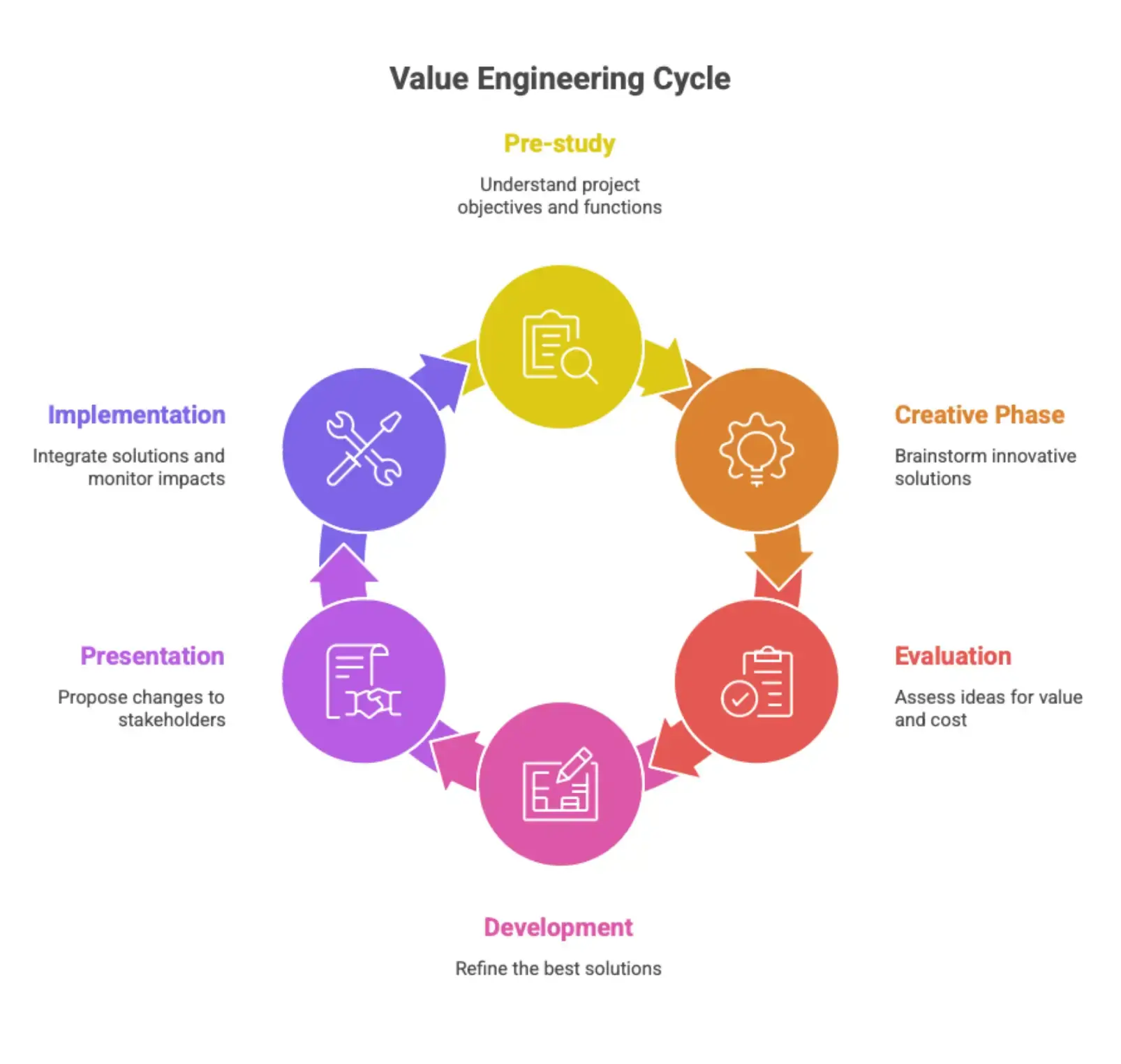
Value engineering often uses a structured six-phase approach:
- Pre-study and information gathering: Understand project objectives and essential functions.
- Creative phase: Brainstorm alternatives and innovative solutions.
- Evaluation: Assess each idea for value, cost, and project alignment.
- Development: Refine the best solutions.
- Presentation: Propose changes to stakeholders for implementation.
- Implementation: Integrate solutions into the engineering process and monitor impacts.
Value analysis is closely related, focusing on established designs and continually seeking cost benefit analysis improvements post-launch.
Why Distinguishing Cost Benchmarking vs Value Engineering Matters
Strategic Benefits for Decision-Makers
Understanding value engineering vs cost benchmarking changes everything. Leaning heavily on benchmarking uncovers outliers and room for cost reduction, but without value engineering to guide proposed solutions, cost cutting can create risks: subpar quality, maintenance headaches, or even safety issues. KPMG UK emphasizes the importance of removing waste without sacrificing what the project’s objectives demand.
Effective cost benchmarking in construction projects means you root every discussion in real market data, driving buy in and transparency with stakeholders. When combined with value engineering, decision-makers balance industry standards with project-specific functional analysis, ensuring long-term success and enhancing project outcomes.
Cost Benchmarking: Process, Purpose, and Outcomes in the Construction Industry
How Cost Benchmarking Works in Construction Projects
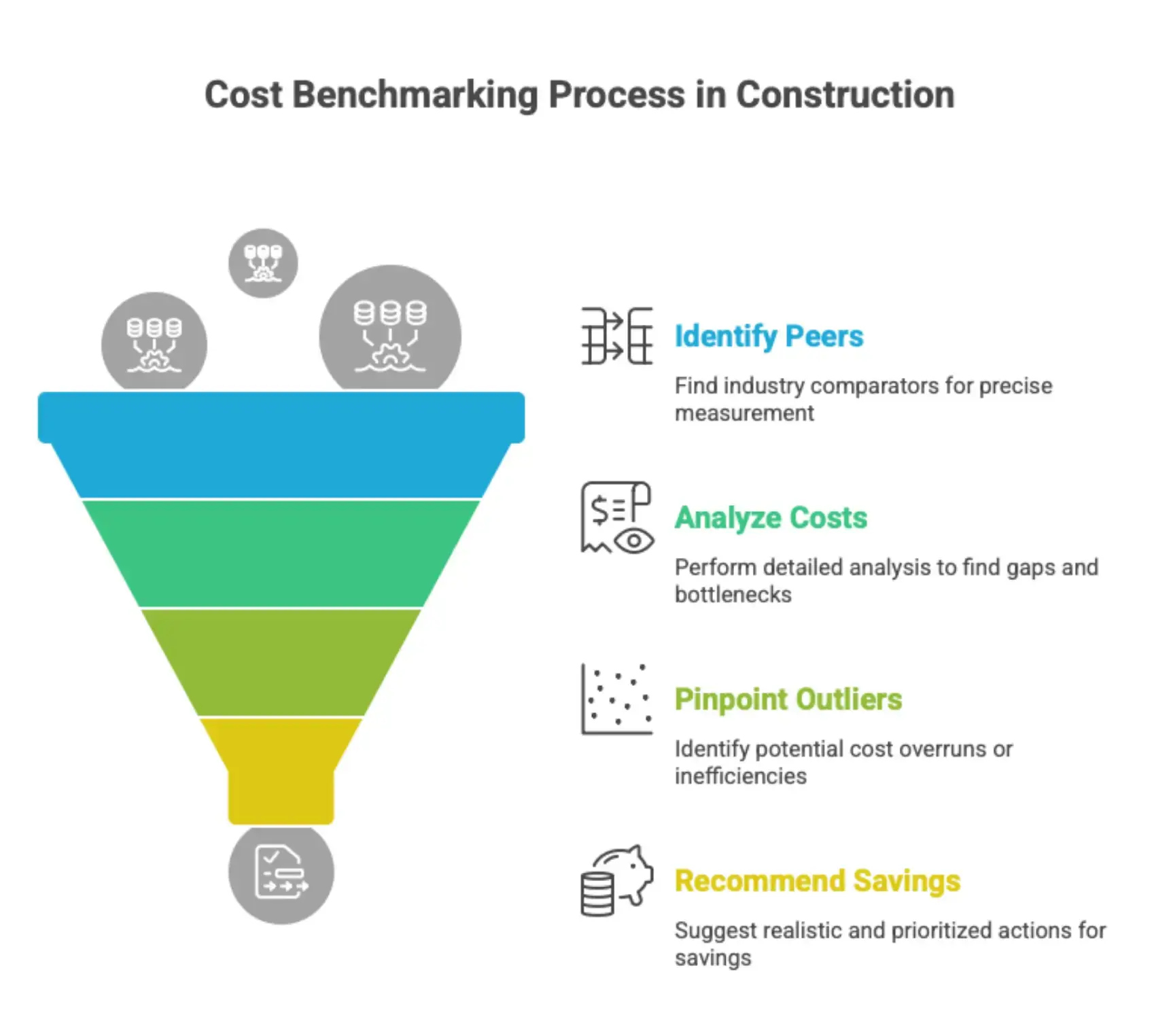
A robust cost benchmarking program for construction professionals starts with collecting quality cost data from operations. This data-driven process ensures budgets are grounded in reality, not guesswork. The typical benchmarking cycle includes:
- Gathering detailed cost data and project metrics.
- Identifying peers and industry comparators for precise measurement.
- Performing detailed cost analysis to surface gaps and bottlenecks.
- Pinpointing outliers that may signal cost overruns or inefficiencies.
- Recommending immediate savings through realistic, prioritized actions.
Benchmarking should be reviewed periodically to manage scope changes and to report progress to key stakeholders. KPMG UK notes that ongoing benchmarking anchors project value and aligns estimates with market intelligence.
Key Benefits for Construction Professionals
Real-world cost benchmarking delivers significant benefits to supply chain managers, project managers, and owners:
- Identify opportunities for cost reduction and improved performance early.
- Ensure cost estimating and budgeting are benchmarked against industry standards.
- Achieve cost savings without compromising quality or project goals.
- Focus on financial efficiency across the lifecycle of large-scale construction projects.
By aligning project metrics with external yardsticks, teams can justify investments in new features, alternative suppliers, or process innovations that drive optimal project value.
Value Engineering: A Systematic Approach to Maximizing Value in Construction Projects
Value Engineering and Cost Optimization Principles
Value engineering is far more than basic cost cutting. It is a systematic approach to achieve essential functions for lower cost, while protecting and enhancing quality. This method encourages teamwork among designers, contractors, and owners, fostering innovative solutions that reduce change orders and minimize design flaws.
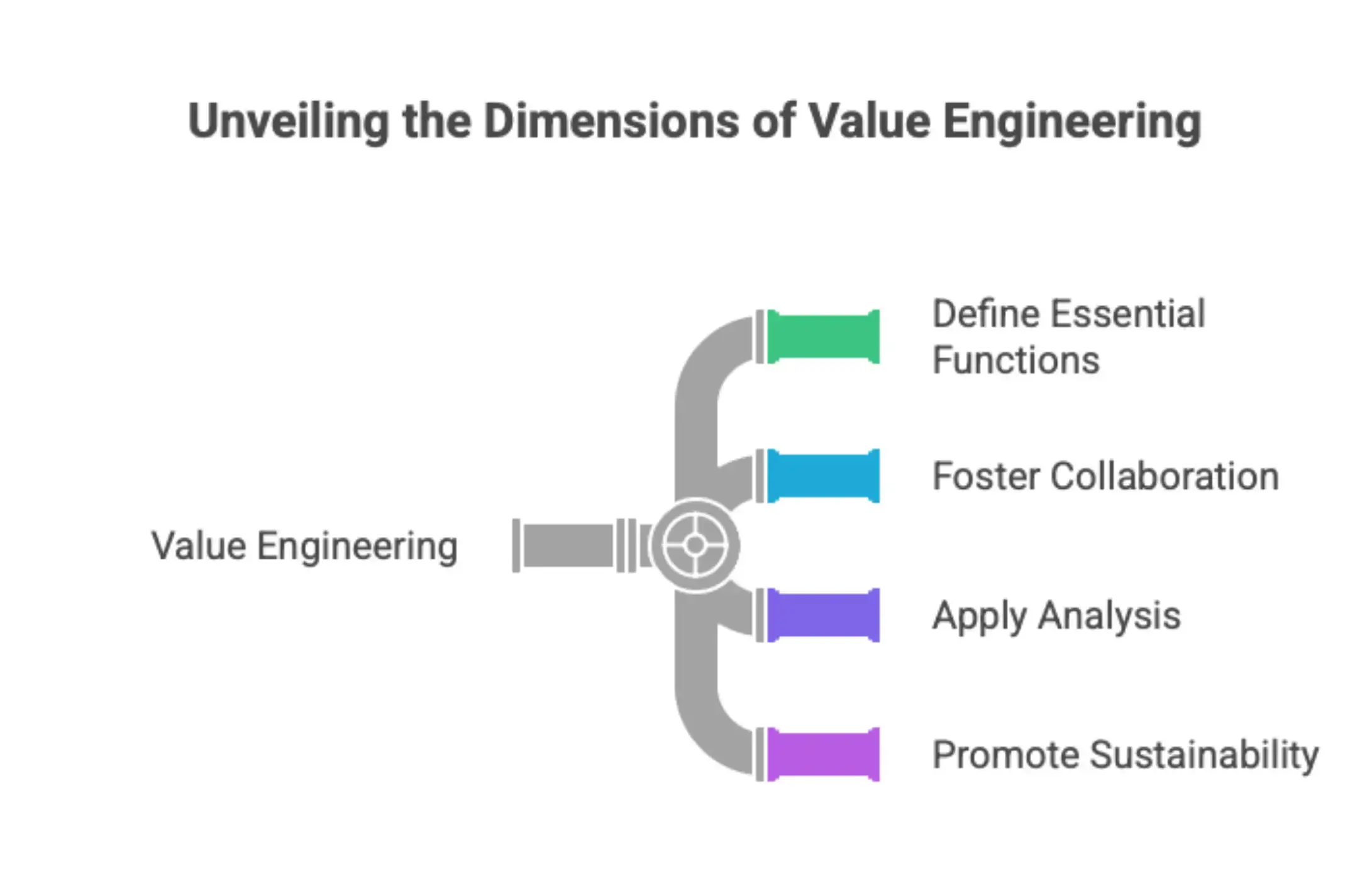
Important principles include:
- Define essential project functions and eliminate over-engineering or redundant components.
- Collaborate across disciplines, including estimators, engineers, procurement, and ops, for buy in and creative problem-solving.
- Apply value analysis and cost benefit analysis to proposed changes.
- Focus on sustainability, often recommending alternative materials and sustainable solutions to reduce lifecycle costs.
A strong value engineering process keeps projects on track and within budget by optimizing resources and identifying smarter solutions from day one.
Value Engineering Lifecycle Focus: From Concept to Construction Phase
VE is most effective when applied during the earliest project phases, prior to design lock-in when options are broadest and change orders cost less to implement. Procore UK explains that up-front investments may pay off exponentially in lower maintenance, operational costs, and improved lifecycle value.
Value engineering can also be applied reactively, such as during the construction phase, when unexpected cost overruns demand innovative thinking. The heart of both approaches is preserving or enhancing project quality, performance, and reliability without unnecessary spend.
Enhancing Collaboration and Achieving Project Value
- Value engineering enhances collaboration among stakeholders, improving communication and aligning everyone’s understanding of both project goals and essential functions.
- Incorporates a creative phase, rallying cross-team innovation to achieve overall value and reduce risks of proposed solutions.
- Minimizes unnecessary expenses by identifying opportunities before they become embedded, creating substantial cost savings and improved efficiency.
- Reduces future change orders by ensuring initial decisions balance project requirements, anticipated lifecycle costs, and long-term sustainability.

Cost Cutting vs Value Engineering: Avoiding Sacrificing Quality for Savings
What is Cost Cutting?
Cost cutting is often confused with value engineering, yet it typically involves top-down decisions made to deliver immediate financial relief. Management may cut features or substitute cheaper materials, directly reducing expenses in the short term. However, this approach can:
- Compromise project quality and performance.
- Lead to increased maintenance or service costs over the life cycle.
- Introduce safety concerns and degrade user satisfaction.
- Miss innovative solutions available through cross-disciplinary teamwork.
Top construction teams know that true cost reduction comes from enhancing functionality, not just eliminating costs.
Value Engineering vs Cost Cutting
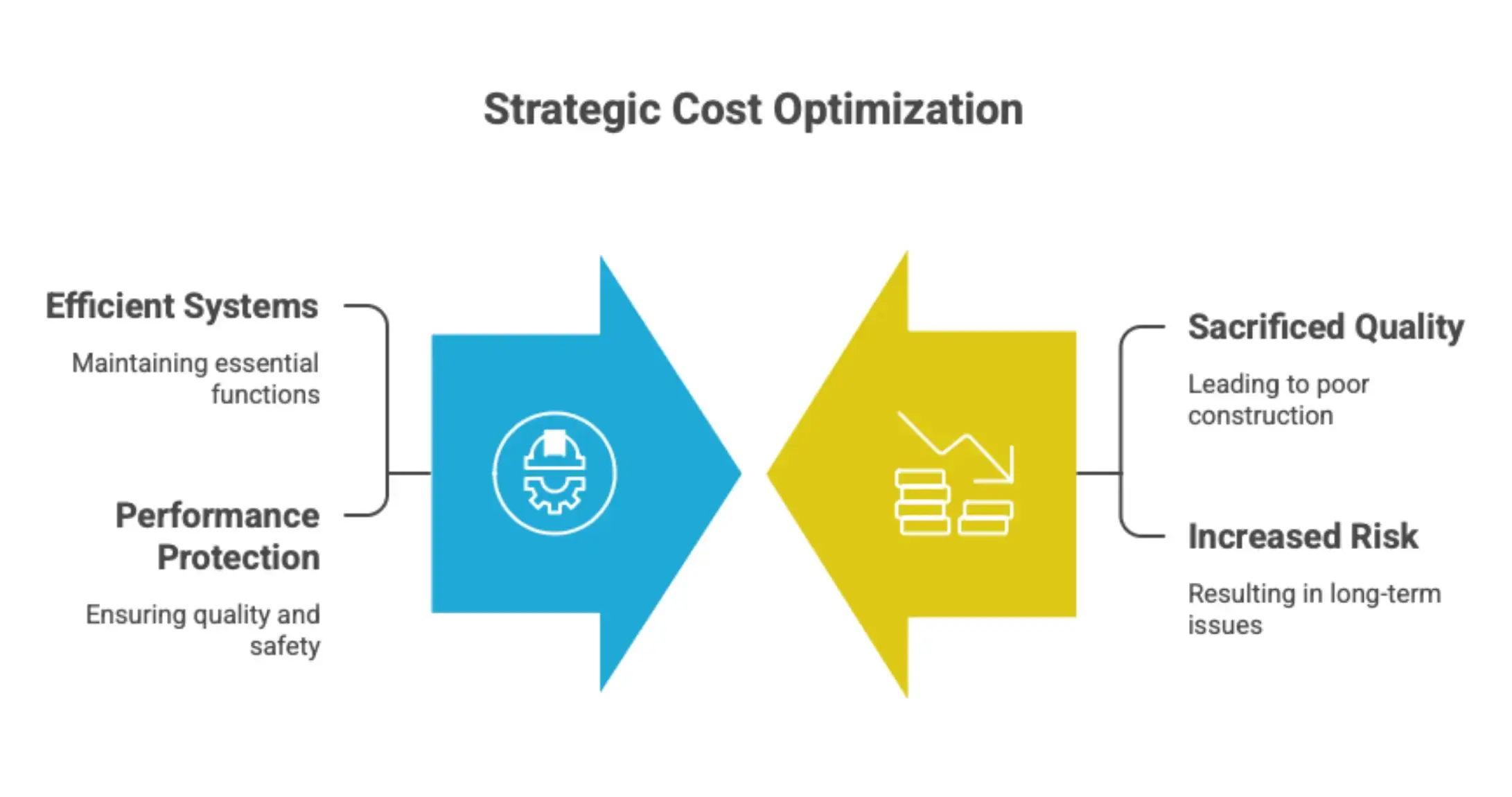
- Value engineering vs cost cutting: while both target reducing costs, only value engineering rigorously protects performance and safety. For example, swapping a fire suppression system for a more efficient one maintains essential functions, while removing it entirely increases risk.
- Cost cutting often sacrifices quality for immediate savings. This practice can lead to poor construction, more change orders, and long-term financial headaches.
The integrated use of cost engineering and value engineering, as well as cost benchmarking and value engineering, ensures the systematic pursuit of both immediate and lifecycle savings without sacrificing quality.
Cost Benchmarking vs Value Engineering: Timing, Application, and Key Differences
Financial Metrics vs Functional Analysis
Cost benchmarking is about measuring your spend against industry standards or historical data, using tools and cost estimating methods to identify where you stand. In contrast, value engineering reviews each function, seeking to enhance project efficiency by delivering more value for similar or even lower cost.
Timing in Project Phases
- Value engineering is proactive, used early in design to influence the whole engineering process and optimize resources before construction commitments.
- Cost benchmarking is iterative, following the project from conceptual design through delivery and operations. Routine benchmarking keeps teams informed, detecting deviations and seizing opportunities for immediate savings, as well as planning for long-term value.
Think of value engineering as setting the best course at the outset. Cost benchmarking ensures you remain on track, adjusting to industry standards as the project evolves.
Integrating Cost Estimating and Value Engineering for Project Success
Synergy of Cost Estimating, Value Engineering, and Project Outcomes
Cost estimating and value engineering are critical project management tools, but all too often they operate in silos. Integrating both, using value analysis techniques, creates a unified lifecycle approach:
- Evaluate multiple configurations side by side.
- Balance functional needs with affordability in real time.
- Apply rigorous cost benefit analysis to each scenario.
- Ensure value engineering isn’t just for design but continues during operations, maintenance, and disposal for total ownership cost management.
A lifecycle-centric approach strengthens decision-making, captures the full potential of value engineering throughout the project’s life cycle, and helps project teams enhance project value long after handover.
Real-World Applications: Cost Benchmarking and Value Engineering in Action
Benchmarking in Supply Chain Management
Supply chain management sees significant benefits from cost benchmarking. Using MetricNet and Nomitech’s benchmarking tools:
- Project managers and construction professionals measure supplier quotes, set industry-aligned targets, and uncover inefficiencies.
- Benchmarking identifies significant cost deviations, providing an early warning system for potential overruns.
- Regular review ensures scope changes are evaluated for their effect on performance and costs.
Value Engineering Drives Project Innovation in Construction and Manufacturing
Value engineering encourages teamwork and creative brainstorming among designers, contractors, and owners to achieve essential functions more efficiently. Boothroyd Dewhurst reports that identifying unneeded functions can yield savings up to 40%. Value engineering in construction and manufacturing sectors:
- Reduces design flaws, enhances project value, and optimizes use of materials.
- Applies alternative materials and proposed solutions to maintain standards while reducing lifecycle costs.
- Supports sustainable solutions and innovative approaches that safeguard long-term quality.
With each successful project, teams build a repeatable playbook that drives better value without compromising quality or performance.
Cost Benchmarking vs Value Engineering: Best Practices for Team Integration
Ongoing Benchmarking Anchors Value Engineering Success
Continuous benchmarking keeps data fresh and action-oriented. KPMG UK finds that lasting improvement only comes when benchmarking metrics and value engineering insights are reviewed together:
- Regularly collect, analyze, and use cost data and value metrics.
- Communicate findings across teams for buy in and faster adoption of proposed changes.
- Use software tools to model scenarios, reduce lifecycle costs, and deliver on both immediate and long-term goals.
Combining Cost Control with Value Engineering and Cost Benchmarking Strategies
Smart project managers never silo cost control and value engineering. Instead, they overlap strategies:
- Align cost savings directly with value improvements and use value benchmarking for tracking.
- Tap historical data and lessons learned to inform future construction projects.
- Challenge the notion that lower cost always means lower quality. Sometimes, innovative solutions lower costs and enhance project value.
Collaboration across disciplines unlocks opportunities difficult to spot in a top-down, cost cutting environment. Teams achieve higher quality, optimized costs, and lifecycle benefits by integrating benchmarks and systematic value assessments.
Frequently Asked Questions
What is the main difference between cost benchmarking vs value engineering?
Cost benchmarking compares your spend to industry standards to pinpoint inefficiencies and ensure budgets are market-driven. Value engineering is a systematic approach that analyzes project functions to achieve essential performance with lower cost, enhancing functionality and value without compromising quality.
When should value engineering be applied during a project?
Value engineering yields the greatest impact early, in the design phase, but can be applied reactively during construction to address unexpected overruns. Early adoption ensures more options for savings and reduces the risk of expensive rework.
How does cost benchmarking benefit supply chain management?
Benchmarking allows supply chain leaders to flag high costs, negotiate effectively, and justify investments by comparing project data with industry standards.
Is cost cutting the same as value engineering?
No, cost cutting prioritizes immediate savings, often at the expense of essential functions and long-term quality. Value engineering emphasizes maintaining critical project goals and performance standards while identifying smarter, lower cost alternatives.
Why is lifecycle performance important in these approaches?
Focusing on full lifecycle costs protects against short-term savings that may lead to long-term maintenance, reliability, or performance problems. Value engineering and benchmarking together support better long-term decisions.
Conclusion: Maximizing Project Value with Cost Benchmarking vs Value Engineering
Integrating cost benchmarking and value engineering is vital for teams aiming to deliver superior results in construction and engineering. When cost engineering, value analysis, and cost benchmarking tools like Nomitech’s software are used in tandem, teams achieve more than just cost reduction. They enhance project value, manage risks, and improve quality.
Key Takeaways for Industry Leaders
- Use cost benchmarking to align costs with real market intelligence, keeping budgets under control and highlighting early inefficiencies.
- Apply value engineering as a systematic approach to foster team innovation, maintain performance, and deliver sustainable solutions without compromising quality.
- Integrate cost estimating with value engineering throughout the life cycle for continuous improvement, optimized costs, and higher overall value.
- Encourage teamwork among all stakeholders for collaborative, innovative solutions that meet project’s objectives and industry standards.
Grounding every decision in data and value-driven discipline creates construction projects that stand out for both clients and end users. Cost benchmarking vs value engineering is not just an academic debate. It is the blueprint for managing costs, enhancing functionality, and achieving a project’s full potential.
Ready to Take the Next Step?
If you’re considering modern platforms to streamline your cost estimation and value engineering efforts, explore Nomitech’s full suite or contact us to find out how we can help build a solution that fits your team’s workflow.





Stay Up to Date
Subscribe to our Newsletter today and receive the latest updates, trends, expert insights, and exclusive offers tailored to your specific industry.