

Cost Benchmarking vs Cost Control: Boost Project Success
TL;DR: Cost benchmarking and cost control are both critical for strong cost management. Benchmarking shows how your spending stacks up to industry standards, while cost control keeps you from blowing the budget. The real magic happens when you combine them. Teams can root out inefficiency, prevent cost overruns, and make smarter calls that set up project success for the long haul.
Introduction: Cost Benchmarking vs Cost Control in Project Management
Anyone who’s watched a project budget slip knows this story: small inefficiencies can quietly build up until you’re staring down major overruns. Effective project management requires accurate cost estimates, robust cost control, and a disciplined cost management framework to support financial performance. Project costs that exceed expectations can take down even well-led teams, especially if cost structures aren’t aligned with strategy or if cost estimation misses the mark.
In today’s environment of market volatility and tighter margins, best practices in cost management matter more than ever. Industry leaders know that full visibility—both to industry benchmarks and real-time project costs—is the backbone of successful cost management. Otherwise, teams lose out on valuable insights and miss the chance for continuous improvement. Regular sharing between estimators, controllers, and project managers means lessons from previous cost management steps inform better future results.
This is where advanced cost estimation platforms like CostOS step in. These tools integrate accurate cost estimation, benchmarking, and cost control into a unified process for optimized cost performance and risk mitigation. With real-time data sharing, project controls software grants transparency and responsiveness for both financial planning and operational efficiency.
Curious how you can flip the script on cost management? Let’s dive in and break down how cost benchmarking vs cost control, plus the right technology, unlock measurable value in construction projects and beyond.
Defining Cost Benchmarking vs Cost Control
Cost benchmarking and cost control both sit at the core of project management practices but tackle different problems.
Cost benchmarking is a structured approach that involves the systematic comparison of your performance metrics, processes, and project costs against established industry standards, competitors, or internal business units. The benchmarking process helps identify performance gaps and drives continuous improvement. According to MetricNet, cost benchmarking comes in two main forms:
- Internal cost benchmarks: Comparing costs and practices across different departments or business units within the same organization to highlight where you lead or lag.
- External industry benchmarks: Assessing production costs or cost per square foot against peer companies or market rates to evaluate competitiveness.
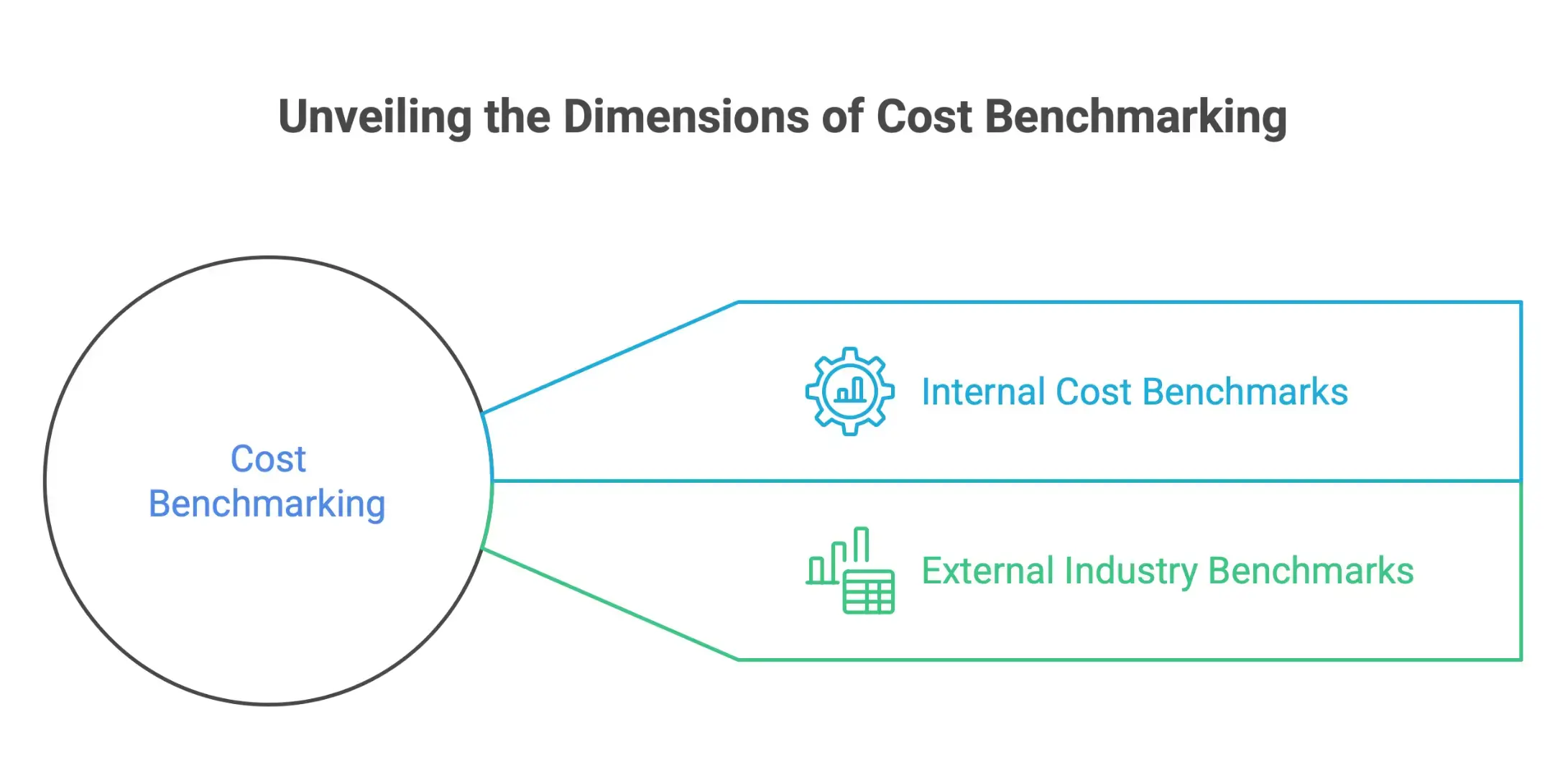
Effective benchmarking enables companies to identify opportunities, set realistic targets, and achieve sustainable growth through ongoing best practices. Modern cost benchmarking tools automate project data collection and support performance metrics normalization across similar projects.
Cost control, by contrast, centers on monitoring and correcting deviations from the cost baseline during execution. It anchors project management by tracking actual costs, controlling costs daily, and implementing corrective actions to prevent cost overruns.
Integrating both cost benchmarking and cost control into a comprehensive cost management strategy provides robust financial management and supports continuous improvement throughout the project lifecycle.
Why Industry Leaders Rely on Cost Benchmarking for Cost Control
For those steering large, technical, or construction projects, cost benchmarking and cost control aren’t just about trimming fat. They are vital for project success and profitability. Industry leaders leverage benchmarking to compare costs, processes, and cost structures, aligning them to industry standards.
Cost benchmarking shines a spotlight on performance gaps, revealing not only where costs exceed norms but where operational efficiency and cost competitiveness can be improved. By comparing costs with industry benchmarks, companies gain valuable insights and stay agile in decision making.
Meanwhile, cost control ensures that real-time spending aligns with established cost baselines. Project managers track actual costs vs planned, identify variances early, and act decisively to prevent overruns. Combining benchmarking with proactive cost control builds the foundation for consistent cost performance and continuous improvement.
Modern AI estimating solutions help industry leaders by merging best practices in cost estimation, benchmarking, and cost control, delivering a single source of truth for cost management and financial planning.
Fundamentals of Cost Benchmarking: Strategies and Best Practices
Cost benchmarking is more than comparing numbers. It’s about uncovering performance gaps, driving cost optimization, and aligning with industry benchmarks. By benchmarking project costs, organizations evaluate if estimates, budgets, and expenditures are competitive.
Types of Cost Benchmarking: Internal, External, and Functional
Cost benchmarking is commonly grouped into:
- Internal benchmarking: Comparing different departments or project teams within the same organization to spot inefficiencies or best practices.
- External benchmarking: Comparing costs to industry peers or standards, ensuring you’re not overspending on supply chain or production costs.
- Functional benchmarking: Evaluating specific processes across organizations in the same industry or in unrelated industries for cross-sector improvements.
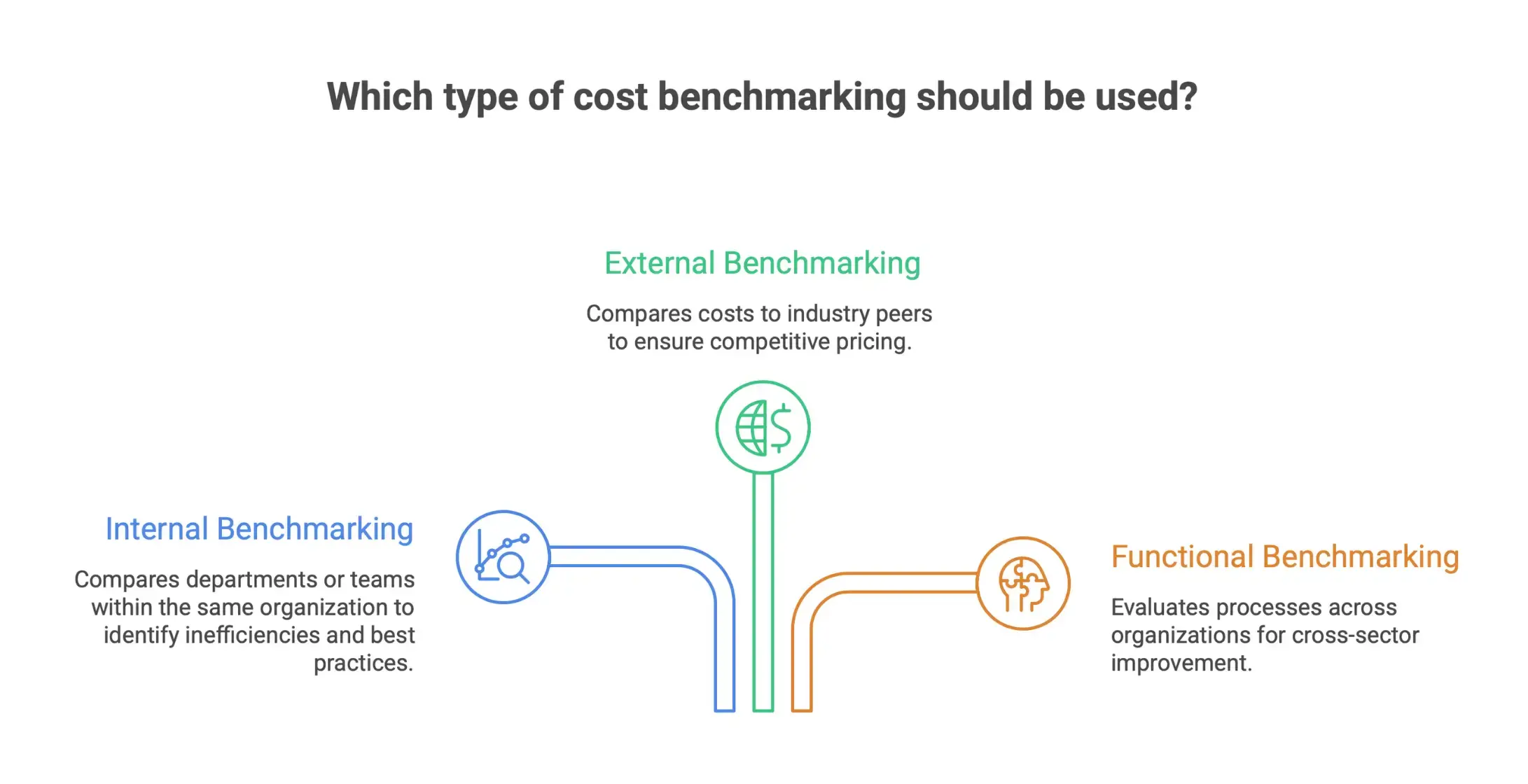
MetricNet and Fastmarkets stress that effective benchmarking process means using reliable, comparable data. Best practices include collecting project data from historical data, ensuring comparability, and using a structured approach for evaluating cost performance.
Benchmarking for Cost Optimization and Competitive Positioning
The true power of benchmarking is cost optimization, not just cost cutting. By using industry benchmarks, project teams identify where production costs or project costs stray above norms and implement improvements. Strategy& shows that competitive benchmarking allows companies to set evidence-based targets and maintain competitive positioning.
Key strategies for using benchmarking include:
- Setting realistic performance metrics for cost estimation
- Using scenario analysis tools to model proposed changes before implementation
- Relying on continuous benchmarking for continuous improvement, not just one-off reports
A robust benchmarking process enables project managers to compare costs across similar projects and industry leaders, drilling down to root causes and driving operational efficiency and cost savings.
Limitations and Depth of Benchmarking Tools
While benchmarking provides valuable insights, limitations do exist. Issues may stem from a lack of truly comparable data, outdated industry standards, or over-reliance on surface-level comparisons. As Fastmarkets notes, strategic benchmarking and deep-dive analytics are needed to avoid misinterpreting strategic costs as inefficiencies.
Look for benchmarking software that offers:
- Access to rich, up-to-date market-wide databases
- Historical data for trend analysis
- Advanced performance metrics for apples-to-apples comparison
- Scenario analysis capabilities
With the right tools and approach, benchmarking becomes a cornerstone of informed decision making in cost management.
Core Principles of Cost Control in Project Management
Cost control is the backbone of effective project execution. It involves measuring actual costs against the cost baseline, identifying variances, and acting quickly to ensure project costs align with the plan.
The Cost Control Process: Steps for Project Success
A practical cost control process, as outlined by Project Control Academy, includes:
- Establish accurate cost estimation and a robust baseline before starting work
- Collect project data and track actual costs throughout execution
- Conduct timely variance analysis to spot where actual costs deviate from planned
- Identify performance gaps and implement targeted corrective actions
- Document changes and reassess cost performance
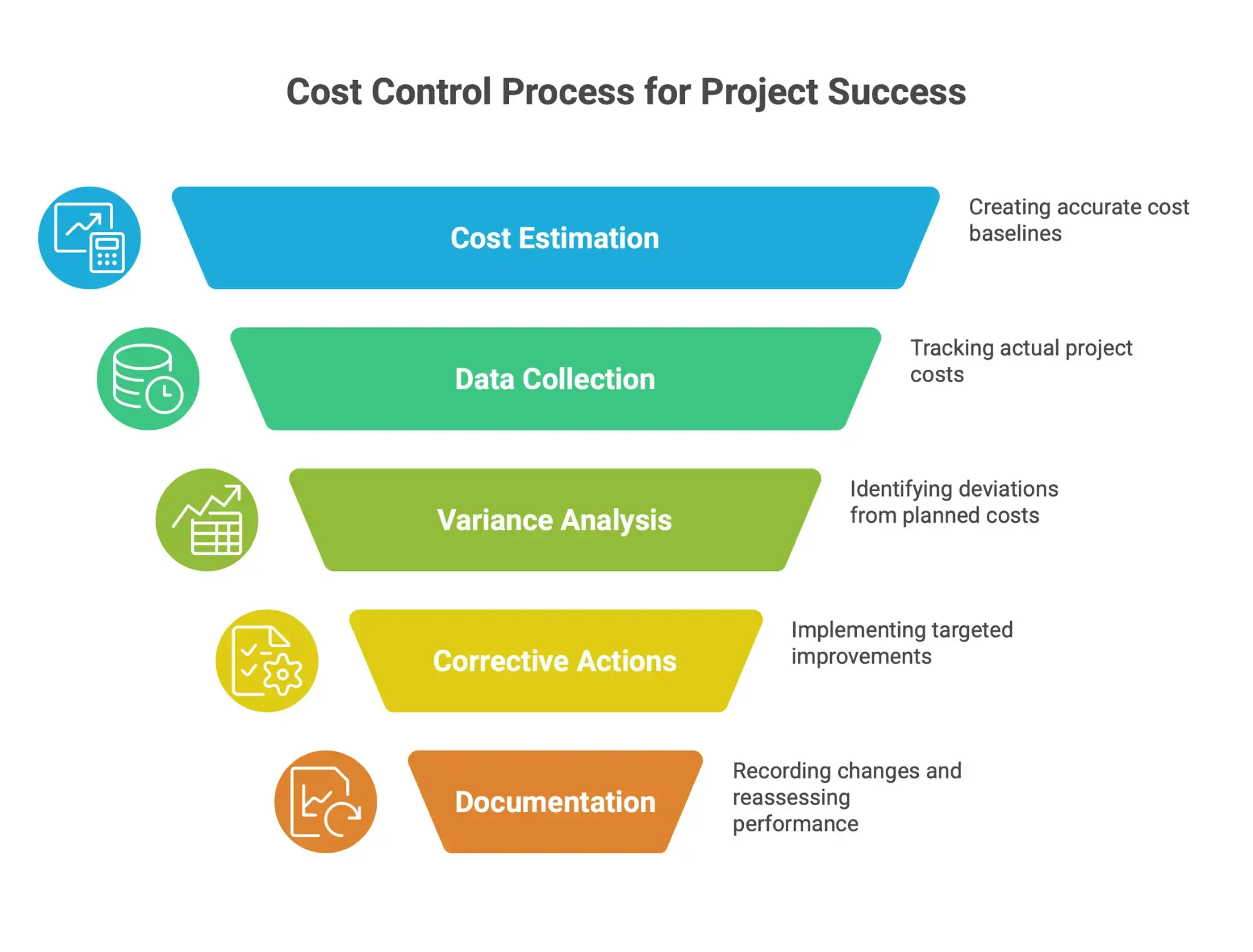
Modern cost estimating software helps automate this structured approach, allowing for continuous monitoring and transparency. Real-time alerts help project managers act decisively, reducing the risk of cost overruns and supporting project success.
Reactive vs Proactive Cost Management
Controlling costs isn’t just about reacting after issues arise. Best practices combine proactive management, incorporating lessons from historical data and performance metrics, so project managers can predict challenges before they escalate.
- Cost control: Reacts to deviations and implements course corrections
- Cost management: Plans for potential trouble areas and uses benchmarking to set informed, competitive targets
Continuous improvement comes from integrating estimation, budgeting, and cost control through the entire life cycle, a hallmark of leading project management practices and finance leaders.
For more on how estimating informs control, see cost estimating vs cost control.
Strategic Cost Management: Aligning Cost Structures for Project Success
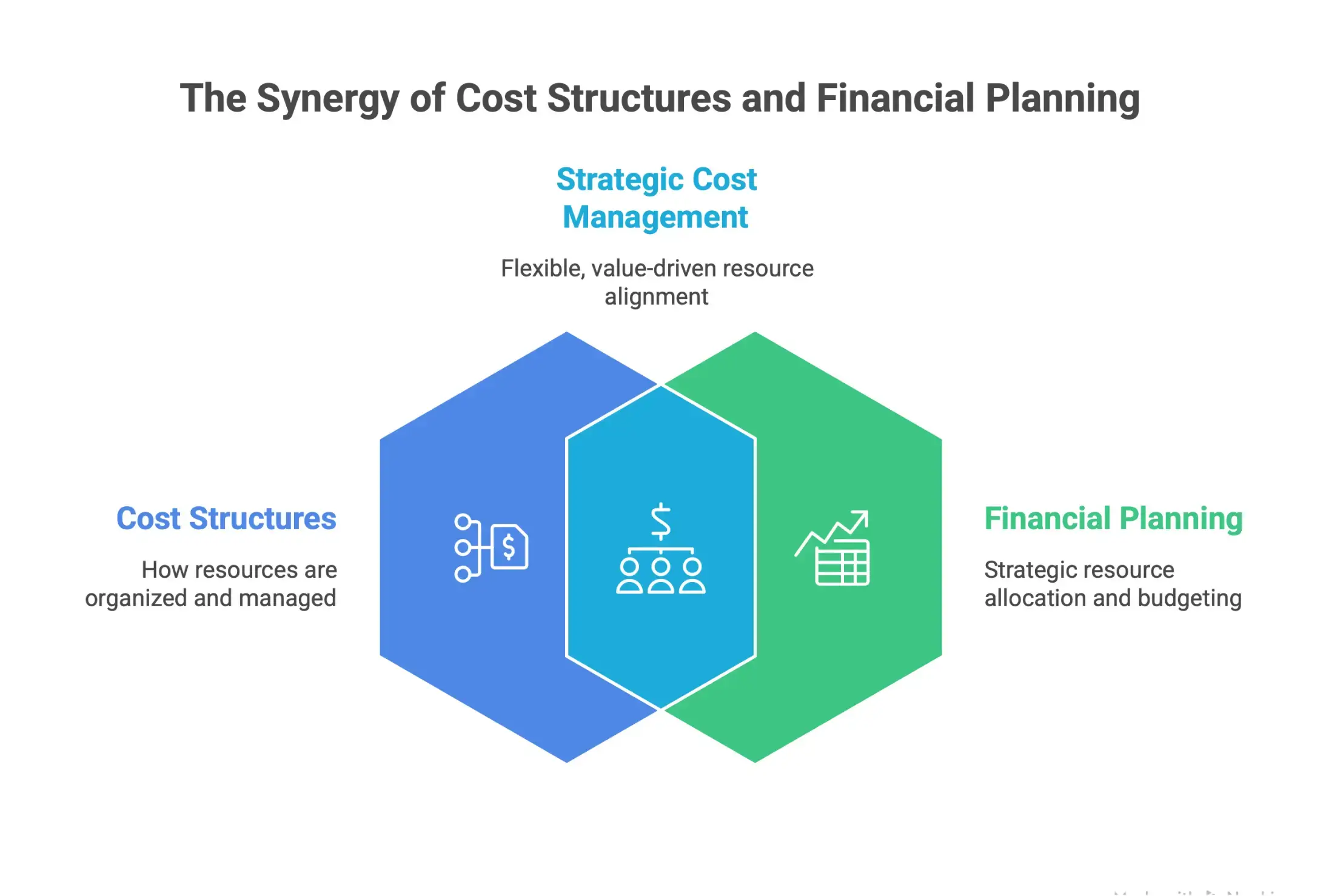
Strategic cost management ties every financial move to broader business goals and sets the stage for sustainable growth. It begins with accurate cost estimation, cost benchmarking, and proactive cost control.
Aligning Cost Structures and Financial Planning
Strategic cost management aligns cost structures with financial planning and the organization’s competitive strategy. Teams structure budgets and cost frameworks to support business drivers, not hinder them, and stay flexible as priorities change.
This approach is especially valuable when projects or market conditions shift. Strategic management empowers fast, data-driven decisions and ensures that total cost and cost per activity align with long-term goals.
Strategic cost management also:
- Supports operational efficiency by optimizing resource allocation
- Ensures funding flows to true value drivers
- Enables project managers to respond rapidly during uncertainty
Building Financial Roadmaps with Analytics
Strong cost management leans on data driven insights from AI-driven analytics and modern project controls software. Tools that leverage historical data provide accurate cost estimation for forecasting, help identify opportunities for cost savings, and defend each budget move with clear logic.
By combining cost benchmarking with continuous monitoring, companies set up financial roadmaps for the future. This turns tactical budgeting into strategic planning.
See cost estimating vs cost control for more on closing the feedback loop between estimating, budgeting, and controlling costs.
Integrating Cost Benchmarking and Cost Control: Best Practices
A unified approach to cost management means blending benchmarking with cost control for maximum impact.
Using Benchmark Data to Inform Cost Control Measures
Benchmarking provides real-world context for controlling costs. By comparing costs from project data or industry standards, organizations quickly identify where performance is lagging and focus on the most impactful changes.
Strategy& confirms that top industry leaders use ongoing benchmarking to set cost control targets grounded in evidence. Best uses of benchmarking data include:
- Pinpointing the largest performance gaps and addressing them first
- Setting realistic cost management targets based on industry leaders’ results
- Focusing improvement efforts for better project performance
Modern enterprise cost management suites bring all of these elements together for actionable, real-time decision making.
Best Practices for Ongoing Benchmarking and Cost Review
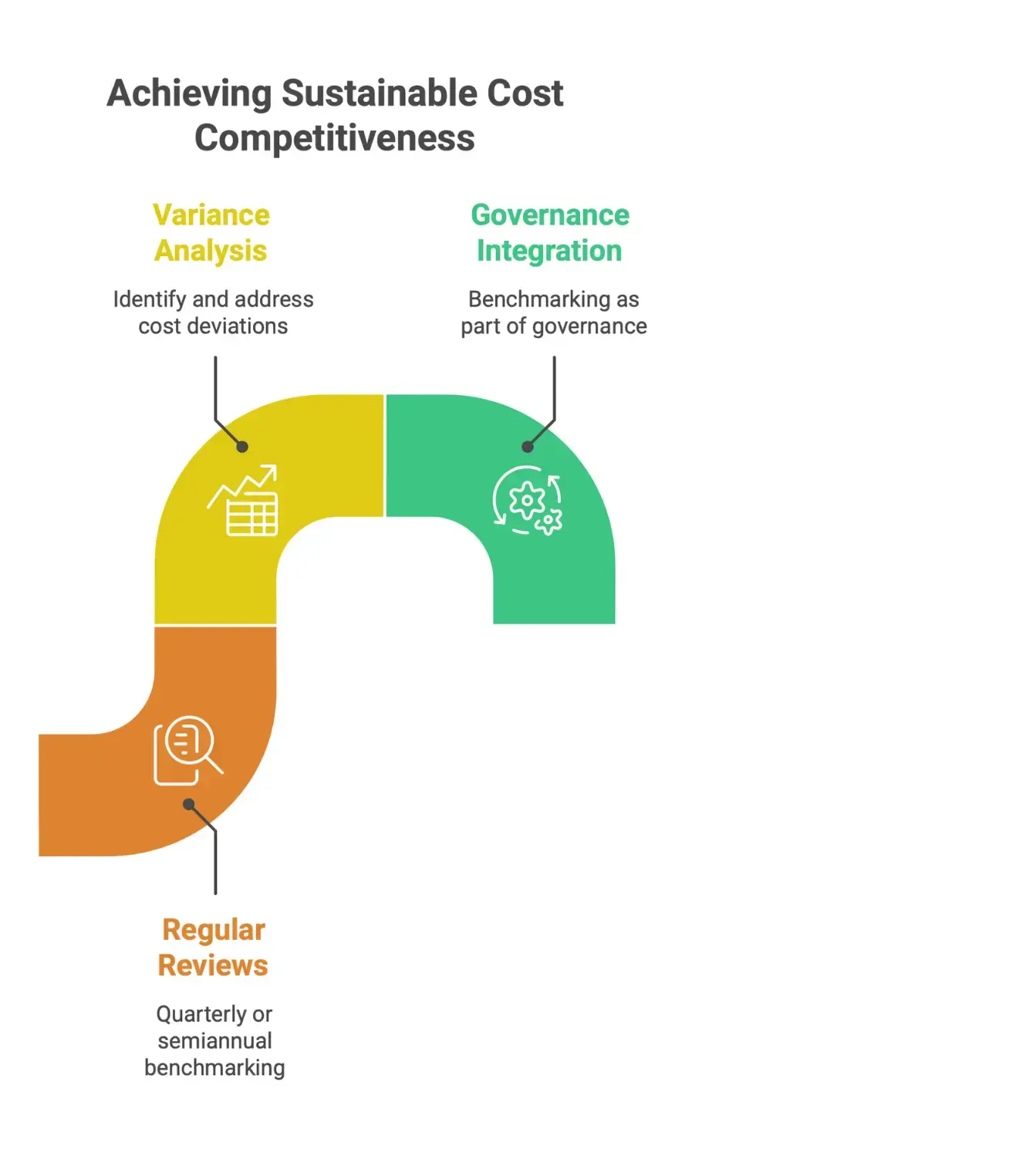
Sustainable cost competitiveness is only achieved when benchmarking and cost control are continuous. Regular reviews and variance analyses ensure improvements stick and benchmarks stay relevant.
Best practices for ongoing benchmarking:
- Use historical data and robust project data for benchmarking and review
- Build in quarterly or semiannual benchmarking routines, not just annual ones
- Make benchmarking part of a governance process alongside performance metrics and reporting
Fastmarkets advises that solid databases and customizable reporting, through cost benchmarking tools, help organizations monitor project costs and identify trends or potential overruns early.
Avoiding Common Pitfalls: Successful Project Cost Management
Even skilled project managers and teams can face obstacles. Avoiding common pitfalls is vital to strong financial management.
Over-Reliance on Benchmarking Without Action
Collecting industry benchmarks and comparing costs without following through is a classic error. Fastmarkets notes that the benchmarking process must lead to real changes, not just data collection.
To prevent inaction:
- Analyze the root of performance gaps and cost inefficiencies
- Implement detailed action plans and track progress
- Use benchmarking tools that connect findings to next steps for continuous improvement
Confusing Control with Strategic Cost Management
Squeezing budgets alone is not enough. Pelanor points out that strategic cost management connects cost control to organizational objectives and sustainable growth.
To bridge the gap:
- Anchor cost control to business strategy and big-picture financial planning
- Evaluate decisions for both immediate savings and future positioning
- Promote a collaborative approach between finance leaders, project managers, and teams
Integrated enterprise estimating suites strengthen both operational discipline and strategic agility, supporting consistent cost performance.
Construction Projects: Cost Benchmarking and Cost Control in Industry Practice
In the construction industry, accurate cost estimation, benchmarking, and active cost control are essential to deliver successful projects. Industry leaders leverage benchmarking not only for budgeting, but for optimizing operational efficiency and controlling costs throughout the project lifecycle.
Industry Examples: Benchmarking Success in Practice
Strategy& details real-world examples, such as energy companies using benchmarking to streamline maintenance and cut waste, or manufacturing plants sharing best practices to improve cost performance. In construction projects, benchmarking against industry leaders reveals hidden inefficiencies in cost structures and spotlights improvement opportunities.
Looking for concrete industry examples? See Nomitech case studies for stories of companies applying benchmarking insights for measurable improvement.
Fusing Benchmarking and Control for Sustainable Growth
The secret to sustainable growth is combining benchmarking with active cost control, especially in construction projects and technical fields. Benchmarking sets the targets, while cost control ensures agile execution and resilience.
Teams that integrate both can:
- Achieve project success by hitting estimates without sacrificing quality
- Implement best practices from industry benchmarks into daily processes
- Maintain a focus on both short-term cost savings and long-term financial planning
From R&D in tech to large-scale construction, benchmarking and control together ensure cost performance is always under review and always improving.
Frequently Asked Questions
What is the difference between cost benchmarking and cost control?
Cost benchmarking is a process of comparing your costs, performance metrics, and practices against industry standards or competitors to reveal performance gaps and highlight improvement areas. Cost control is about tracking actual costs, identifying variances, and taking action so project costs stay within budget. In short: benchmarking identifies where you need to improve, cost control gets you there.
Why should organizations use both cost benchmarking and cost control?
Benchmarking alone shows where you lag industry standards but won't deliver results without follow-through. Cost control by itself manages current spending but can miss broader opportunities. Using both helps organizations set competitive targets, monitor project performance, and achieve predictable project outcomes.
How do benchmarking tools and cost control systems work together?
Benchmarking tools provide data driven insights by comparing costs against historical data or industry benchmarks. Cost control systems use that insight to track project data and implement course corrections in real time, supporting both estimation and execution.
What are common pitfalls to avoid with cost benchmarking and cost control?
Beware of collecting benchmarking data but never implementing changes, or treating cost control as the only solution. Maximize value by making benchmarking and cost control part of a continuous improvement process that fuels better project management, quality, and profitability.
How do industry leaders successfully implement both benchmarking and cost control?
Industry leaders set clear goals, use standardized performance metrics, review cost variances regularly, and rely on comprehensive analytics platforms. They share lessons learned among project managers, estimators, and controllers, ensuring best practices drive real, lasting improvement.
Conclusion: Key Takeaways for Finance Leaders and Project Managers
Effective cost management in project management blends cost benchmarking and cost control to maximize project success. Benchmarking gives you the industry context, comparing costs with peers and highlighting where you need to improve. Cost control delivers the tools and processes to manage project costs tightly and prevent overruns, supporting financial stability and decision making.
Put simply, industry leaders don’t just track figures. They build continuous improvement into cost management by closing the feedback loop. Both estimation and control become a daily discipline, moving organizations from reactive to proactive management.
To practice this, a modern cost benchmarking tool makes data comparisons easy, while an enterprise cost management suite integrates estimating, benchmarking, and controlling costs into one workflow.
With both approaches, companies not only spot inefficiency, they achieve cost efficiency, lock in savings, and build a culture where project teams expect to improve outcomes every year.
Checklist for Effective Implementation
Looking to embed best practices in your everyday routine? Here’s a checklist to put strong cost management into action:
- Define clear, aligned goals to guide cost management and financial planning
- Standardize performance metrics for comparing costs across departments, business units, and similar projects
- Run regular variance analyses to spot and address cost overruns immediately
- Adopt fast-response protocols so project teams handle deviations from performance metrics decisively
- Ensure continuous monitoring. Make reviewing project costs and benchmarking a core practice for continuous improvement
- Foster collaboration among estimating, procurement, and project managers for comprehensive accountability
- Leverage historical data and project controls software for smarter cost estimating and forecasting. See historical project cost planning
- Share lessons learned so all teams benefit from previous improvement efforts and avoid repeating mistakes
Project Control Academy stresses that true value comes from tackling problems head-on, not just tracking them. Embedding benchmarking and cost control in your cost management framework brings cost performance to the forefront and drives quality improvement.
Organizations that make cost management a driver of decision making will deliver consistent results, prevent surprises, and maximize budget potential.
Ready to Take the Next Step?
Want to see how advanced cost estimation, benchmarking, and cost control can transform your projects? Explore Nomitech’s full suite or get in touch to find the right solution for your needs and achieve better project outcomes.





Stay Up to Date
Subscribe to our Newsletter today and receive the latest updates, trends, expert insights, and exclusive offers tailored to your specific industry.