

How Value Engineering in Construction Maximizes Project Value
TL;DR: Value engineering in construction isn’t just about shaving dollars off the bottom line. It’s a disciplined engineering methodology for maximizing value throughout every construction project. Done right, the value engineering process delivers lasting quality, performance, and client satisfaction. Enlisting a collaborative engineering team, smart alternatives, and today’s digital tools. This guide explains how value engineering in construction delivers cost reduction and sustained results, without ever compromising quality.
Understanding Value Engineering in Construction
Attention: If you’ve managed a construction project, you know how budgets balloon and schedules slip. Too often, value engineering in construction is misunderstood as code for painful cost-cutting late in the game. This engineering process, when left to the end, sparks tension and reduces project outcomes. Patchy data and fragmented collaboration add to the challenge.
Interest: That approach misses the point. Today, razor-thin margins and volatile material prices make effective cost reduction critical. Old tools and late changes can undermine value and increase costs, as well as disrupt owner expectations. Value engineering in construction, when applied at the right stage, and with modern software, prevents these pitfalls and enhances the project life cycle.
Desire: Modern value engineering, anchored in accurate cost estimates and function analysis, keeps every project decision on track. With a value engineering team working early, every element is evaluated for its function and cost, ensuring function is maximized at the lowest possible cost without sacrificing quality. Instead of “cost-cutting,” the approach surfaces innovative ideas and suitable alternatives that drive real project value.
Action: In this guide, you’ll learn what value engineering in construction really means, its origins during World War II at General Electric, the methodology behind it, and how creative teamwork delivers results in the construction industry. See how embracing structured value engineering efforts at the design phase and beyond achieves significant improvements. This includes reducing unnecessary costs, improving quality, and streamlining the construction process.
What Is Value Engineering in Construction?
Value engineering in construction is a systematic engineering method that examines every element of a project, breaking down their functions and their associated costs. The primary goal is to maximize function at the lowest cost, aligning with both basic functions and essential functions, without compromising quality or industry standards.
This isn’t simple cost cutting; value engineering involves analyzing, evaluating, and generating alternative solutions that offer added value and achieve project goals. The engineering team applies function analysis, idea generation, creative brainstorming, and evaluation to find solutions that enhance value. When the design team collaborates with general contractors and project owners, the process fosters transparency and substantial savings.
A Brief History: From World War II to Modern Projects
The concept of value engineering originated during World War II at General Electric. Lawrence D. Miles and his value engineering team sought substitutes for costly materials due to shortages, leading to the technique called “value analysis.” Creatively applying existing processes, they replaced expensive materials with suitable alternatives while maintaining required functions. This systematic, evidence-based engineering methodology set the foundation for value engineering in today’s construction industry.
The Value Engineering Process and Methodology
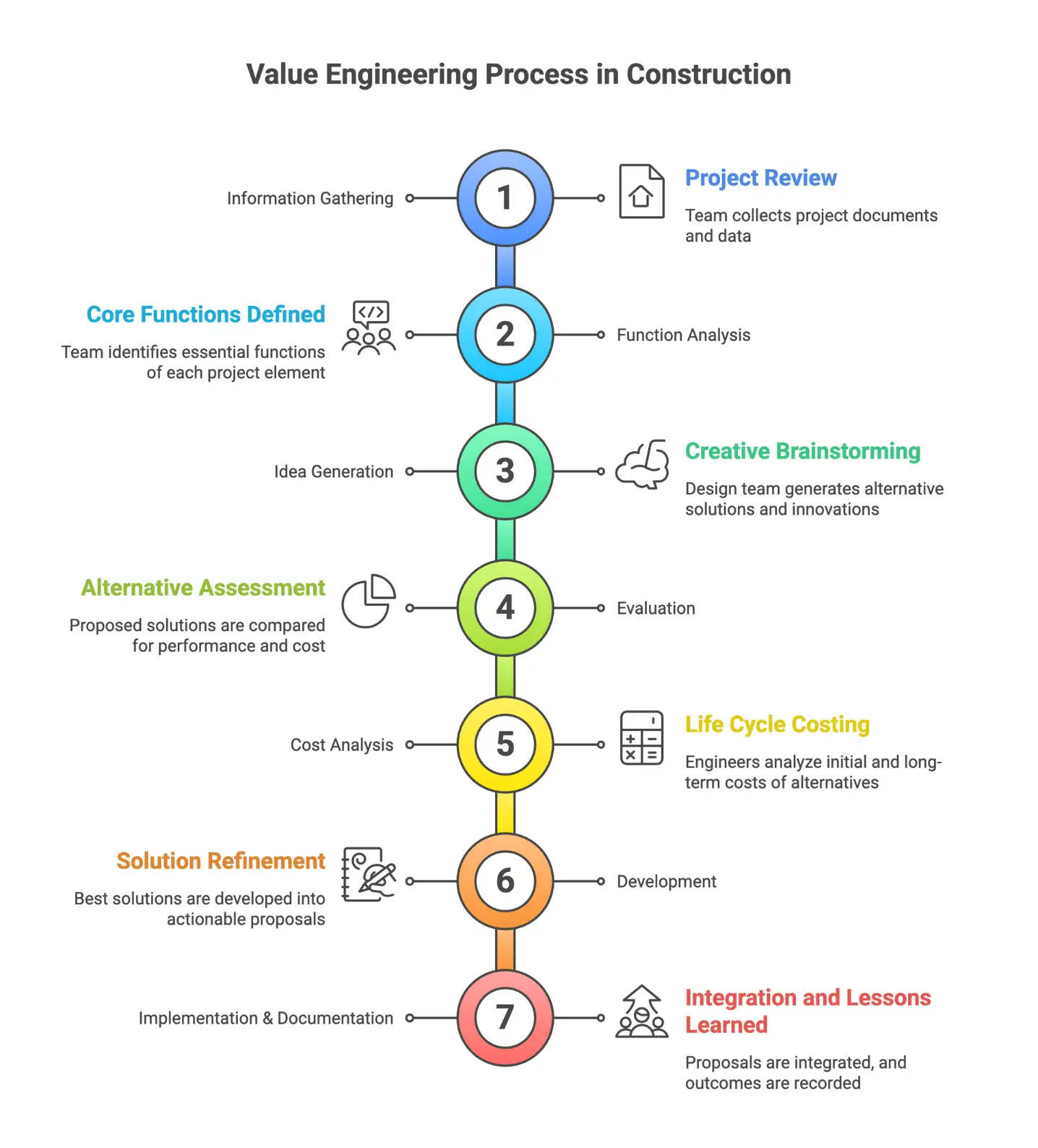
Proper value engineering efforts follow a step-by-step engineering process. Here’s how a multi-disciplinary value engineering team typically operates in construction projects:
- Information Gathering: The first step is understanding the project concept, reviewing construction documents, and collecting data about requirements, owner expectations, existing processes, and cost estimates.
- Function Analysis: Next, the engineering team defines the core functions of every project element, asking what purpose each serves. This function analysis ensures only essential functions remain, preventing unnecessary costs and cost overruns.
- Creative Speculation / Idea Generation: Through creative brainstorming, the design team generates alternative solutions and innovative ideas for core project requirements. This is often where significant improvements are conceived.
- Evaluation: The proposed alternatives are compared and assessed for performance, total cost, life cycle, and impact on quality, ensuring solutions don’t result in sacrificing quality.
- Cost Analysis: Engineers allocate costs to each alternative, considering both initial costs and long-term costs, using life cycle cost analysis and benchmarking with data from similar projects.
- Development: The best solutions move forward. These can involve modular construction, design simplification, material substitution, or alternative ways to achieve substantial savings.
- Implementation & Documentation: The proposals are integrated during the design phase or, as needed, in the construction phase. The team records lessons learned and outcomes to inform future projects.
Regular value engineering workshops occur at major milestones, enhancing stakeholder engagement and maximizing the benefits of the process.
Core Concepts: More Than Cost Cutting
The value engineering process is driven by a few key aspects:
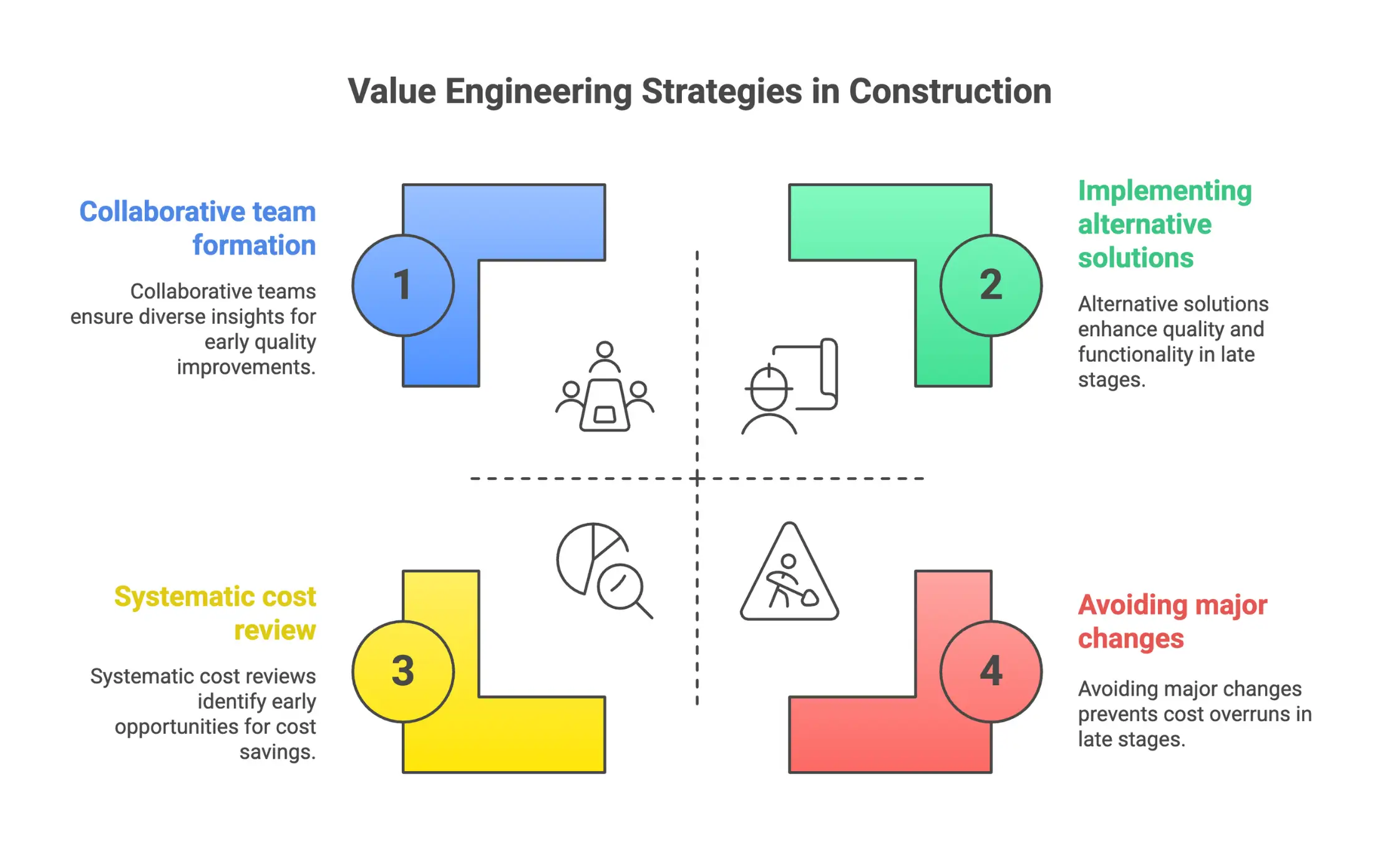
- Not Just Cost Reduction: Value engineering is not a cost-cutting strategy or a desperate move. It's a systematic review for maximizing function, quality, and cost effectiveness throughout the project life cycle.
- Collaborative, Team Sport: Experienced contractors, architects, engineers, and suppliers form a value engineering team to ensure diverse, informed alternative analysis.
- Timing Is Critical: Value engineering is most impactful when performed in the early project stages. Making major changes during the construction phase is rarely ideal and often leads to higher costs or schedule delays.
- Alternative Solutions: VE aims to reduce or prevent unnecessary costs by replacing costly materials or over-designed systems with suitable alternatives while increasing quality.
Phases of Value Engineering in Construction
When to Apply Value Engineering
- Planning Phase: The best opportunity to influence design elements and achieve the lowest cost without costly changes or delays.
- Design Phase: Effective for assessing alternatives, though changes may incur some redesign costs.
- Construction Phase: Sometimes prompted by unexpected expenses, but changes here can be disruptive and yield less cost savings.
Applying value engineering at every stage, but especially in early project phases, ensures the most value is created and retained.
Value Engineering During the Design Phase
The design phase is the ideal point for the design team and value engineering team to work closely, facilitating cross-discipline reviews and creative discussions. Materials, methods, and systems are evaluated for cost reduction, performance, and long-term maintenance costs. By conducting function analysis and developing alternative solutions now, teams avoid more money being spent later correcting missteps.
Value Engineering in the Construction Phase
Although less effective, the value engineering process can still play a role during the construction phase. Project owners or general contractors may use VE to address cost overruns, implement additional alternative solutions in response to real-world conditions, or prevent further unnecessary costs as issues arise.
Key Benefits of Value Engineering in Construction
Cost Reduction and Project Efficiency
Value engineering in construction delivers cost reduction while maintaining (or even improving) project quality and performance:
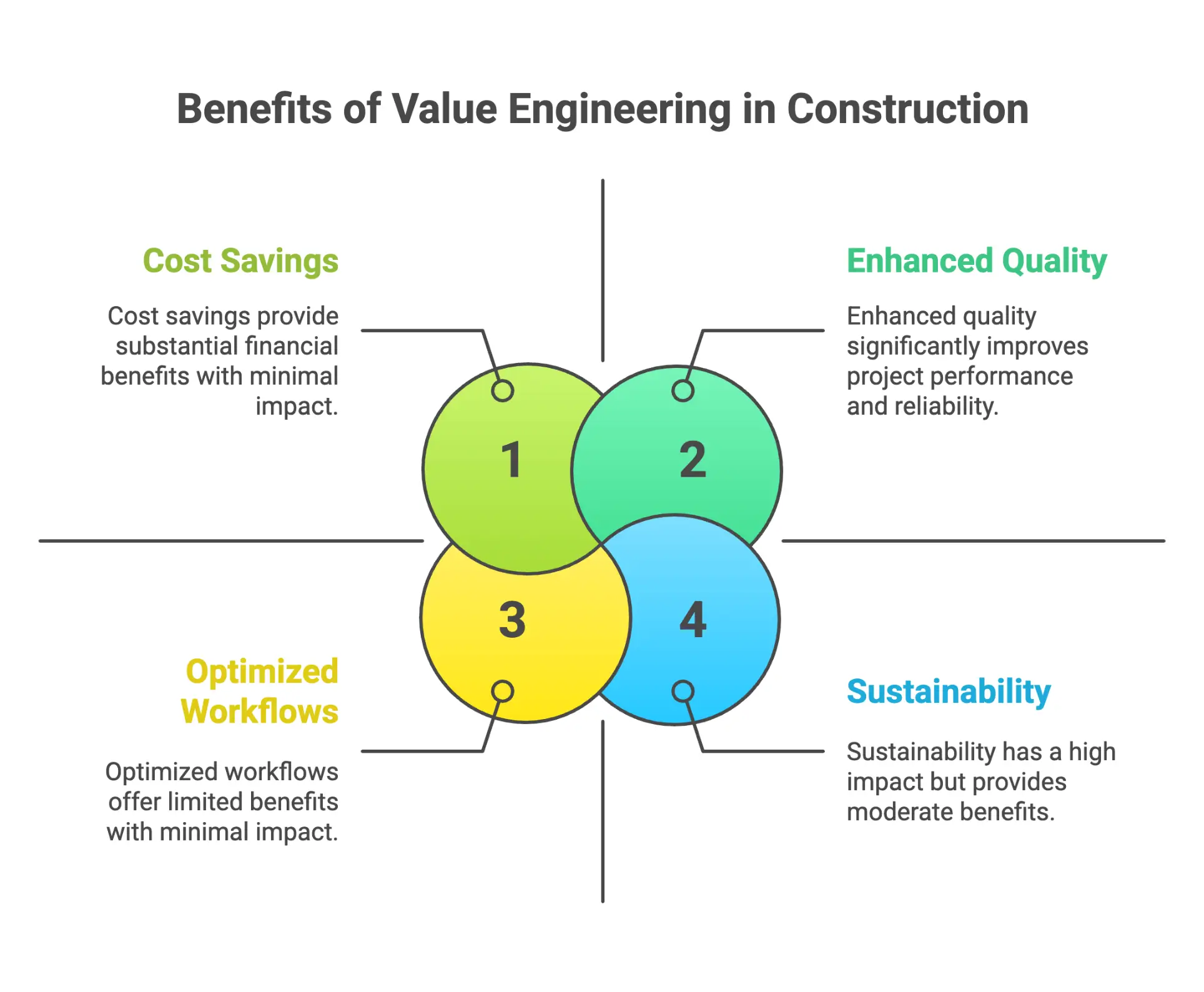
- Cost Savings: Structured value engineering efforts can uncover materials, details, or methods with the same function but at a lower total cost, benefiting both project owners and contractors.
- Enhanced Quality: By encouraging idea generation and robust evaluation, value engineering often leads to higher-performing, more reliable buildings.
- Optimized Workflows: Eliminating complexity and focusing on essential functions streamlines the construction process and improves performance.
- Sustainability: Selecting resource-efficient, eco-friendly materials reduces environmental impact and supports long-term project goals.
Project Owner and Stakeholder Value
- Better Communication: Collaborative value engineering enhances communication among all stakeholders, making decision-making clearer and issues easier to resolve.
- Budget Contingencies: By identifying cost-effective solutions early, VE creates contingencies that cushion unexpected challenges.
- No Sacrificing Quality: The value engineering method isn’t about compromising quality. The aim is to maximize function, not eliminate it.
Life Cycle Cost Analysis and Long-Term Impact
Beyond Initial Costs: Considering the Full Life Cycle
Value engineering isn’t just about the lowest cost up front. Life cycle cost analysis examines initial costs, future operational and maintenance costs, and the eventual cost to upgrade or replace systems. This approach guarantees the lowest cost over the building’s life cycle, not just at completion.
Projects that integrate life cycle cost analysis ensure that choices upfront, like purchasing raw materials, durable finishes, or efficient systems, have lasting value and reduced maintenance costs. The result: owner expectations are met or exceeded, and repeat business grows.
Real-World Examples of Value Engineering in Construction
- Golden Gate Bridge: Value engineering efforts reduced final costs from an initial $100 million to approximately $35 million, all while meeting structural and safety goals.
- Torre Reforma Project: In Mexico City, the value engineering process improved energy efficiency and reduced structural expenses by creatively applying alternatives.
In both cases, significant factors contributing to success were early involvement from the value engineering team, robust function analysis, and leveraging lessons learned.
Effective Value Engineering Practices and Lessons Learned
Practical Strategies
- Material Substitution: Replace costly materials with equal or better-performing, lower cost substitutions.
- Design Simplification: Eliminate unnecessary complexity in design elements, keeping focus on essential functions.
- Modular Construction: Prefabrication can result in substantial savings, greater efficiency, and reduced schedule risk.
- Regular VE Workshops: Conduct workshops at key milestones to promote active collaboration and review.
Documentation and Expertise
Carefully document every value engineering initiative, alternatives considered, cost savings achieved, lessons learned, and outcomes reached. This knowledge base improves the next value engineering project and strengthens internal expertise and benchmarks.
Multi-Disciplinary Teams: The Heart of Value Engineering
Value engineering is a team sport. Having architects, engineering experts, contractors, suppliers, and the project owner at the table from the start is one of the most significant factors contributing to successful VE outcomes. Multi-disciplinary teams provide a broad set of ideas and drive better owner satisfaction.
Collaboration and clear structure, supported by tools like Building Information Modeling (BIM) and artificial intelligence for cost analysis, are essential. These platforms enable effective evaluation, track benchmarking, and deliver greater efficiency.
Value Engineering Methodology: Step-by-Step Overview
Here’s a summary of the systematic approach for value engineering in construction:
- Information Gathering: Understand the project scope, owner requirements, and constraints.
- Function Analysis: Define all core and supporting functions, eliminate non-essential or overlapping features.
- Creative Speculation: Encourage the identifying and idea generation of innovative, alternative solutions.
- Evaluation: Assess and prioritize options against quality, cost, and life cycle metrics.
- Cost Analysis: Use cost estimates, historical project data, and life cycle cost analysis to support decision-making.
- Development: Build out the best options for stakeholder review.
- Implementation & Documentation: Document the process and continually improve by capturing lessons learned.
Collaboration and Stakeholder Engagement in Value Engineering
The Value Engineering Team Approach
Value engineering in construction only works when the value engineering team, designers, engineers, general contractors, and project owners, is fully engaged. Workshops, collaborative sessions, and open communication help prevent unnecessary costs and keep all suggestions on track.
Collaboration ensures that creative alternatives and owner expectations are weighed, making it easier to align on major decisions and prevent costly changes later.
Best Practices for Applying Value Engineering in Construction
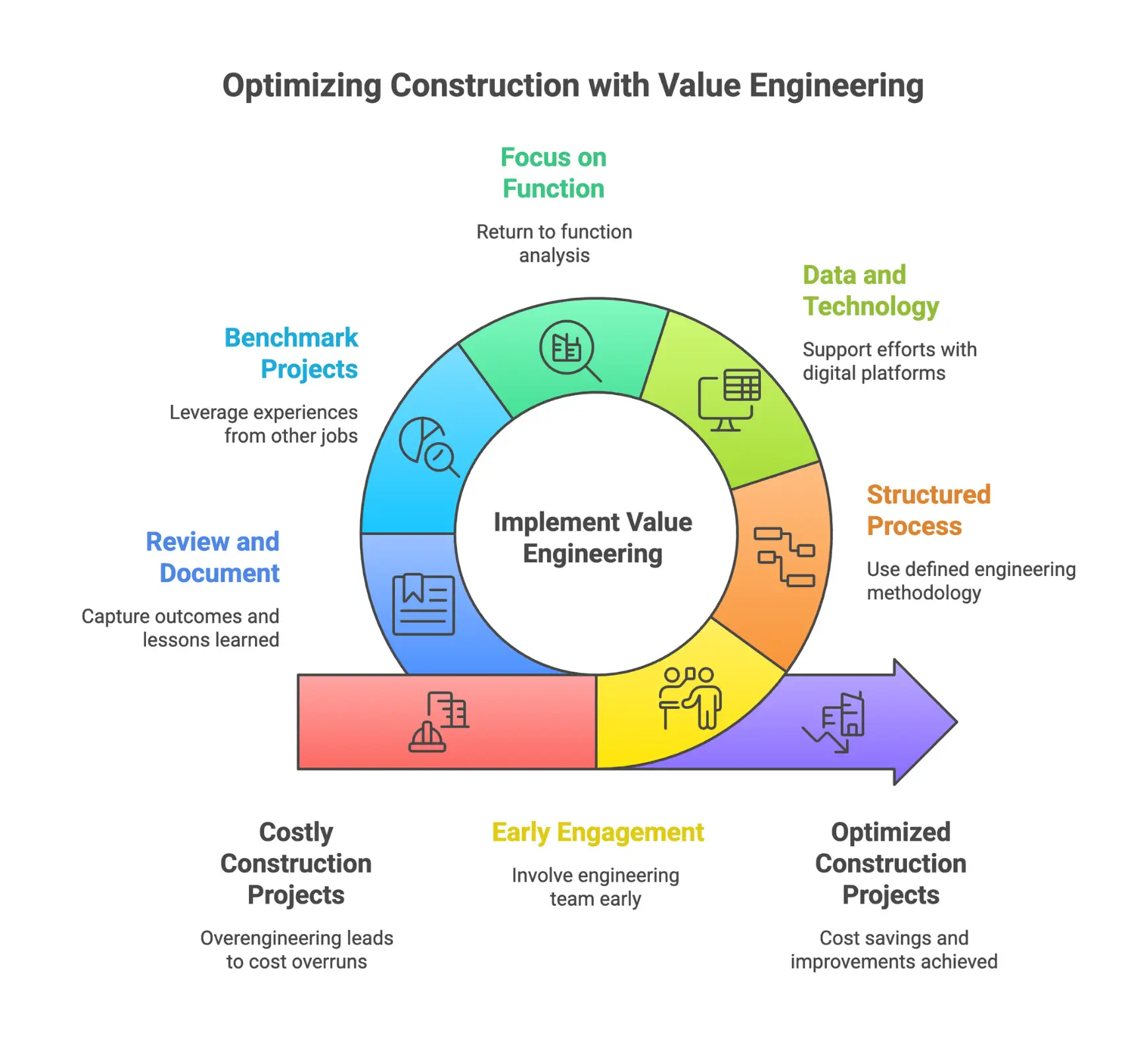
- Involve Value Engineering Early: The sooner the engineering team is engaged, the greater the possible cost savings and improvements.
- Structure the Process: Use a defined engineering methodology for evaluating every decision.
- Use Data and Technology: Support your engineering efforts with digital platforms like AI-assisted estimating tools, BIM, and cost databases.
- Focus on Function, Not Features: Always return to function analysis, avoid overengineering and cost overruns.
- Benchmark Against Similar Projects: Leverage experiences and outcomes from other jobs to guide better choices.
- Continually Review and Document: Capture outcomes and lessons, making improvements for future projects straightforward.
Frequently Asked Questions
What is the key difference between value engineering and simple cost-cutting in construction?
Value engineering focuses on maximizing function, quality, and long-term performance at the lowest possible cost. Regular cost cutting, or indiscriminate cost reduction, can undermine key outcomes and strip away vital value. Value engineering’s systematic analysis reduces costs only where it genuinely improves outcomes, never at the expense of quality or essential functions.
When should value engineering be applied in construction projects?
You’ll achieve significant improvements when value engineering is introduced in the planning and design phase. Early analysis and collaboration maximize positive impact and minimize disruption. Waiting until the construction phase often results in costly changes, though VE can still add value in addressing issues that surface late.
How do digital tools like artificial intelligence support value engineering?
Artificial intelligence platforms and other digital tools streamline cost estimates, function analysis, and evaluation. They enable the value engineering team to model alternative solutions, perform life cycle cost analysis, and synthesize lessons learned from similar projects. The right technology fosters greater efficiency, transparency, and communication.
Why is a multi-disciplinary value engineering team important?
Success in value engineering depends on diverse expertise. When the design team, engineers, contractors, and owners collaborate, they generate more alternatives, spot opportunities, and avoid missed risks, ensuring the project achieves substantial savings and higher quality.
Conclusion: Value Engineering as a Competitive Advantage in the Construction Industry
In today’s construction industry, value engineering in construction is a must-have competitive advantage. The value engineering process lets your engineering team analyze, generate, and evaluate alternatives at every stage. This enhances function, secures cost reduction, and improves outcomes without sacrificing quality.
Firms that commit to structured engineering methodology, open stakeholder collaboration, and advanced digital tools outperform those stuck in reactive cost cutting. The return: stronger partnerships, improved efficiency, and a reputation for innovative solutions.
Why Decision-Makers Should Prioritize Value Engineering
Complex construction projects demand disciplined value analysis and proactive cost reduction. Prioritizing value engineering keeps teams focused on real project goals: quality, efficiency, and cost effectiveness.
From function analysis to implementation, the value engineering method ensures every construction project meets or exceeds owner expectations and withstands the test of time. Firms that embrace value engineering as habit, not emergency, achieve significant improvements and enduring client trust.
Ready to Take the Next Step?
Curious about artificial intelligence platforms powering value engineering? Check out Nomitech’s full suite for engineering teams or reach out to find the best match for your workflows and value engineering needs.





Stay Up to Date
Subscribe to our Newsletter today and receive the latest updates, trends, expert insights, and exclusive offers tailored to your specific industry.