

What Are Procurement Benchmarks? Your Guide to Metrics & Improvement
TL;DR: Procurement benchmarks are crucial metrics that organizations use to assess and elevate how they buy. In this guide, you’ll learn what procurement benchmarks really are, why they matter, how smart procurement benchmarking supports cost efficiency and operational excellence, and how to leverage benchmark data for actionable improvements. Avoid common pitfalls and see how leading organizations benchmark procurement for strategic impact. Done right, benchmarks reveal improvement opportunities, drive business value, and strengthen finance and procurement alignment.
Introduction to Procurement Benchmarks
Does your procurement team struggle to demonstrate its value, control costs, or align with company goals? Many organizations face pressure to justify procurement spend, manage fragmented systems, and keep up with evolving industry standards. Without reliable data, procurement performance can be difficult to measure, leading to unclear targets and reactive decisions instead of strategic impact.
Procurement benchmarking changes this landscape. By setting objective metrics and using external benchmarks, procurement teams can compare their performance to industry peers and leaders. Benchmark data elevates procurement from an operational function to a driver of strategic value, turning performance gaps into actionable improvements. Tools like CostOS help centralize procurement data, making benchmark procurement measurable and repeatable.
Ready to shift from fragmented systems and gut-feel decisions to a continuous improvement process rooted in reliable data? This guide shows how procurement benchmarking transforms your team, improves operational efficiency, and aligns with finance and procurement objectives.
Let’s break down what are procurement benchmarks, why they matter, and how benchmarking in procurement provides the framework for true cost control and performance excellence.
What Are Procurement Benchmarks? Objective Standards for Measuring Performance
Procurement benchmarks are objective, standardized metrics that organizations use to measure and compare procurement performance against both their own history and industry standards. Procurement benchmarking involves collecting key metrics, such as cost savings, cycle times, contract compliance, and supplier performance, and evaluating them against benchmarks from industry peers or best-in-class performers.
According to STARS, effective procurement benchmarking focuses on core indicators that deliver real insight:
- Cost savings percentage – measures the portion of spend saved from sourcing, negotiations, and supplier optimization
- Procurement cycle time – tracks how quickly requests move from requisition to purchase order
- Supplier performance metrics – such as on-time delivery and defect rates
- Contract compliance rates – monitors how consistently purchasing follows policy
Procurement benchmarks are not just internal KPIs; they are external reference points. Comparing your procurement function to relevant benchmarks from industry leaders and peers enables your team to identify gaps, target improvement opportunities, and demonstrate procurement’s business value to leadership. Benchmarking in procurement unlocks continuous improvement, actionable insights, and cost efficiency.
The Purpose and Value of Procurement Benchmarks
Benchmarking supports better decision-making by establishing a market-based baseline for procurement performance. Without external benchmarks, organizations lack visibility into whether their procurement processes are competitive or lagging behind. By consistently using procurement benchmarking, teams can:
- Identify performance gaps compared to industry peers and best-in-class organizations
- Set realistic, achievable targets rooted in market reality rather than just internal data
- Track progress over time, making procurement performance measurable, comparable, and actionable
- Demonstrate value to leadership and strengthen the connection between finance and procurement objectives
- Shift from operational tasks to strategic impact by aligning improvements with business units’ needs
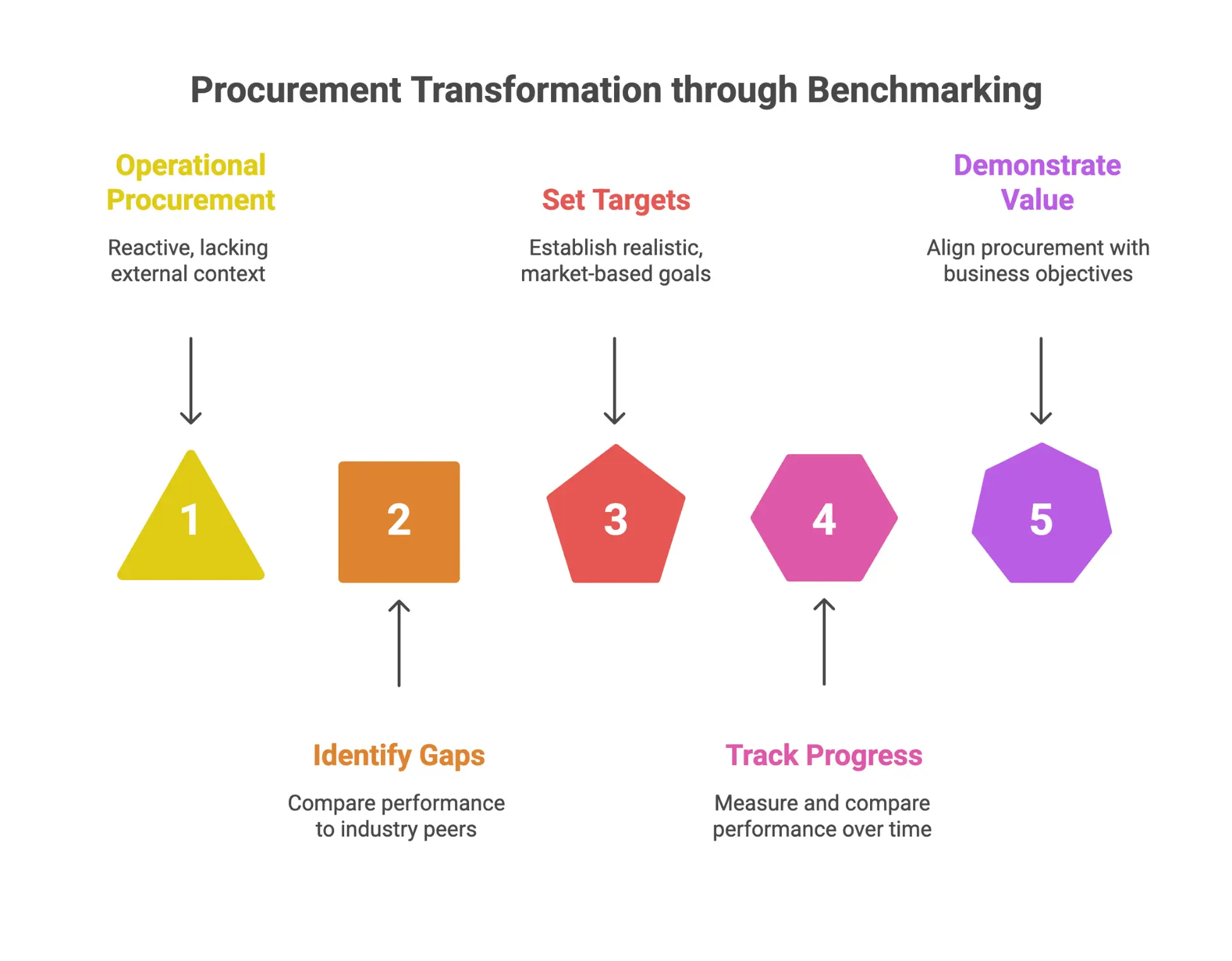
When benchmarking is embedded into procurement processes, teams can drive transformation, realize continuous improvement, and respond swiftly to changes in their business environment.
Why Procurement Benchmarking Matters for Leaders
Procurement leaders rely on benchmarks to drive operational efficiency, align with enterprise strategy, and build credibility with executive teams. Lacking relevant benchmarks can result in missed opportunities, inefficient resource allocation, and process inefficiencies.
As Brixs US highlights, robust procurement benchmarking empowers leaders to:
- Reveal hidden inefficiencies and gaps in procurement operations
- Develop investment cases for new technology, process improvement, or staff development using concrete benchmark data
- Connect procurement performance to high-level business goals and demonstrate strategic impact
Objective, high-quality external benchmarks let procurement leaders set improvement targets based on industry standards and demonstrated best practices. This focus helps prioritize projects that offer genuine business value, not just minor tweaks in tactical KPIs.
By benchmarking procurement regularly, teams can secure buy-in, justify resource allocation, and maintain momentum towards operational excellence.
Key Metrics and KPIs for Procurement Benchmarking
Choosing the right performance metrics is central to effective procurement benchmarking. Key performance indicators provide structure for measuring procurement performance, comparing against industry best practices, and setting improvement targets.
Essential Procurement Benchmark KPIs
Every strong procurement strategy starts with basics:
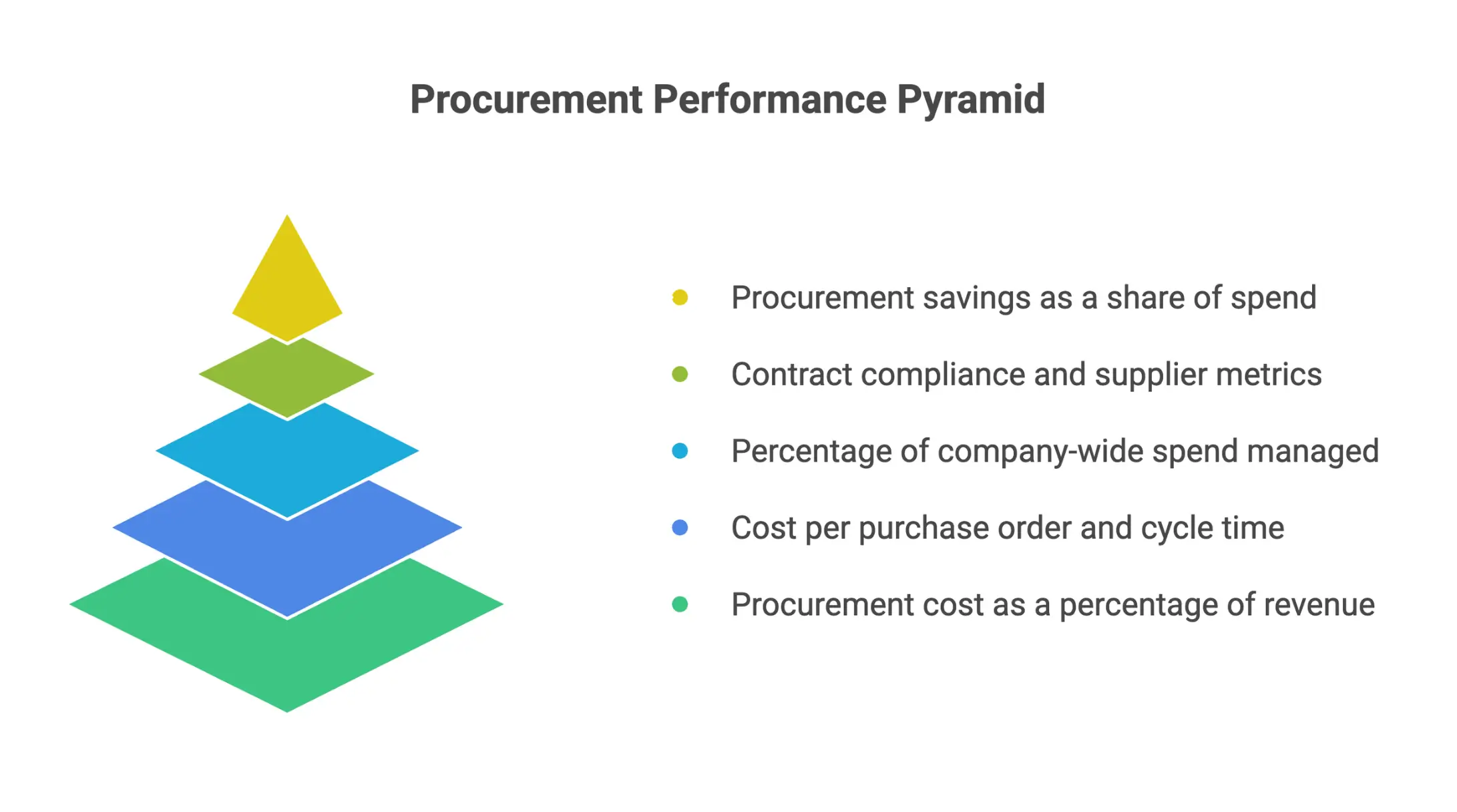
- Cost savings percentage: Measures procurement savings as a share of addressable spend. Leading teams achieve annual cost savings of 8%–12% of total spend and track cost savings benchmarks for ongoing improvement.
- Procurement cost as a percentage of revenue: Typically ranges from 0.5%–1%, a key cost efficiency metric.
- Cost per purchase order: Indicates process efficiency and automation’s impact.
- Procurement cycle time: World-class cycle times fall in the 24–48 hour range, signaling fast, frictionless procurement processes.
- Spend under management: Top organizations manage over 91% of company-wide spend, compared to industry averages closer to 61%.
- Contract compliance: Best-in-class procurement functions achieve compliance rates above 85%.
- Supplier performance metrics: Including on-time delivery rates (target >95% for critical suppliers) and defect rates (<1% ideally).
Other critical metrics:
- Maverick spend (off-contract purchases)
- Staff productivity (procurement function size vs. spend/resources managed)
- Key metrics like demand management and resource allocation
CompanySights notes procurement teams should benchmark headcount, averaging 1.28% of a company’s workforce, against industry leaders for optimal resource allocation.
Benchmarking these standards lets your procurement team measure against both internal history and external benchmarks, identifying gaps and actionable insights.
Advanced Procurement Benchmarking Metrics
Mature procurement teams expand their benchmarking process with robust data:
- Process efficiency: Transaction rates through automation, procurement cost per transaction, approval cycle times
- Compliance & risk management: On-contract spend, exception frequency, supplier management KPIs such as supplier on-time delivery and defect rates
- Operational efficiency: Total cost metrics, procurement operating cost as a percentage of total spend
- Supplier relationships and scorecards: Evaluating supplier reliability, quality, and risk
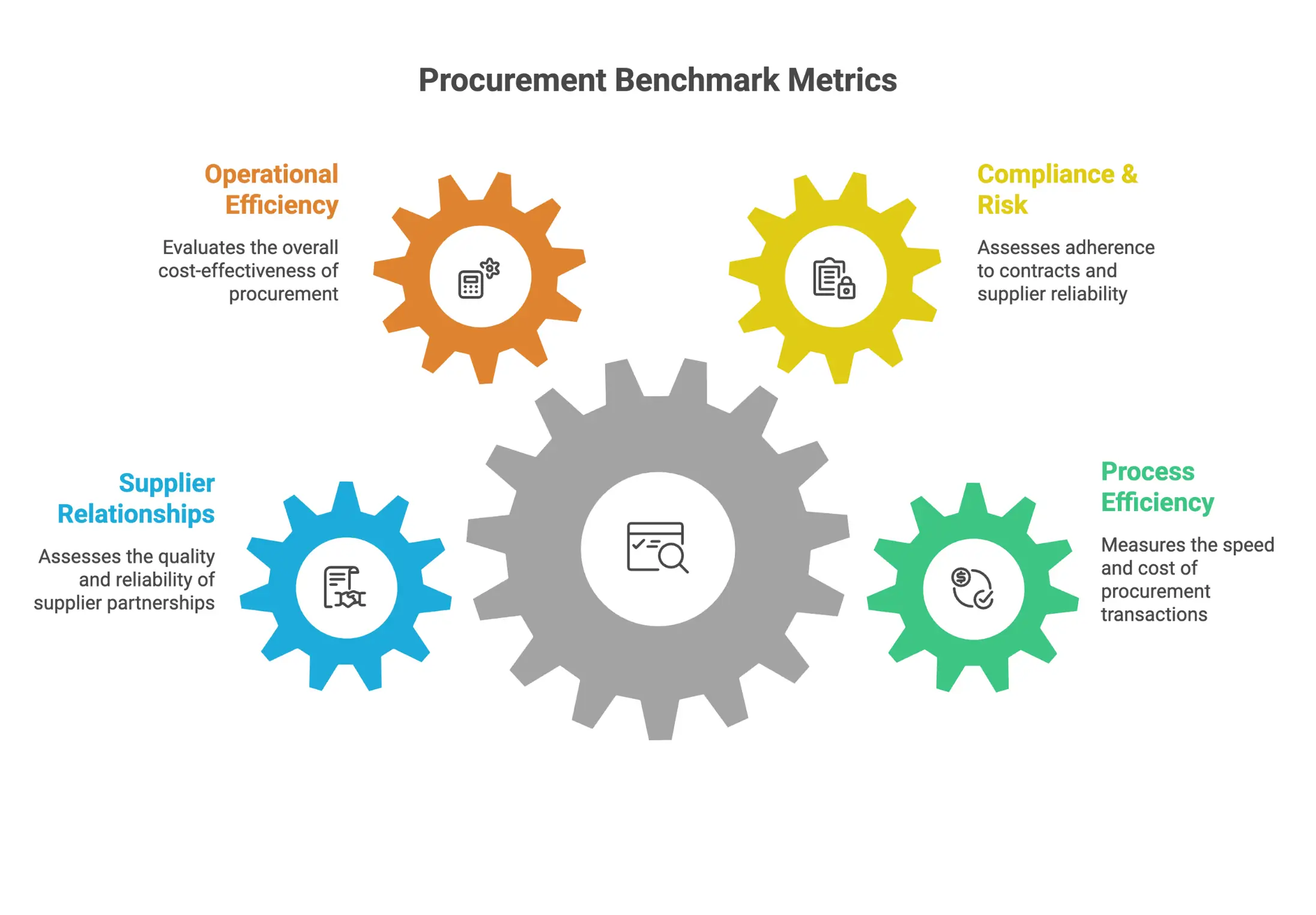
Custom benchmarks connect directly to company size, industry, and procurement maturity level. By benchmarking contract compliance, supplier management, and procurement efficiency, organizations deepen their insight, sharpen strategic value, and stay competitive.
Types of Procurement Benchmarks: Internal, Industry, and Best-in-Class
Understanding benchmarking in procurement means knowing which types of benchmarks to use, when, and why. These three main approaches each deliver value for the benchmarking process.
Internal Benchmarks: Tracking Internal Data and Progress
Internal benchmarks focus on your procurement function’s historical performance. Procurement professionals use internal data to spot trends, measure continuous improvement, and track progress toward self-defined targets.
Mining your historical cost data helps identify improvement opportunities and highlights where to focus process improvement efforts. Centralizing procurement data from fragmented systems enables more reliable benchmarking.
Internal benchmarks are precise, context-sensitive, and support effective resource allocation for your business units.
Industry Benchmarks: Comparing to Industry Peers and Standards
Industry benchmarking compares procurement data to industry peers. This reveals baseline standards, exposes performance gaps, and provides external benchmarks to highlight where your procurement process is lagging or leading.
Trusted data providers like H&Z Management Consulting publish industry best practices, combining quantitative benchmark data and qualitative insights. These comparisons are essential for measuring procurement performance and preparing your team to answer executive questions about competitiveness and industry standards.
Best-in-Class Benchmarks: Emulating Industry Leaders
Best-in-class benchmarks reach beyond your own sector to learn from top-performing procurement teams globally. These benchmarks reveal what’s possible when procurement benchmarking is woven into daily processes and operationalized for continuous improvement.
- Top-performing teams manage 92% of spend and realize 8% annual cost savings (Zycus).
- Best-in-class contract compliance rates exceed 85%, and supplier reliability targets >95%.
Best-in-class benchmarking pushes teams to close the gap with industry leaders, accelerate procurement excellence, and achieve operational excellence.
Benchmarking in Procurement: From Data Collection to Actionable Insights
Strong procurement benchmarking depends on reliable data collection, a repeatable benchmarking process, and commitment to using insights for real change, not just measurement. Here’s how to benchmark procurement for maximum impact.
The Benchmarking Process: A Continuous Improvement Cycle
- Define objectives and KPIs: Map business needs to clear targets (cost savings, risk metrics, spend under management) and clarify ownership across finance and procurement.
- Data collection and normalization: Centralize procurement data, standardize definitions, and ensure reliable data for apples-to-apples comparisons with industry peers.
- Analyze benchmark data: Compare your metrics to relevant benchmarks and external standards to identify gaps, outliers, and improvement opportunities.
- Develop actionable insights: Understand the root causes behind performance gaps, not just the surface-level numbers, and involve business units to prioritize fixes.
- Set improvement plans: Align procurement upgrades with company strategy, assign resources, and track progress.
- Monitor and review: Regular cycles of re-measurement keep benchmarking in procurement current and drive continuous improvement.

When organizations neglect benchmark data quality or don’t align procurement and finance benchmarks, they undermine effective benchmarking and decision making.
Common Data and Process Challenges
- Fragmented systems: Many procurement teams rely on multiple systems and point solutions, making procurement data difficult to baseline and benchmark.
- Poor data quality: Outdated or incorrect data leads to misreads and lost opportunities, so always prioritize normalization and high-quality external data.
- Siloed benchmarks: Misaligned benchmarks between finance and procurement can create confusion and limit impact.
- Measuring the wrong metrics: Focusing solely on cost savings or metrics that don’t affect strategic value can result in false progress.
- Static benchmarking: Without regular cycles, benchmarks lose relevance as business and market dynamics change.
Integrating statistical cost modeling and analytics enables procurement professionals to extract predictive, actionable insights from their data, sharpening procurement strategy and ensuring operational efficiency.
Key Use Cases: How Leading Procurement Teams Leverage Benchmarking
High-performing organizations never treat benchmarking as a “tick-box” exercise. They operationalize benchmarks to drive measurable improvements across supply chain, cost control, and strategic impact.
Driving Cost Savings, Efficiency, and Spend Under Management
By benchmarking spend categories, contract compliance, and cost metrics, procurement teams uncover pricing outliers and operational inefficiencies. Procurement Insights shows teams using procurement benchmarking achieve up to 30% cost reduction and 25% increase in efficiency.
- Move spend under management closer to industry leaders (91%+)
- Realign sourcing strategies based on reliable benchmark data
- Accelerate cycle times, driving operational excellence
Cost benchmarking tools and enterprise procurement technology automate KPI tracking for sharper, faster decision-making.
Optimizing Procurement Headcount and Resources
Benchmarking the procurement function helps organizations right-size their teams and match workforce to managed spend. CompanySights notes that aligning headcount (typically 1.28% of workforce) with peer and best-in-class benchmarks ensures resource allocation fits business growth.
Teams use benchmarking insights to evaluate automation needs, stretch existing resources, or justify additional investment in procurement staff.
Enhancing Supplier Performance and Supplier Management
Supplier management benchmarks focus on on-time delivery, quality defect rates, and supplier reliability metrics. Organizations aiming for world-class procurement performance track supplier on-time delivery (>95%) and use supplier scorecards for ongoing supplier performance measurement.
Benchmarking supplier management builds stronger supplier relationships, supports risk management, and increases value across the supply chain.
Avoiding Common Pitfalls in Procurement Benchmarking
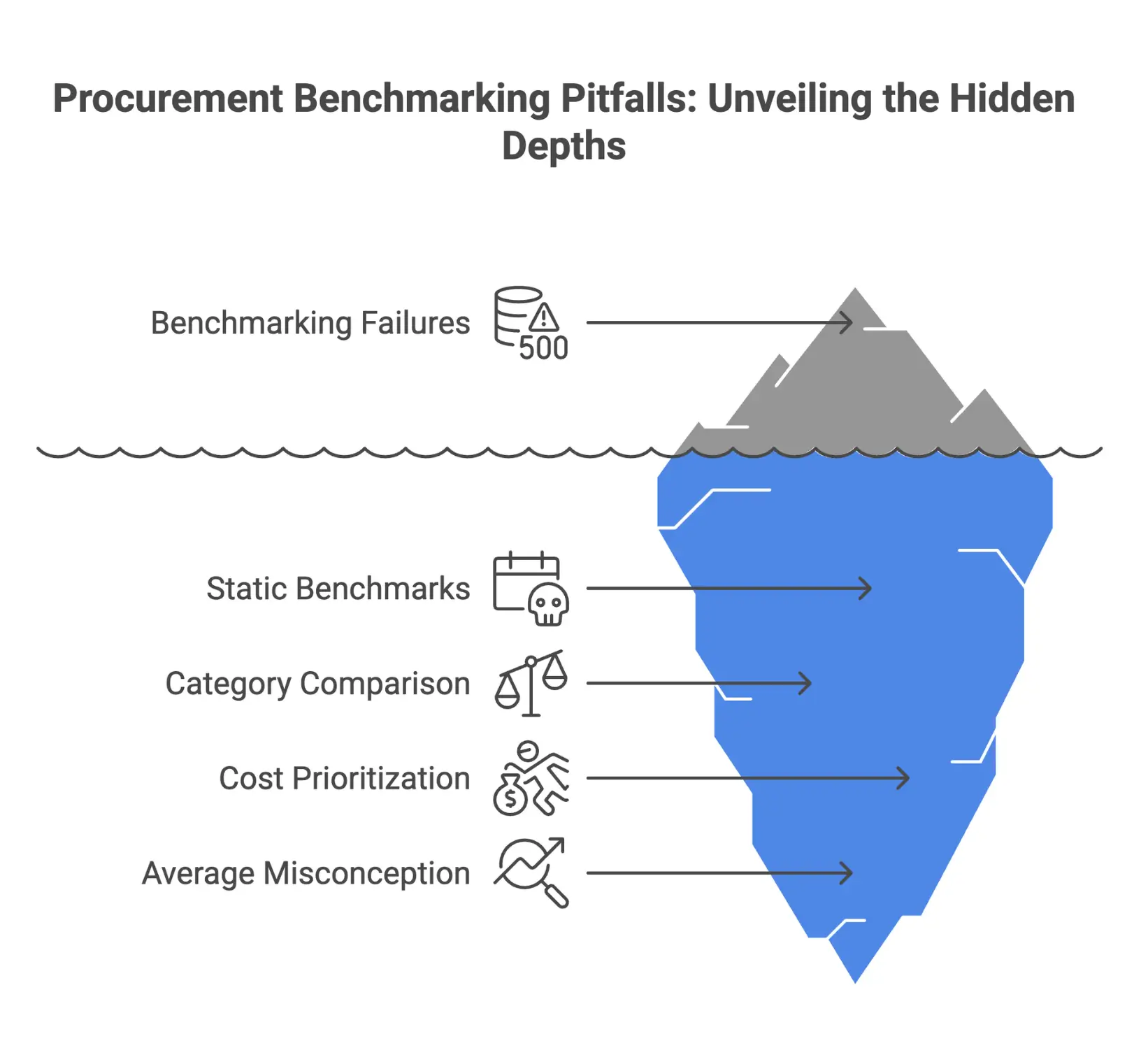
Benchmarking often fails when data quality is poor, when organizations measure irrelevant metrics, or when benchmarks are used as inflexible targets instead of learning tools.
Common mistakes include:
- Relying on static or outdated external benchmarks
- Comparing different spend categories without normalization for business environment or procurement maturity
- Prioritizing cost savings at the expense of quality, supplier reliability, or risk metrics, which leads to stakeholder frustration
- Mistaking averages for goals without considering company-specific improvement opportunities
Best-in-class procurement teams treat benchmark data as a jumping-off point for discussion, not a rigid scoreboard. They use effective benchmarking, centralize data, align across business units, and drive continuous improvement by re-evaluating metrics as markets and processes evolve.
Procurement Benchmarking Trends: Digital Transformation and Real-Time Analytics
Procurement benchmarking is evolving rapidly, powered by digital transformation and advanced analytics. Procurement professionals are moving from static annual check-ins to real-time benchmarking and continuous monitoring.
Digital procurement systems and AI estimating platforms now:
- Centralize fragmented procurement data for reliable benchmarking
- Enable real-time insight into cost, speed, risk management, and ESG performance
- Match external benchmarks to operational workflows for continuous improvement
- Expose bottlenecks and identify gaps before they become systemic issues
- Align procurement tech investments with measurable outcomes
- Track performance with predictive analytics and deeper benchmarking insights
Procurement benchmarking rooted in digital transformation keeps organizations agile, value-focused, and in sync with industry best practices.
Frequently Asked Questions: Benchmark Data and Best Practices
What are procurement benchmarks?
Procurement benchmarks are external reference points, standardized metrics and KPIs like cost savings, cycle time, contract compliance, and supplier performance, that let procurement teams compare results to industry standards, identify gaps, and guide improvement.
How does procurement benchmarking improve organizational performance?
Benchmarking in procurement makes performance measurable, comparable, and actionable. Teams use benchmark data to prioritize improvements, align with business units, and set targets that reflect both company objectives and market reality. Realistic, data-driven benchmarks sharpen decision-making and demonstrate procurement’s strategic impact.
How do you benchmark procurement against industry standards or best practices?
First, collect reliable internal data and standardize metrics. Next, compare this procurement data to external benchmarks from reputable organizations and industry leaders. Identify gaps, set improvement plans, and use continuous measurement cycles to track progress against industry best practices.
What are common pitfalls in procurement benchmarking?
Common pitfalls include poor data quality, outdated benchmarks, alignment gaps between finance and procurement, focusing too narrowly on cost, or measuring irrelevant metrics. Avoid these by using high-quality external data, mapping benchmarks to business strategy, and making benchmarking a continuous, multi-dimensional process.
How can digital tools support procurement benchmarking?
Digital procurement technology centralizes data, improves data quality, and enables real-time procurement benchmarking. Platforms like Nomitech’s CostOS automate KPI tracking, streamline data collection, and produce actionable insights that drive procurement excellence and operational efficiency.
Conclusion: Making the Most of Procurement Benchmarks for Continuous Improvement
Procurement benchmarking goes beyond measuring numbers. It powers cost control, strategic value, and organizational excellence. By consistently integrating benchmarking into daily procurement processes, organizations set themselves up for operational excellence and sharper business outcomes.
Key Takeaways and Next Steps for Procurement Teams
- Upgrade spend management: Boost spend under management, moving toward industry leader benchmarks for greater value and visibility. Cost benchmarking tools can help track and manage this process.
- Benchmark realistic savings and efficiency goals: Leading procurement teams save 8–12% of total spend. Set targets that fit market reality using external benchmarks.
- Align benchmarks across finance and procurement: Collaboration and data normalization are essential for reliable benchmarking results.
- Review procurement benchmarks regularly: Quarterly check-ins ensure continuous improvement, highlight process inefficiencies, and keep procurement performance current against evolving industry standards.
- Map procurement KPIs to strategy: Focus improvement efforts where your company’s procurement performance and business objectives intersect.
Treat procurement benchmarking as a continuous improvement journey. Repeatable processes, high-quality data, and alignment with business units ensure procurement evolves into a powerhouse of efficiency and strategic impact year after year.
Ready to Take the Next Step?
To elevate your procurement analytics and continuous improvement process, explore Nomitech’s full suite or get in touch to see how modern cost estimation and benchmarking software can help your procurement function identify performance gaps, deliver operational efficiency, and achieve procurement excellence.





Stay Up to Date
Subscribe to our Newsletter today and receive the latest updates, trends, expert insights, and exclusive offers tailored to your specific industry.