
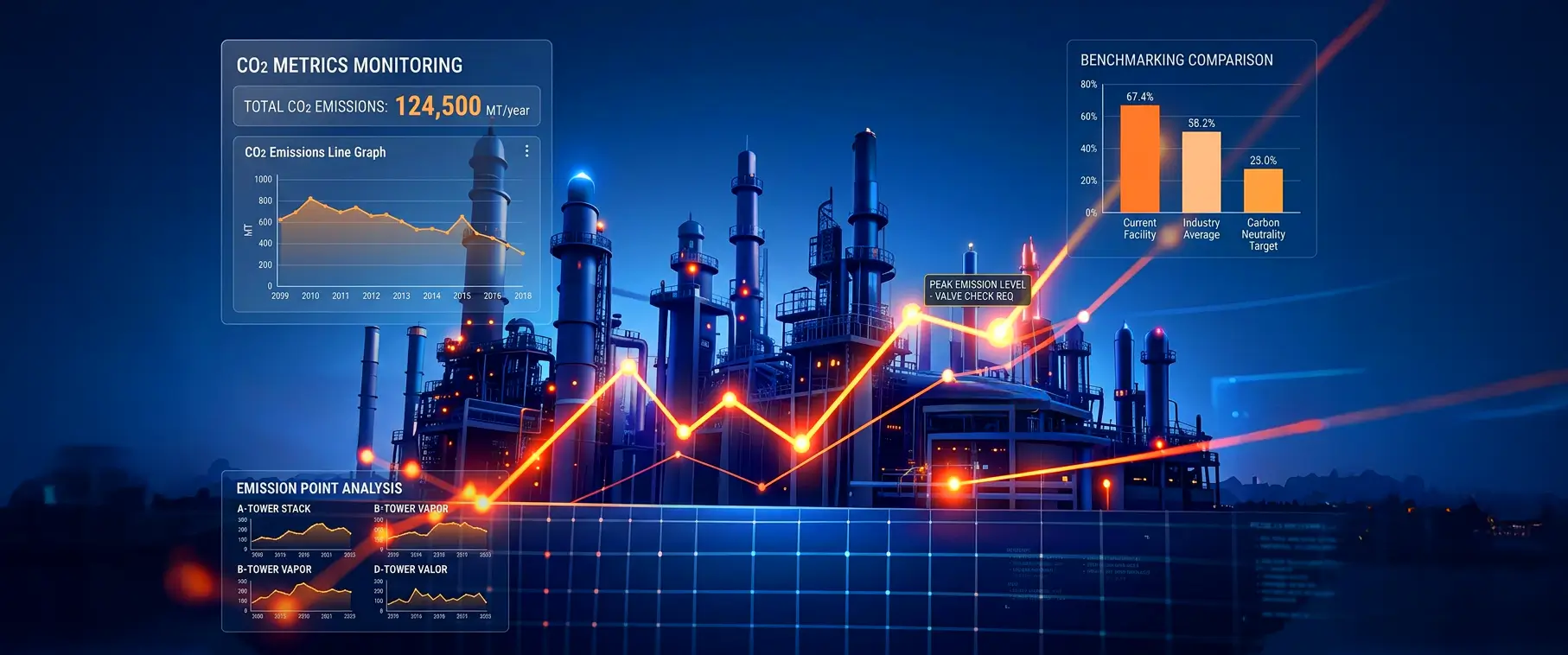
What Is Carbon Footprint Benchmarking? Complete Guide for Organizations
TL;DR: Carbon footprint benchmarking helps companies measure and compare their greenhouse gas emissions using structured data and industry standards. This article breaks down how benchmarking works, which frameworks to use, sector-specific examples, key challenges, and actionable steps to get started. It’s essential for organizations aiming to make credible sustainability improvements, drive transparent results, and meet regulatory requirements.
Ever feel like your company’s sustainability efforts are stuck in neutral simply because you don’t know where you really stand? In today’s business environment, genuine green outcomes, supported by clear data, are increasingly essential. Without a strong grasp of your carbon footprint, you risk missing new business, facing regulatory hurdles, and losing credibility with investors and customers.
Outdated or incomplete data and loose objectives turn sustainability strategy into a guessing game. As climate change accelerates and expectations rise, success hinges on meaningful, comparable numbers.
Carbon footprint benchmarking is the solution. It takes the uncertainty out of emissions tracking, offering the same data-driven control companies expect in finance or operations. Using benchmarking templates and automated platforms, you can measure performance, set realistic targets, and support environmental claims with hard numbers. This guide covers what carbon footprint benchmarking is, why it matters, trusted frameworks, sector examples, reporting best practices, challenges, and steps to get started. Let’s break it down.
What Is Carbon Footprint Benchmarking?
Carbon footprint benchmarking is the process of measuring, analyzing, and comparing carbon emissions, often expressed as carbon dioxide equivalents, across different entities or operations to identify opportunities for improvement. It enables organizations to assess their greenhouse gas emissions and see how they compare to industry averages, global emissions, or leading peers. Instead of aiming in the dark, benchmarking provides structure and clarity, guiding carbon management and reporting.
For instance, Meegle offers a Carbon Footprint Benchmarking Template that streamlines emissions data collection. With such tools, companies standardize their emissions data, enabling fair comparisons across the same sector. If you operate in construction or infrastructure, cost benchmarking tools with embedded carbon accounting integrate financial and environmental performance, revealing both cost savings and emissions reductions opportunities.
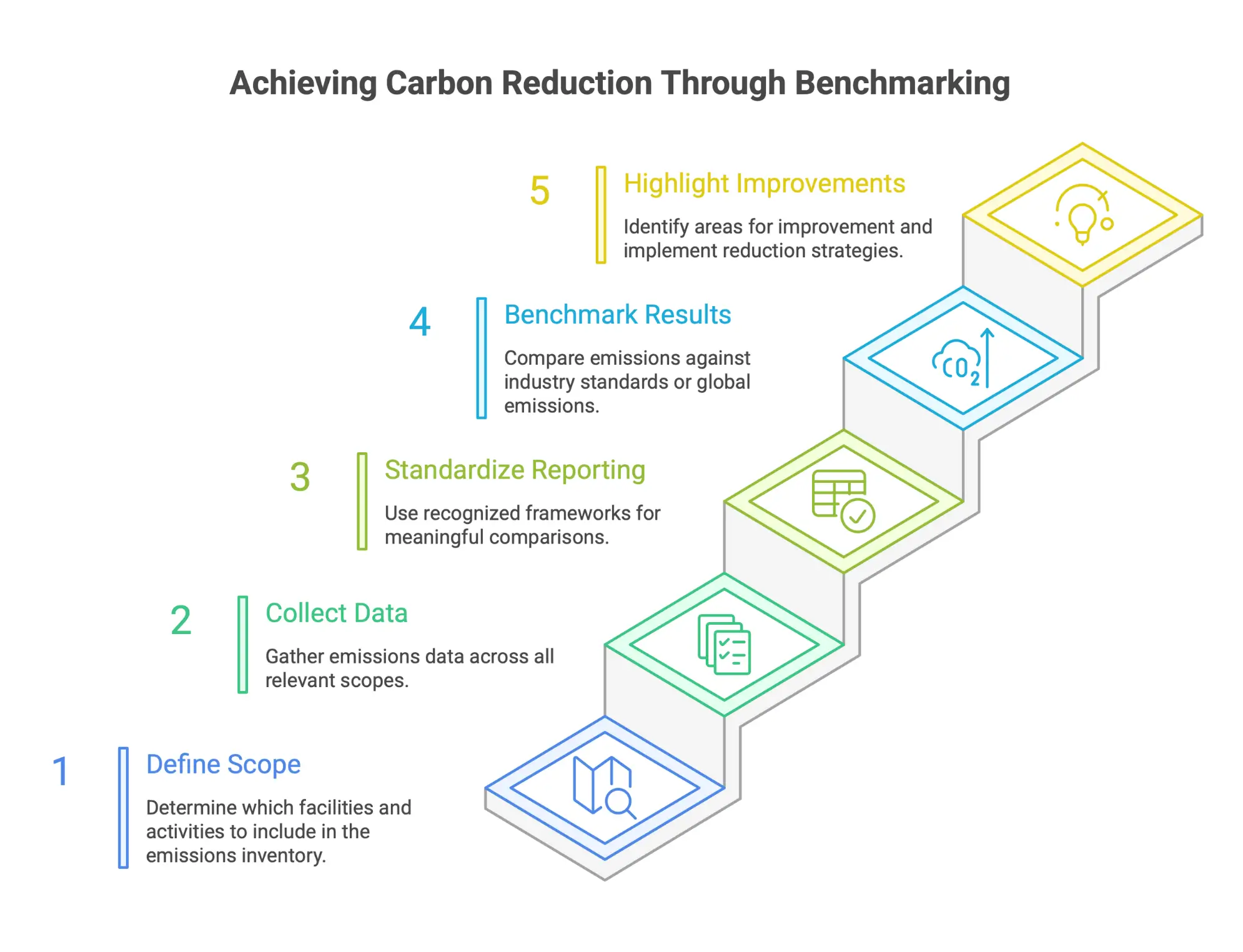
The benchmarking process generally includes these steps:
- Define the scope, decide which facilities, assets, and activities to include in your emissions inventory
- Collect emissions data across all relevant emission scopes (direct, indirect, and other indirect emissions)
- Standardize reporting using recognized frameworks for meaningful comparisons
- Benchmark your results against industry standards or global carbon emissions
- Highlight areas for improvement, set realistic targets, and implement strategies to reduce emissions
A carbon footprint measures total greenhouse gas emissions resulting from human activities over the entire lifecycle of a product, service, or organization. Benchmarking turns those measures into structured, actionable insights.
Why Benchmark Carbon Footprints and Carbon Emissions?
Why go beyond simply reporting emissions? Benchmarking carbon footprints isn’t just about keeping score. It’s central to reducing greenhouse gas emissions and delivering a strong sustainability strategy.
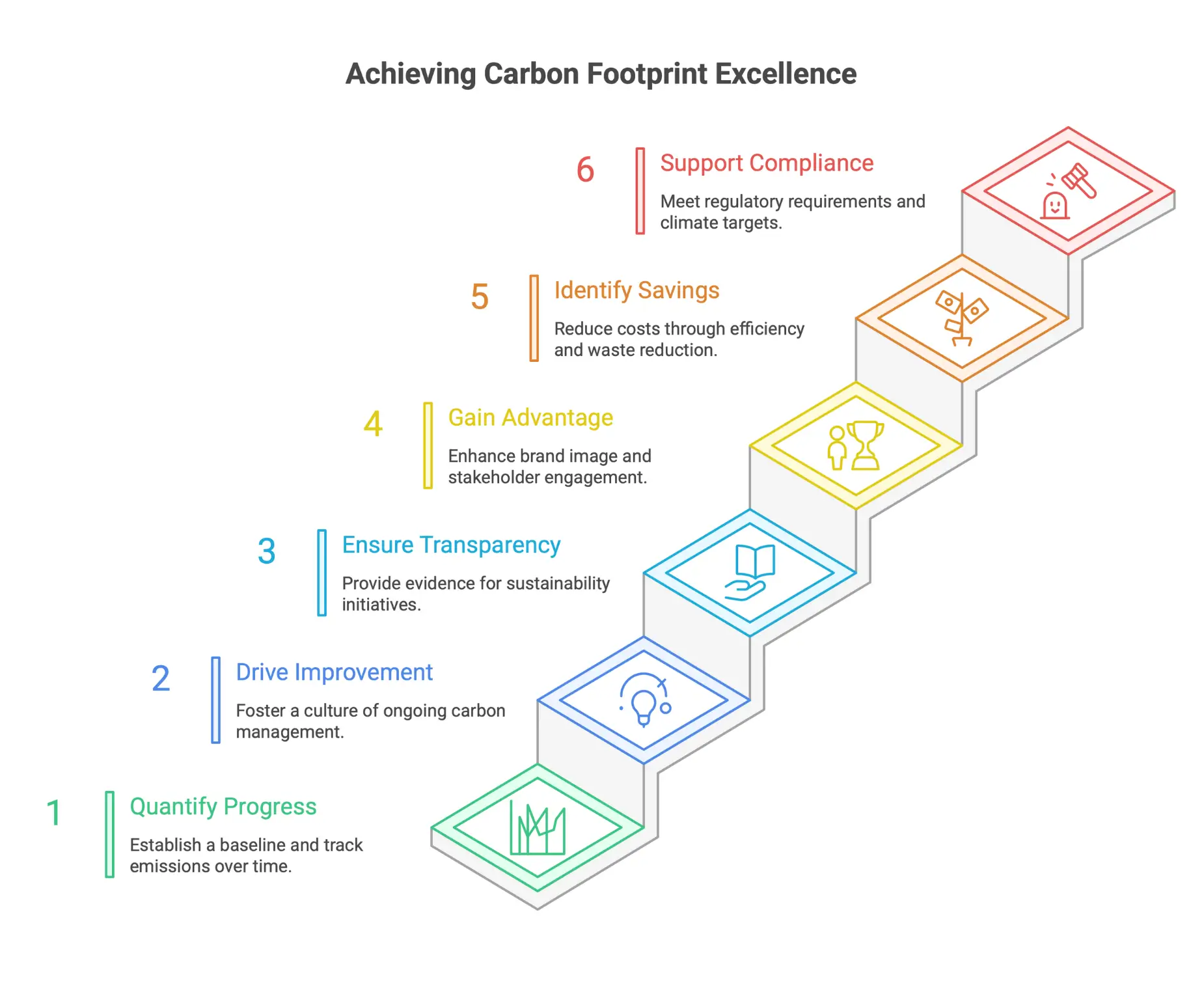
Key Benefits of Benchmarking Carbon Footprints
- Quantifies Progress: Provides a credible baseline for setting achievable targets and tracking progress over time.
- Drives Continuous Improvement: Highlights trends in emissions and supports a culture of ongoing enhancement in carbon management.
- Ensures Transparency & Accountability: Supplies evidence for sustainability initiatives and climate commitments.
- Competitive Advantage: Reveals how your carbon footprint stacks up against industry benchmarks, supporting stakeholder engagement, regulatory compliance, and positive brand image.
- Identifies Cost Savings: Pinpoints inefficiencies and energy waste, leading to significant reductions in both emissions and operational expenses.
- Supports Regulatory and Policy Compliance: Offers a transparent process for meeting requirements like the Paris Agreement targets and evolving local or global mandates.
Benchmarking for Action
Carbon benchmarking studies reveal opportunities for reducing embodied carbon emissions (the total carbon emitted over a product or building’s entire lifecycle), particularly in the building and manufacturing sectors. By benchmarking carbon footprints against industry standards, businesses identify operational practices and technologies that can drive emissions reductions, cost savings, and meaningful progress toward sustainability goals.
The Frameworks and Industry Standards Behind Benchmarking Efforts
Getting meaningful results means following rules that everyone trusts. Standardized frameworks are the backbone of effective carbon benchmarking, transforming raw data into actionable insights.
Overview of Key Carbon Footprint Frameworks
- Greenhouse Gas Protocol: Categorizes emissions into Scope 1 (direct emissions), Scope 2 (purchased energy), and Scope 3 (all other indirect emissions such as those from supply chains).
- ISO 14065 Accreditation: Used by leaders like CarboNZero and CEMARS, ensuring internationally credible emissions reporting.
- Meegle and Digital Tools: Templates and benchmarking software standardize data collection, support comprehensive data collection and facilitate easier comparison with industry averages.
Accurate data collection is fundamental for any company aiming to assess and benchmark its carbon footprint effectively. These frameworks ensure the data collected is robust, consistent, and defensible across benchmarking efforts.
Internationally Accredited Benchmarking Schemes
Programs like CarboNZero and CEMARS provide accredited carbon footprint benchmarking. Their validation under ISO 14065 attests to their strict methodologies. According to Wikipedia, these programs guide organizations from emissions accounting through to third-party certification and offsetting, enabling true carbon neutrality.
Third-party verification audits not only build trust with stakeholders, they create a solid foundation for long-term improvement.
Industry-Specific Benchmarking Methodologies
- Manufacturing Sector: Responsible for 20% of global greenhouse gas emissions and half of energy consumption, using tailored benchmarking to optimize processes and reduce emissions.
- Building Sector: Carbon benchmarking helps reduce embodied carbon through life cycle assessment and smarter use of construction materials.
- Technology and Infrastructure: Digital benchmarking leverages advanced technologies and cost estimation best practices for operational and environmental performance tracking.
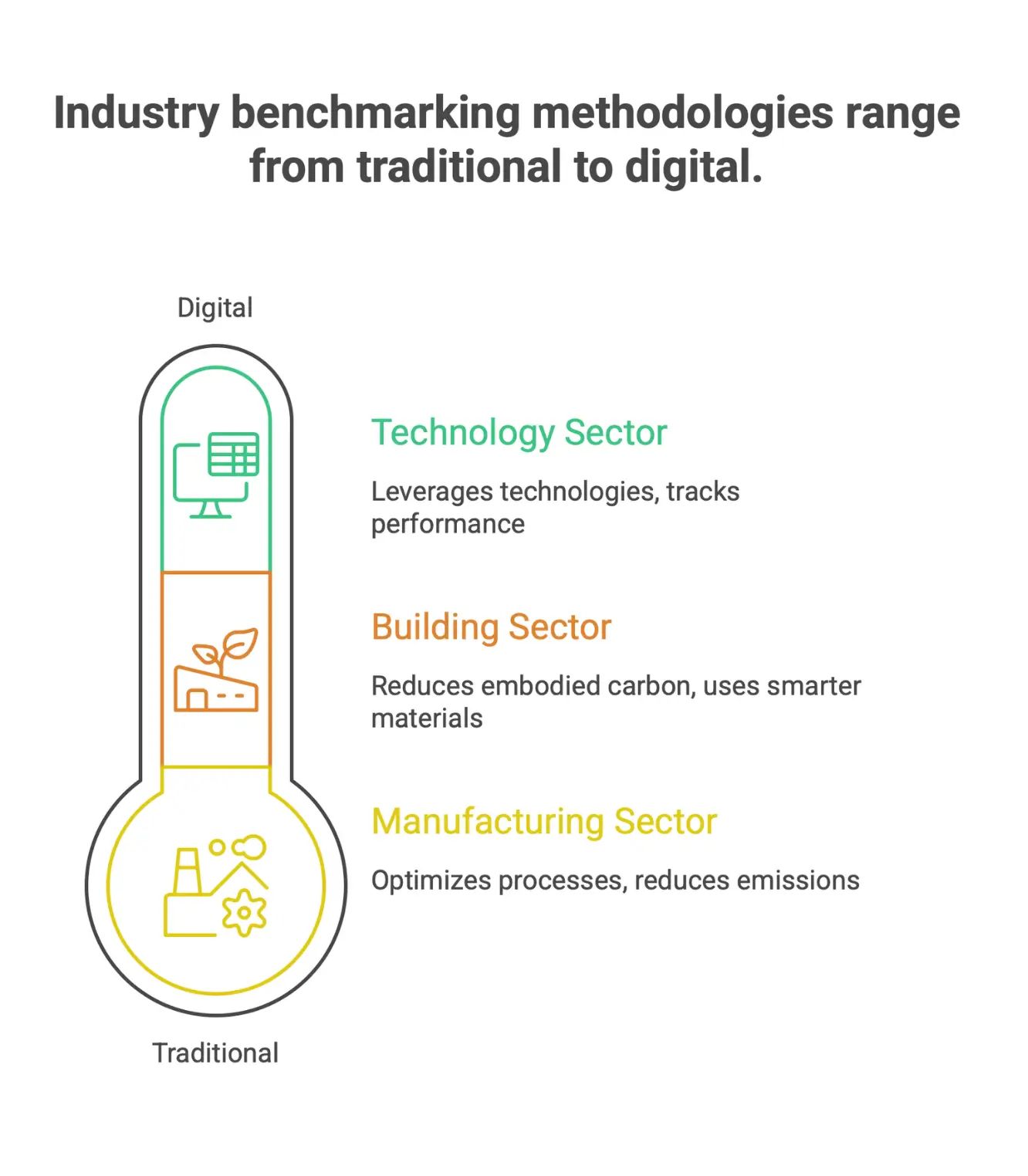
Templates and digital benchmarking tools from providers like Meegle and Nomitech ensure that industry standards and sector-specific challenges are addressed with relevant, comparable data.
The Importance of Carbon Benchmarking in Environmental Sustainability
The significance of carbon benchmarking in addressing global greenhouse gas emissions cannot be overstated. As businesses grapple with climate change and mounting environmental pressures, carbon benchmarking provides a structured, transparent approach to emissions management.
By setting industry benchmarks and establishing clear baselines, organizations can:
- Quantify and compare emissions from their own operations and supply chains
- Track progress over time to foster continuous improvement in carbon management
- Proactively meet regulatory requirements and market expectations
- Highlight areas for innovation, efficiency improvements, and emissions reductions
Benchmarking carbon footprints fosters transparency, accountability, and sustainability progress across sectors, helping mitigate the broader impacts of climate change.
How Organizations Use Carbon Benchmarking Tools and Reports
Organizations in every industry use benchmarking tools to understand, manage, and decrease their carbon footprint. Accurate carbon emissions data supports everything from internal strategy to external reporting and stakeholder engagement.
Structuring and Customizing Reports
Transparent and consistent reporting is essential for driving positive environmental impacts. For example, the Kuwait Finance House Carbon Footprint Report 2024 demonstrates multi-year emissions trends, operational boundaries, and emissions sources.
Best practices for benchmarking reporting include:
- Defined timeframes for fair comparison
- Comprehensive data collection specifying emissions scopes and sources
- Industry benchmarks to contextualize progress
- Regular reviews and updates to capture meaningful trends
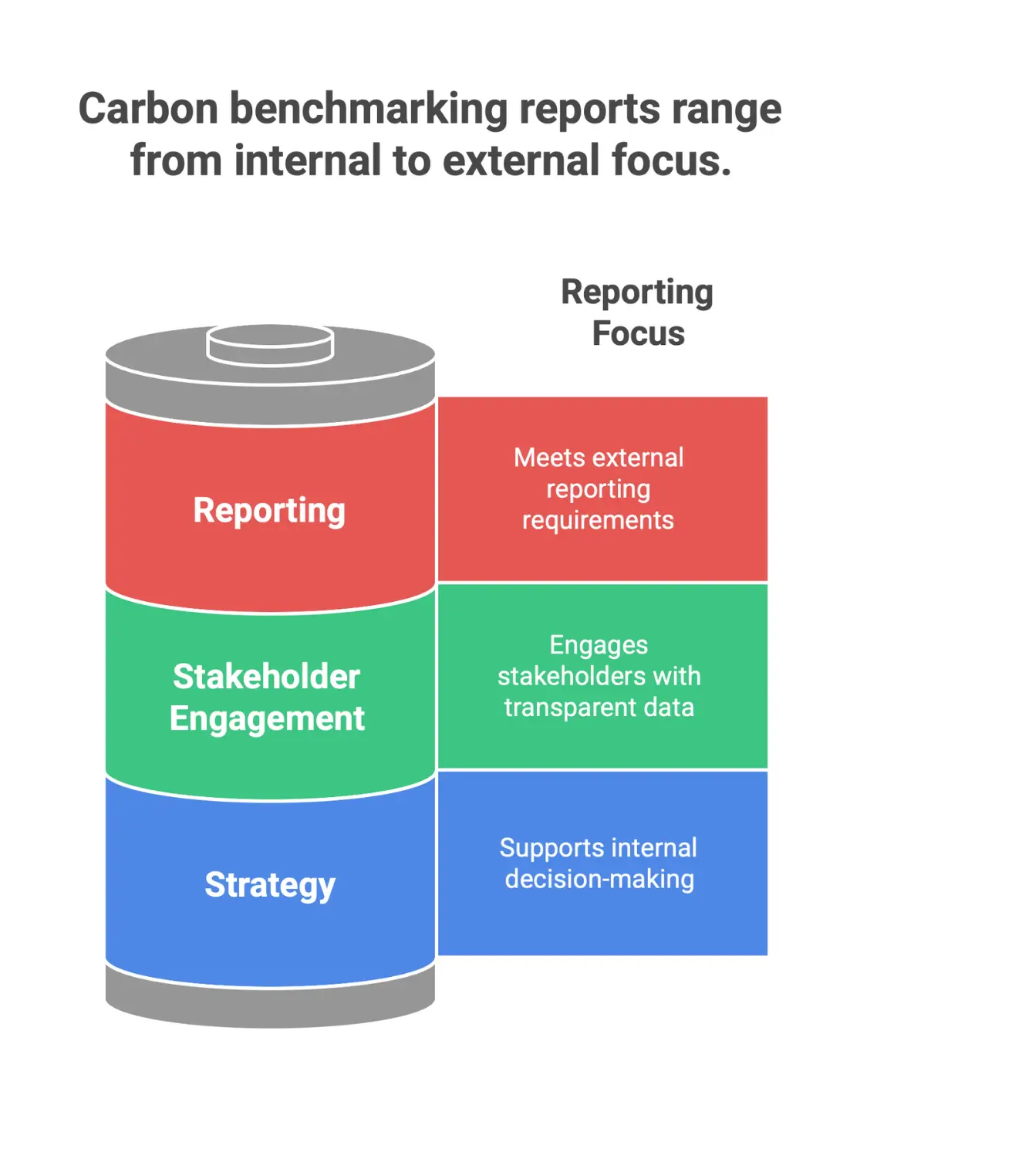
Sustainability dashboards and third-party tools, such as those from Nomitech, allow companies to compare carbon footprint data against industry averages, facilitating continuous improvement.
Systematic Emissions Data Collection and Analysis
Effective benchmarking follows strict data discipline. Standardized emissions data entry ensures that key performance indicators are comparable across teams, facilities, and time periods.
Tools such as the Meegle Benchmarking Template standardize data collection and enable organizations to track progress and highlight operational practices that need refinement. Data quality issues or incomplete data can significantly compromise results, so robust data governance is non-negotiable.
Linking environmental benchmarking with a centralized cost estimating database provides a holistic view of both emissions and cost drivers, enabling better-informed decisions and prioritizing investments that lead to significant cost savings and emissions reductions.
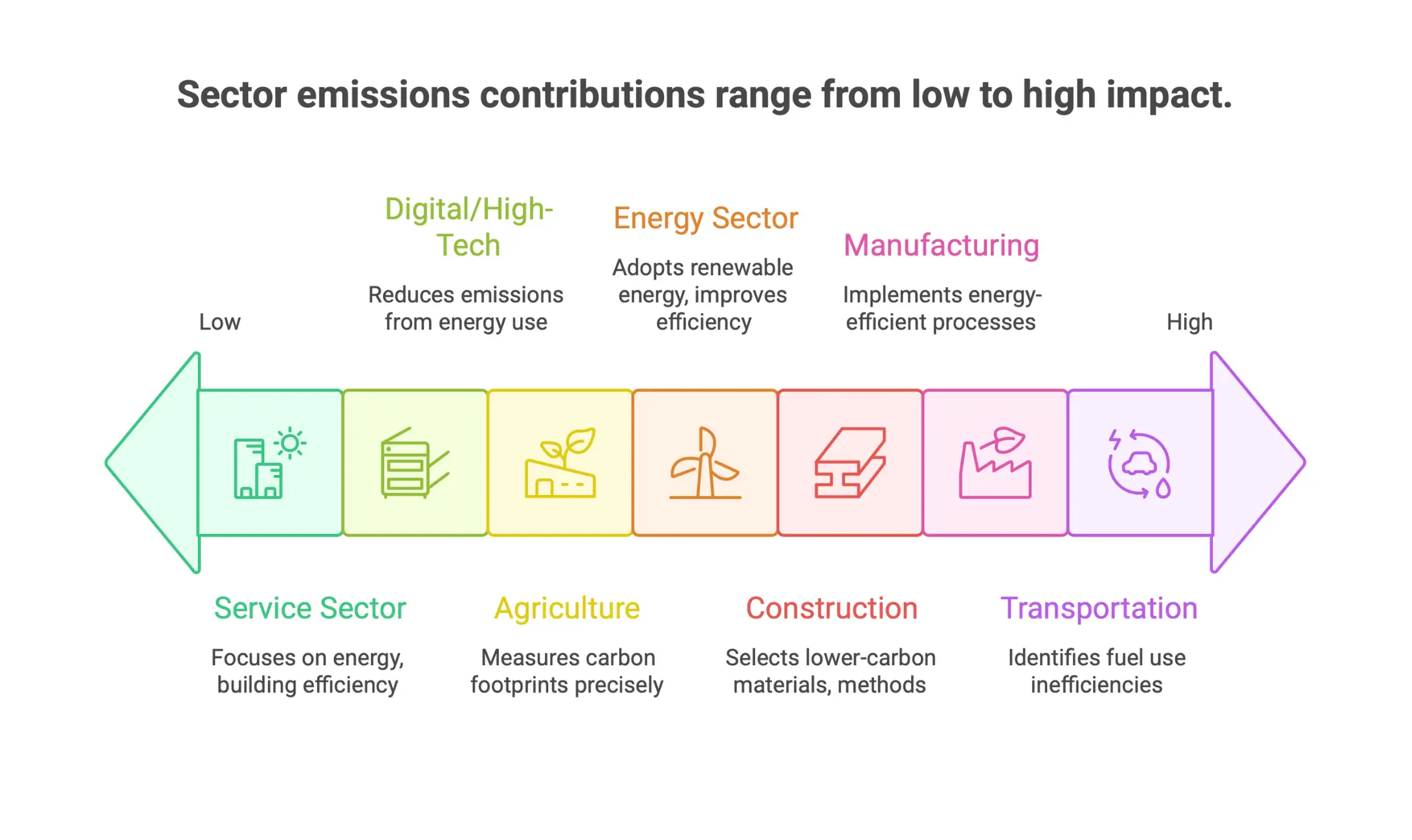
Sector Emissions Contributions and Carbon Benchmarking Use Cases
Benchmarking is a cross-sector effort, with each industry addressing unique operational, regulatory, and technological hurdles and opportunities.
Energy Sector
The energy sector is a major source of greenhouse gas emissions, contributing about 1.8% of total U.S. emissions in 2021. Benchmarking helps companies adopt renewable energy sources, improve energy efficiency, and track progress against environmental goals.
Manufacturing Sector and Embodied Carbon
The manufacturing sector accounts for one-fifth of global emissions and uses roughly half the world’s energy. By benchmarking carbon emissions and embodied carbon from raw materials to final products, manufacturers can compare against industry standards, implement more energy efficient processes, and achieve meaningful emissions reductions.
Transportation Sector
Transportation produced around 29% of U.S. emissions in 2021, mainly from light-duty trucks and passenger cars (about 60%). Benchmarking uncovers inefficiencies in fuel use and logistics, helping identify realistic targets for emissions reductions across fleets and supply chains.
Agriculture and Controlled Environment Facilities
Agriculture is responsible for approximately 19% of global emissions and 10.6% of total U.S. greenhouse gas emissions in 2021. In sectors such as greenhouse-grown produce and cannabis, benchmarking carbon footprints enables precise measurement and innovation in operational practices, as seen in the Glass House Group report.
Service Sector
The service sector contributes over one-third of industrial greenhouse gas emissions in the U.S., playing a significant role in the country’s overall carbon footprint. Carbon footprint benchmarking in service industries often focuses on energy consumption, building efficiency, and supply chain sustainability.
Construction and Buildings: Managing Embodied Carbon
Construction is notorious for high embodied carbon, especially from materials like steel and concrete. Benchmarking carbon footprints through life cycle assessment enables teams to select lower-carbon construction materials and methods. A ScienceDirect study found that prefabricated steel buildings reduced embodied carbon by 7.1% compared to traditional structures. Using benchmarking carbon footprints, companies can make informed choices that align financial and carbon management.
Benchmarking in Digital and High-Tech Environments
ICT infrastructure, such as data centers, carries a growing environmental impact. Benchmarking digital carbon footprints helps model and reduce emissions from energy use and operational practices. Batsim’s carbon calculation plugin enables companies to simulate the impacts of technology changes on carbon footprint before implementing them. Integrating AI-powered cost estimating and carbon management supports the drive toward reduced waste and optimized workflows.
The Carbon Benchmarking Process and Best Practices
Importance of Comprehensive Data Collection
Collecting accurate and comprehensive emissions data across the entire lifecycle, from supply chains to end-of-life, is essential. Data should include energy consumption, process emissions, waste, logistics, and use-phase impacts, converted to carbon dioxide equivalents using established emissions factors.
Engaging Stakeholders
Engaging stakeholders in the benchmarking process promotes transparency and accountability. Input from internal teams, suppliers, regulators, and external partners strengthens the credibility of emissions data and the effectiveness of sustainability efforts. Regularly disclosing methodologies and results ensures that the entire organization and its stakeholders are aligned with environmental goals.
Benchmarking Tools and Key Performance Indicators
Benchmarking uses key performance indicators to track progress and support strategic decision making. Performance can be measured by industry benchmarks, carbon intensity (emissions per unit of activity), or comparison to peers in the same sector. Using third-party tools and sustainability dashboards enables real-time tracking of achievements and areas for improvement.
Third-Party Verification and Reporting
Verification by accredited third parties boosts confidence in reported results, reduces data quality issues, and ensures compliance with industry standards and regulatory requirements. Transparent reporting should always include clear boundaries, detailed emissions sources, and a disclosure of methodologies.
Continuous Improvement and Carbon Management
Companies that benchmark regularly are better positioned to adjust practices, prioritize investments in renewable energy or advanced technologies, and drive continuous improvement in their environmental performance. This ongoing cycle, measure, compare, improve, not only supports compliance but also fosters innovation and resilience.
Overcoming Challenges in Carbon Footprint Benchmarking Efforts
Though foundational, benchmarking is not without hurdles. Common challenges include:
- Defining Boundaries and Emission Scopes: Clear boundary setting determines what’s included in emissions tracking; vague or shifting definitions lead to inconsistent comparisons.
- Data Quality and Completeness: Incomplete data, poor data quality, or inconsistent methodologies undermine results and slow progress.
- Sector-Specific Variations and Industry Norms: Each industry has unique processes, seasonal or operational factors, and regulatory requirements, so tailoring the benchmarking process is crucial.
- Cost and Resource Demands: Comprehensive data collection and analysis can be resource-intensive without the right tools or expertise.
- Resistance to Change: Adoption of new benchmarking and reporting standards can face internal resistance, especially where it impacts operational practices.
Tackling these issues head-on, with technology, verified frameworks, and active stakeholder engagement, enables meaningful progress.
Getting Started: Steps for Effective Carbon Footprint Benchmarking
1. Set Clear Objectives and Prepare for Data Collection
Begin by articulating what you want to achieve, whether regulatory compliance, cost savings, improved stakeholder trust, or environmental branding. Identify all emissions sources and set organization-wide boundaries.
2. Choose Benchmarking Frameworks and Templates
Adopt proven templates, such as those offered by Meegle, to guide data collection, reporting, and analysis. For project-driven organizations, coupling sustainability with cost estimation best practices enables more efficient benchmarking of both environmental and financial performance.
3. Leverage Software Tools for Data Management
Utilize digital benchmarking platforms for comprehensive data collection, consistent calculations, and transparent reporting. Link carbon accounting with financial databases for a holistic view.
4. Ensure Third-Party Accreditation
Build credibility by having results audited by accredited organizations such as CarboNZero or CEMARS. Third-party certification demonstrates compliance with ISO 14065 and similar industry standards.
5. Engage Stakeholders in Benchmarking Efforts
Involve key teams, partners, and external stakeholders in reviewing and refining your carbon footprint measures. This strengthens both process and outcomes.
6. Communicate Outcomes Clearly
Effective reporting should document progress, challenges, and next steps. Include methodologies, boundaries, emissions data sources, and industry averages to foster transparency and comparability.
7. Review, Improve, and Repeat
Regularly update your benchmarking process as business, industry, and regulatory demands evolve. Integrate lessons learned into continuous improvement cycles and set more ambitious targets as you develop expertise.
Frequently Asked Questions
What is carbon footprint benchmarking and why does it matter?
Carbon footprint benchmarking is the process of measuring your company’s greenhouse gas emissions and comparing them with peers or industry leaders. This benchmarking process creates a hard baseline for setting credible goals, evaluating progress, and communicating results to stakeholders. It is essential for identifying opportunities for emissions reductions, optimizing operational practices, and fulfilling regulatory requirements.
What frameworks or standards should companies use for credible benchmarking?
Companies should use gold-standard frameworks like CarboNZero and CEMARS, both ISO 14065 accredited. Templates from providers such as Meegle help ensure consistent, comparable, and reliable emissions data collection.
How do organizations turn benchmarking data into actionable results?
With standardized data, organizations can benchmark carbon footprints, assess their carbon intensity against industry benchmarks, and track progress with key performance indicators. This visibility enables practical target setting, cost savings, and continuous improvement.
What industries benefit most from carbon footprint benchmarking?
Construction, manufacturing, banking, energy, agriculture, transportation, and digital infrastructure all derive significant value by benchmarking carbon emissions. Each sector tailors benchmarks to fit unique operational and regulatory requirements, supporting both compliance and competitiveness.
What are the biggest challenges in carbon footprint benchmarking?
Setting precise boundaries, standardizing emissions data, managing data quality, and adjusting to sector-specific differences are the main challenges. Addressing these ensures benchmarking supports meaningful, lasting progress in emissions reductions.
Conclusion
Carbon footprint benchmarking bridges the gap between sustainability ambitions and tangible results. By using trusted frameworks, industry standards, third-party certification, and consistent reporting, organizations make decisions that benefit both their bottom line and the environment. As climate expectations rise, carbon benchmarking becomes the foundation for real progress, enabling transparent environmental performance, regulatory compliance, and industry leadership.
Ready to Take the Next Step?
Looking into cost estimation tools that support your sustainability efforts? Explore Nomitech’s full suite or contact our team to find the option that fits your workflow.




Stay Up to Date
Subscribe to our Newsletter today and receive the latest updates, trends, expert insights, and exclusive offers tailored to your specific industry.