

Cost Benchmarking vs Forecasting: Which Improves Cost Control?
TL;DR: Cost benchmarking stacks your project costs against industry standards, highlighting where you can improve. Forecasting, meanwhile, predicts future costs by analyzing current trends and data. Using both methods together gives you a solid baseline plus real-time adjustments, helping teams gain better cost control and boost project outcomes.
Introduction: Understanding Cost Benchmarking and Forecasting in Cost Management
If you’ve managed a project, you know the drill: deadlines are tight, costs start creeping up, and the market never sits still. Teams are pushed to deliver on budget and somehow stay ahead, even while battling uncertain prices and scattered information. When you’re short on reliable data, financial control can quickly slip away.
Cost management is under more pressure than ever. Prices are rising, requirements change on the fly, and project managers struggle with dozens of spreadsheets just to keep up. In this climate, just getting close to your budget isn’t enough. You need to justify every dollar and identify cost saving opportunities with confidence.
That’s where cost benchmarking vs forecasting finally step into the spotlight. These cost estimation methods, powered by tools like CostOS, let you combine benchmarking data, forecast future costs, and keep all your numbers in one place for better expense tracking and decision making. With the right framework, project teams and finance teams get the full picture: where you stand, what’s next, and how to make data driven choices for continuous improvement in project performance.
Wondering if it’s time to update your cost control strategy? Dive in to learn how cost benchmarking and forecasting help build resilient financial plans, support continuous monitoring, and transform project management for major projects—from early planning to final delivery.
Defining Cost Benchmarking and Forecasting
What Is Cost Benchmarking?
Cost benchmarking is about holding your project costs up to industry benchmarks, historical data, or best-in-class practices. You compare your own actual costs to sector averages, similar projects, or market standards, aiming to pinpoint gaps and inefficiencies. This isn’t just about slashing budgets but about using the benchmarking process to highlight general and administrative costs, procurement prices, or resource allocation patterns, spotting opportunities for operational efficiency and improvement. As MetricNet illustrates, true cost benchmarking relies on hard benchmarking data instead of hunches to guide cost control and accurate cost estimates.
Modern organizations typically use two types of benchmarking process: internal benchmarking (comparing internal business units to drive continuous improvement) and external benchmarking (comparing with industry leaders and peers to evaluate competitiveness when entering new markets or launching products). Data collection sits at the heart of all this, requiring the cleaning, analyzing, and validation of internal records, published standards, and external industry benchmarks to ensure your comparisons are truly apples-to-apples.
If you want to streamline data-driven benchmarking, benchmarking software can support the process across complex projects and multiple industries.
What Is Forecasting?
Forecasting takes a different tack. Rather than giving you a single static comparison, forecasting keeps your financial outlook dynamic, continuously updating project costs and future costs based on current data and historical trends. This forecasting process uses regular data collection, statistical methods, and predictive analytics to anticipate how project scope, market conditions, and resource utilization might alter your cost profile.
As CFO Shortlist highlights, forecasting thrives in environments that never stand still. Project managers can adjust forecasts and plans as soon as new information emerges, offering real-time budget control, reducing the risk of cost overruns, and supporting agile strategic planning.
To get forecasting right, you need accurate internal historical data, structured cost estimation, and frequent analysis of market trends and performance indicators.
When brought together, cost benchmarking vs forecasting create a framework for accurate budgets, informed decisions, and continuous forecasting throughout the project lifecycle.
Cost Benchmarking vs Forecasting: Key Concepts and Approaches
Cost Benchmarking: Setting the Standard for Project Costs
Key Objectives, Data Collection, and Benefits
The benchmarking process gives project managers real visibility into their competitive position and actual spending habits. By comparing actual costs of construction projects or business units with established industry benchmarks, historical data, and similar projects, organizations identify cost drivers, production costs, and budget targets that matter most. Benchmarking highlights inefficiencies within operational costs such as procurement or G&A and guides resource allocation while ensuring a sustainable price-to-cost ratio. This is crucial when entering new markets.
It’s the data collection and cleaning that enable trustworthy benchmarking results, using a combination of internal records, external benchmarks, and published industry standards. Without reliable data, benchmarking data lacks context, increases potential financial risks, and can even lead to misleading conclusions.
The biggest payoffs of benchmarking come in three forms:
- Uncovering precise areas for cost improvement
- Setting actionable, evidence-based performance goals
- Driving organizational accountability for cost efficiency and budget control
Regular benchmarking cycles guide continuous improvement, operational efficiency, and cost management across the business.
Internal vs. External Benchmarking
Organizations typically use two main benchmarking process types:
- Internal Benchmarking: Comparing cost and operational data between business units to spot cost drivers, identify trends, and drive continuous improvement within the organization.
- External Benchmarking: Comparing your benchmarks against industry leaders, competitors, or established external benchmarks to evaluate your cost structure and project costs versus the market.
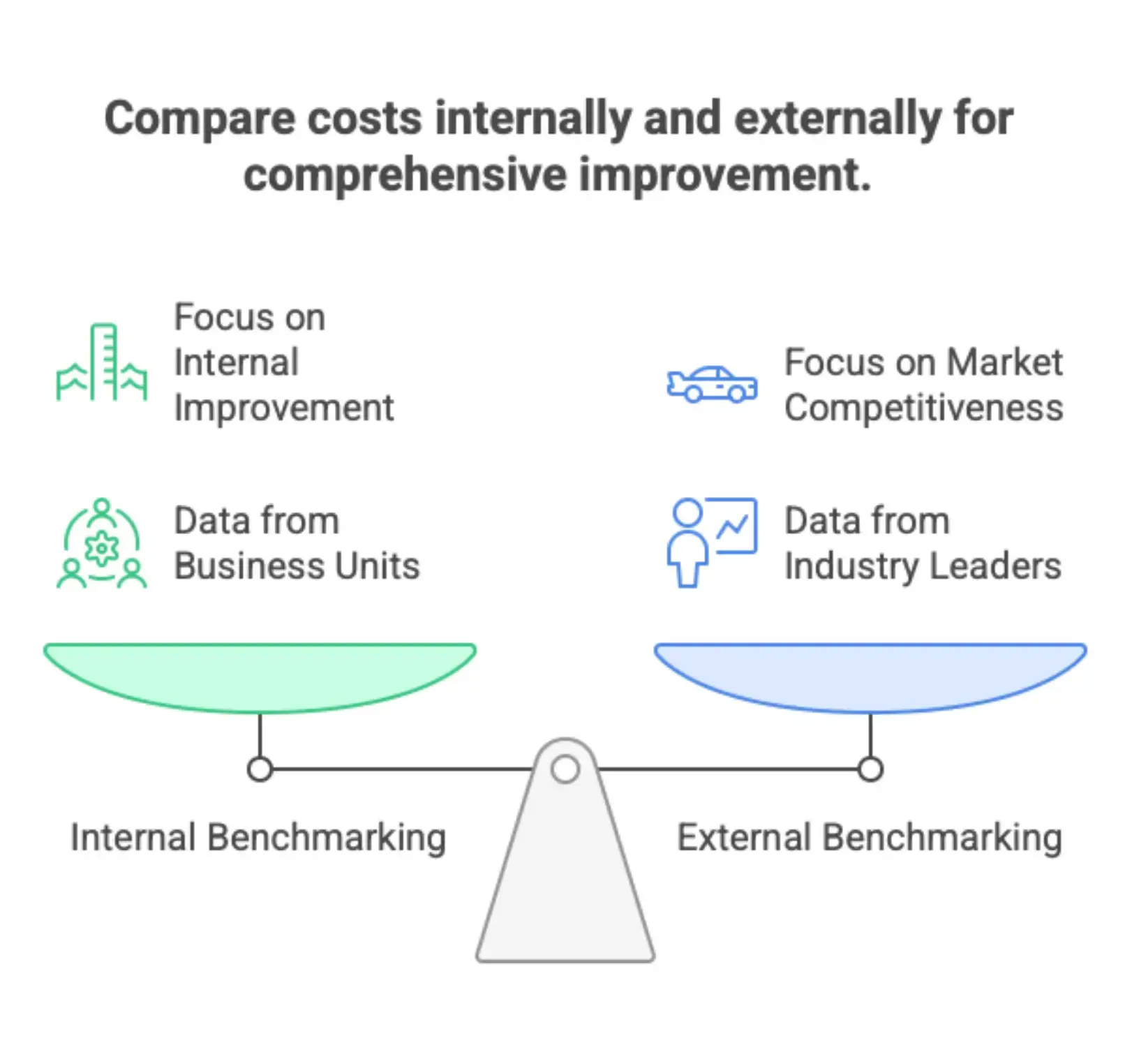
This two-track approach ensures you’re always pushing for higher standards both internally and against the broader market.
Types and Depth of Benchmarking Data
There’s basic benchmarking, good for quick checks and detecting outliers, and there’s full-scale, data-driven benchmarking, which pulls in detailed analytics, historical data, and cost drivers for deep dives and strategic initiatives. The more robust your data collection and benchmarking process, the sharper your actionable insights.
See the Office of Rail and Road for more guidance on benchmarking data quality and context.
Forecasting: Navigating Dynamic Decision Making and Project Performance
The Value of Forecasting Techniques and Forecasting Accuracy
Unlike rigid annual budgets, forecasting techniques such as moving average analysis or predictive analytics allow project teams to adjust forecasts and plans without delay. Continuous monitoring of market trends and actual costs ensures you always have a realistic picture for operational decision making, cost control, and resource allocation.
Forecasting isn’t just about big-picture planning. It’s about running reliable, real-time forecasts that support informed decisions and rapid responses to change. When supply chain snags or pricing shocks hit, accurate forecasts help project managers react quickly, allocate resources efficiently, and avoid potential financial risks.
Forecasting accuracy improves over time with better data collection and modeling. By benchmarking forecast results against industry benchmarks, you spot where your forecasting process shines or where it needs work. Tools for cost estimating software now bring together performance reviews, benchmarking data, and financial planning for complete visibility.
Forecasting in Cost Management
Effective forecasting depends on accurate historical data and clear project requirements. A structured approach covers:
- Data collection and cleaning
- Defining project scope
- Analyzing historical data for trends in project costs and resource utilization
- Estimating requirements and using analytics tools
- Continuous monitoring and rapid adaptation to market conditions and project scope changes
Forecasting supports risk management, helps anticipate cash flow needs, and guides how you allocate resources throughout the project lifecycle.
Continuous Forecasting and Performance Measurement
Continuous forecasting and regular monthly reviews make forecasting a living process. By comparing actual spending to the forecast and identifying variances, project teams refine future projections. Using industry benchmarks and historical data sharpens your forecasting accuracy, helping you keep budgets on track and avoid overruns.
Differences and Practical Application: Cost Benchmarking vs Forecasting
Benchmarks vs Projections in Strategic Decision Making
Cost benchmarking and forecasting serve different purposes in strategic decision making:
- Cost Benchmarking: Compares your performance to external benchmarks and industry standards. It’s grounded in data driven comparisons of actual costs, useful for setting baselines and exposing cost saving opportunities.
- Forecasting: Projects future costs based on up-to-date internal data, historical data, and assumption-driven analysis. Useful for anticipating changes, directing resource allocation, and identifying potential financial risks.
Benchmarking is a snapshot; forecasting is a movie playing out in real time. Where benchmarking provides a stable reference, forecasting gives the agility to adjust plans and inform continuous improvement.
You don’t need to pick just one. Integrating benchmarking data into your forecasting cycle provides a complete toolkit for budget control, proactive risk management, and operational excellence.
The Benchmarking Process in Practice: Use Cases for Project Management
Industry Benchmarking for Identifying Cost Drivers and Cost Efficiency
Industry benchmarking is essential for organizations looking to run leaner. When you compare actual costs to industry benchmarks, inefficiencies become visible, whether those are in procurement, resource allocation, or operational costs. As MetricNet notes, this benchmarking process identifies competitive gaps and turns vague goals into measurable, actionable plans.
Benchmarking is especially valuable for major projects or when launching new products. It tests your price-to-cost ratios in new markets and helps maintain a sustainable position versus the competition.
Typical steps in the benchmarking process include:
- Collecting and cleaning cost data from internal records and external industry benchmarks
- Comparing actual costs and production costs across projects or units
- Pinpointing cost drivers and inefficiencies
- Developing targeted cost control and resource allocation plans
- Monitoring progress through continuous improvement cycles
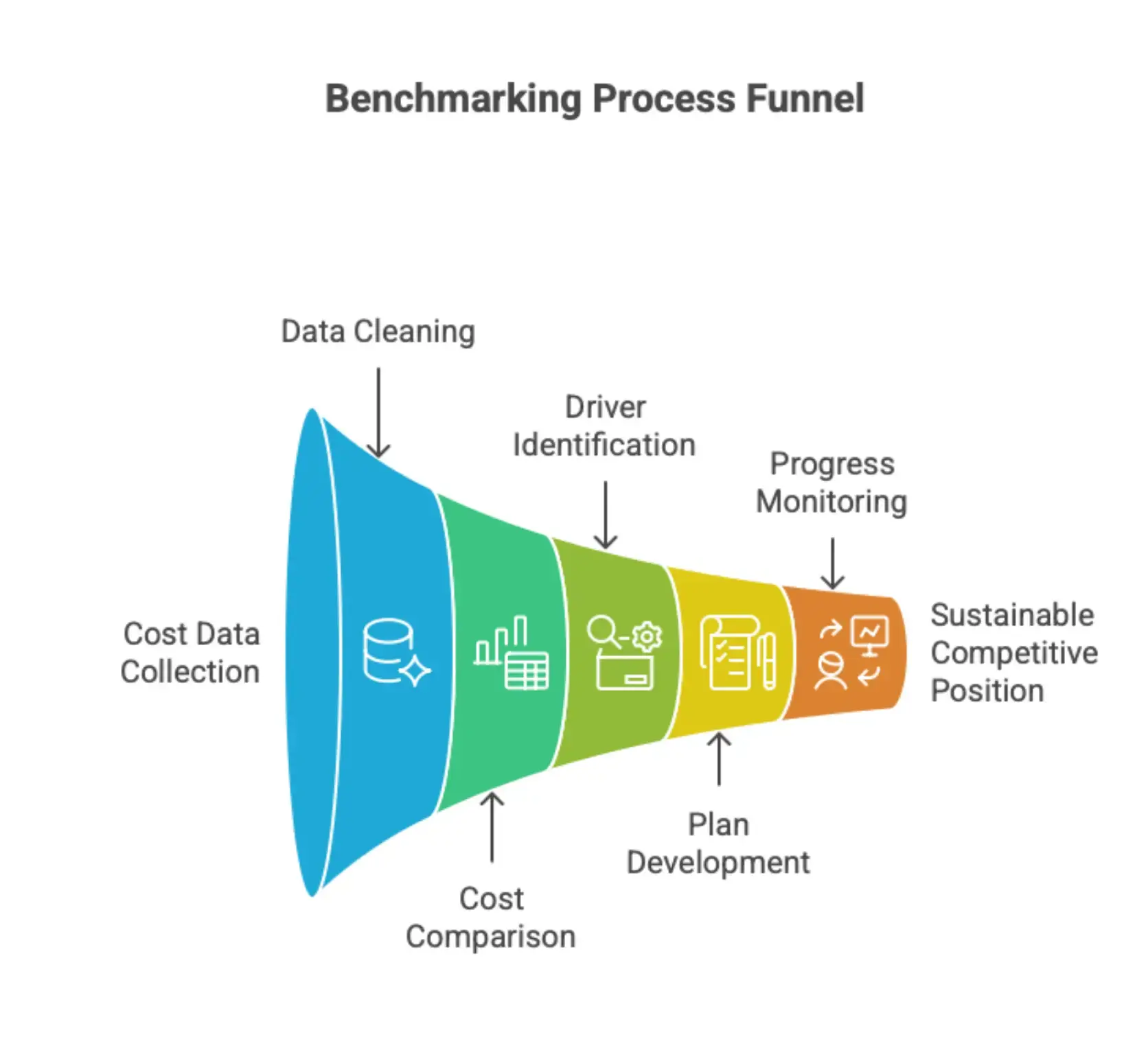
Dedicated cost benchmarking tools speed up data collection and improve accuracy.
Limitations of Basic Benchmarking
Basic benchmarking illuminates surface-level gaps but may miss operational realities. Common pitfalls include ignoring operational differences, skipping context adjustments, or failing to translate findings into actionable improvements. The Office of Rail and Road recommends deeper, context-aware benchmarking for better financial insights and sustainable continuous improvement.
Forecasting in Practice: Applications, Forecasting Accuracy, and Performance Reviews
Benchmarking Forecast Accuracy Against Industry Benchmarks
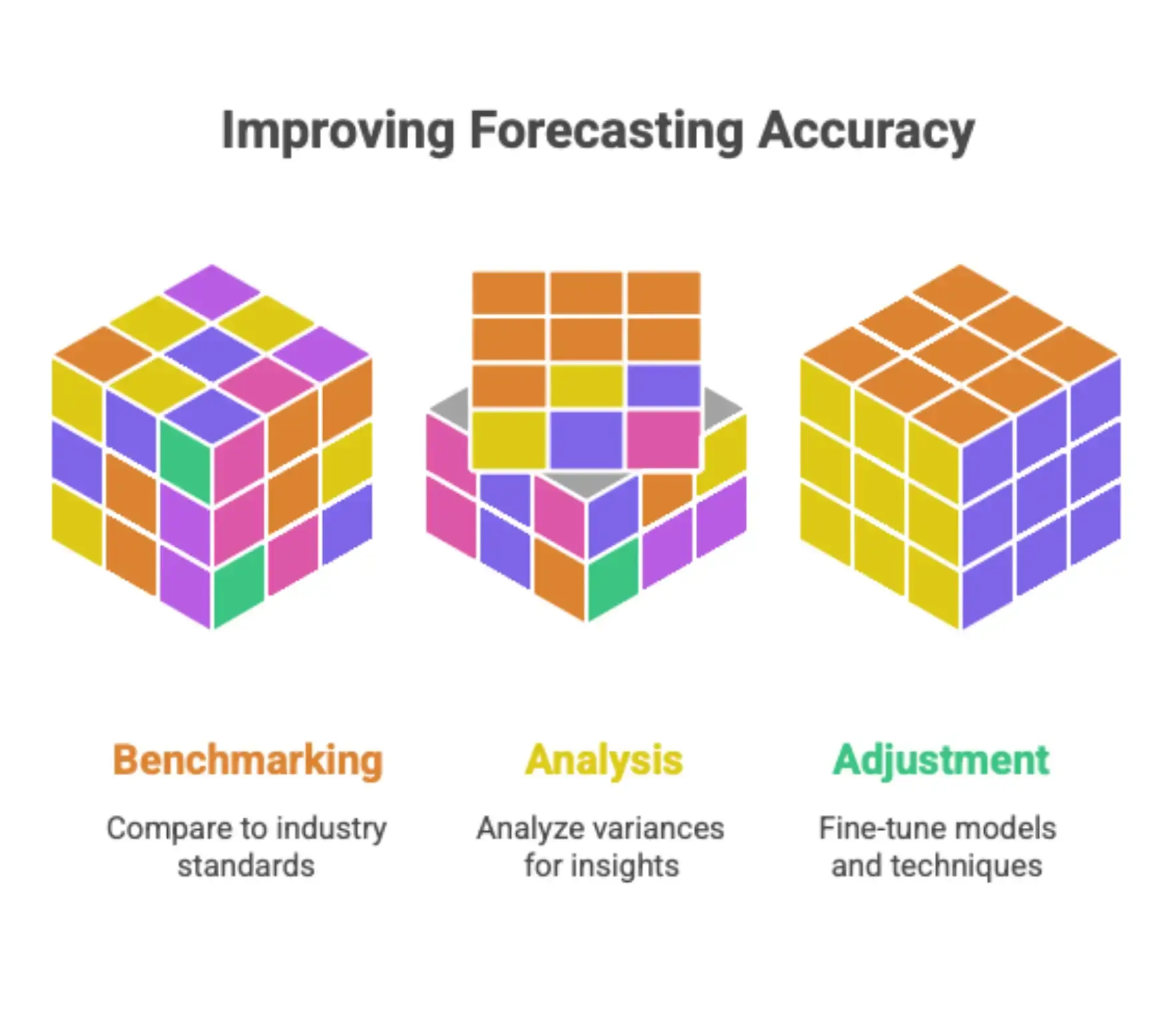
To improve forecasting accuracy, compare your forecast models and results to respected industry benchmarks and external benchmarks. This process highlights bottlenecks, fine-tunes resource allocation, and optimizes supply chain planning.
Redwood Logistics suggests:
- Watching key performance indicators and forecast accuracy
- Benchmarking against industry standards
- Analyzing variances for actionable insights
- Continuous adjustment to forecasting techniques and models
Better forecasting accuracy leads to cost efficiency, less waste, and nimble project teams able to adjust plans as market trends shift.
Forecasting Techniques and the Role of Data Collection
Effective forecasting for project management includes:
- Rolling, frequently updated projections of income, expenses, and cash flow (rolling forecasts)
- Scenario analysis and predictive analytics to identify trends and market trends
- Using accurate cost estimates and resource allocation models to meet budget targets
Success hinges on robust data collection and regular performance reviews, ensuring actual costs and resource needs stay in sync with project scope and strategic goals.
Comparing Actuals: Actual vs. Budget and Actual vs. Forecast
Performance measurement within financial planning often relies on two types of comparison:
- Actual vs. Budget: Measures your real results against the original budget, useful early in the fiscal year and during budgeting cycles for a reality check.
- Actual vs. Forecast: Compares results to the latest forecast, which incorporates current conditions and recent trends. This method is ideal in fast-changing or unpredictable markets and helps teams react to emerging issues.
Relying solely on actual vs. budget can leave blind spots as original budgets may get outdated, missing shifts in market conditions or project requirements.
When to Use Cost Benchmarking vs Forecasting in Cost Control
Early Planning, Risk Management, and Accurate Cost Estimates
During early project planning, benchmarking delivers essential context. With little recent data, historical data and benchmarking data from similar or completed projects offer a reliable cost estimation baseline, helping project managers set realistic budgets and flag typical cost fluctuations tied to project requirements.
Nomitech describes how benchmarking helps manage project risks before they grow, supports reliable budget control, and guides resource allocation at project kickoff.
Real-Time Cost Control and Agile Resource Allocation
Once the numbers start rolling in and the project scope shifts, forecasting makes sure your plans stay current. Forecasting lets finance teams and project managers adjust budgets, resource utilization, and spending quickly, whether that’s in response to external market conditions, regulatory updates, or supply chain issues.
Forecasting aids operational decision making in live projects:
- Supporting rapid adjustments to resource allocation and resource utilization patterns
- Identifying potential financial risks and cost overruns
- Keeping stakeholders informed with accurate forecasts and real-time updates
The best approach is to pair benchmarking (for context and strategic decision making) with ongoing forecasting (for agile operational adaptation throughout the project lifecycle). This allows for informed decisions, continuous improvement, and cost management at every stage.
For further advice, see this guide to cost estimating tools.
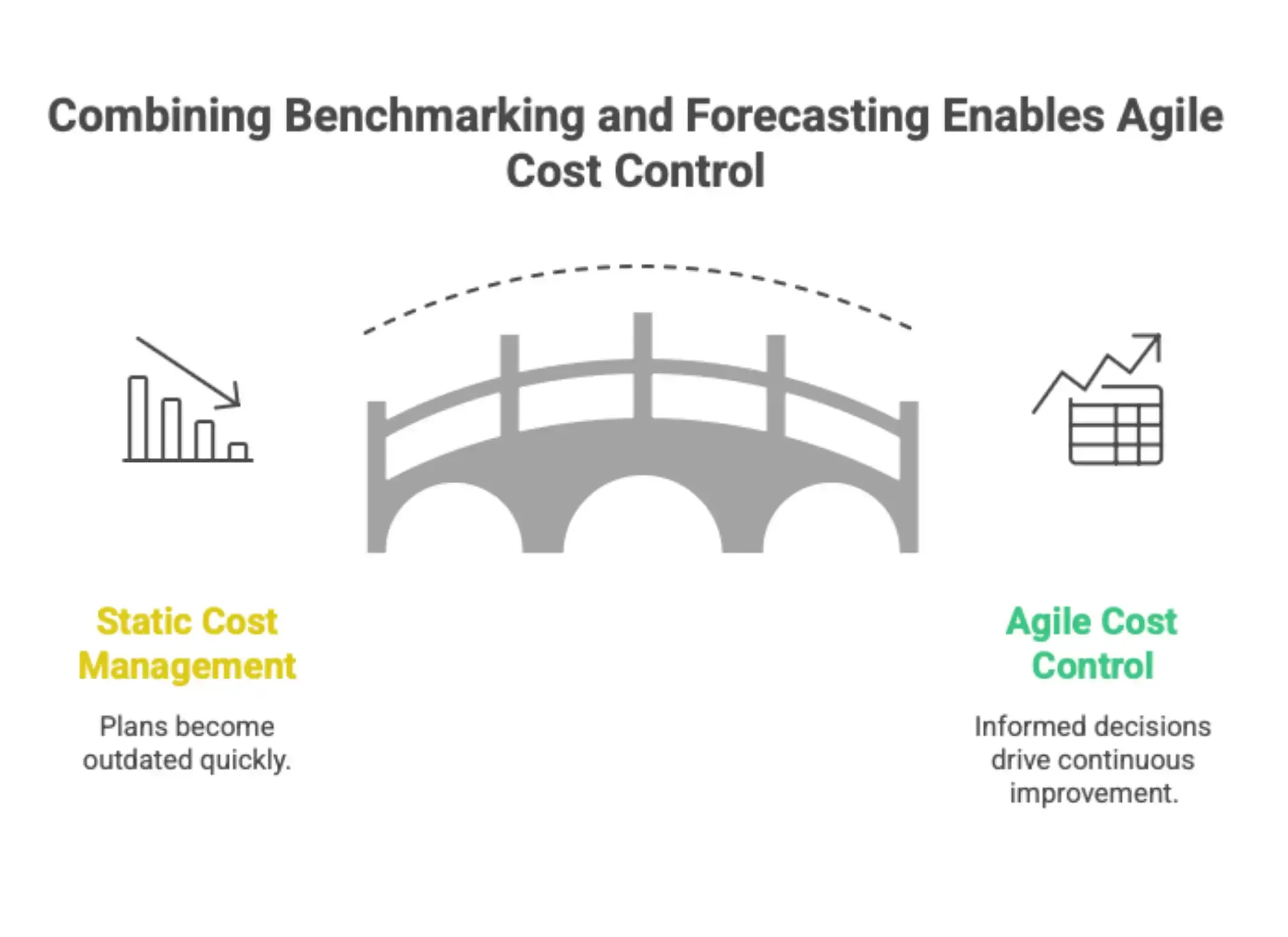
Integration of Cost Benchmarking and Forecasting for Enhanced Decision Making
Why Integration Matters for Financial Performance
Bringing benchmarking data into your forecasting techniques transforms project management. Integrating cost benchmarking and forecasting gives you the full spectrum: strategic improvements from benchmarking and operational agility from forecasting.
- Benchmarking provides structural improvements by identifying where costs can be trimmed or reallocated
- Forecasting ensures projections always reflect the latest financial realities, making controlling costs efficient and data driven
This integration helps organizations allocate resources efficiently, prevent budget overruns, and shift from reactive to proactive cost control.
How to Integrate: Practical Steps for Project Teams
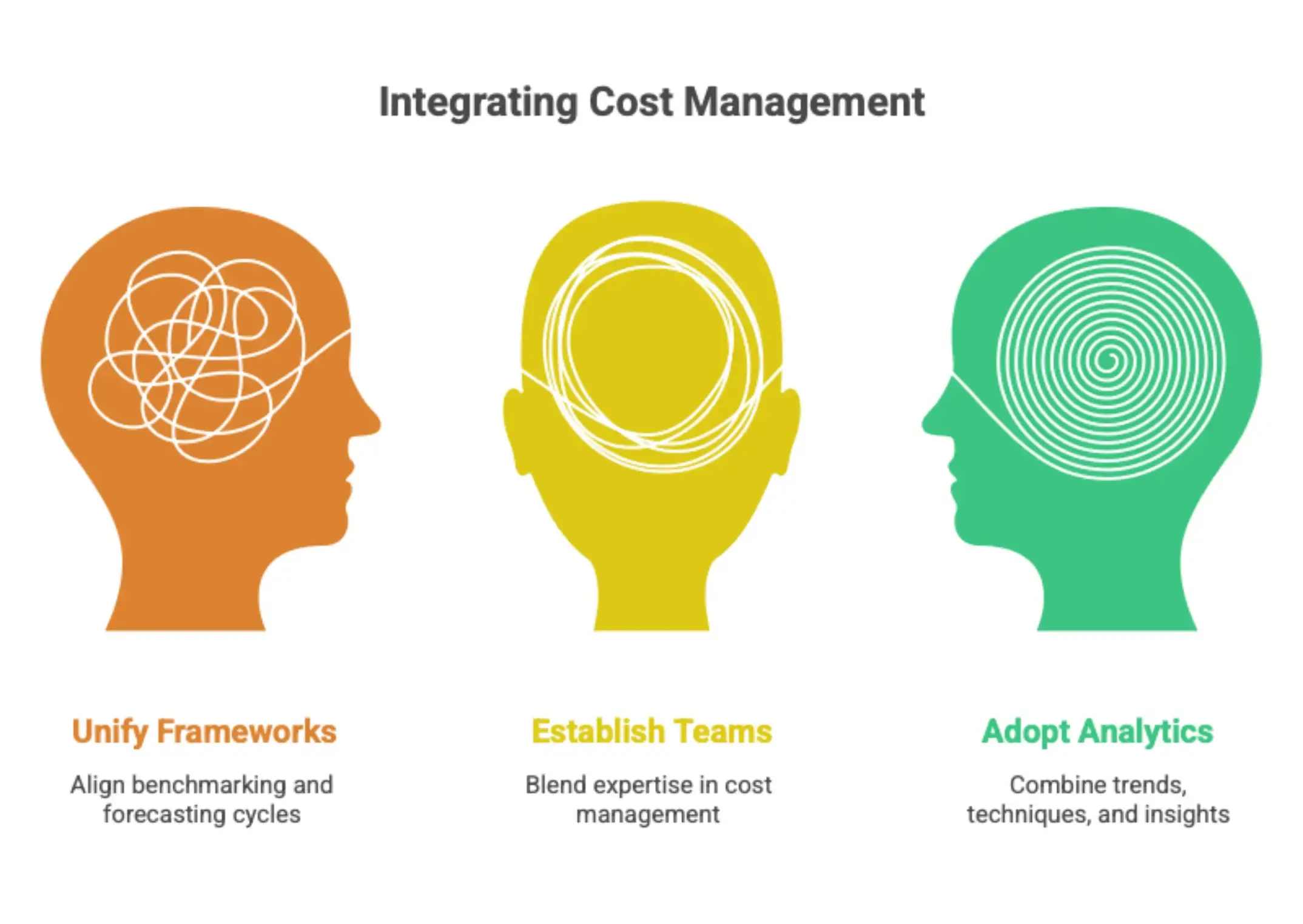
- Unify benchmarking frameworks and forecasting cycles so all actual spending and forecast outcomes are cross-checked and variances used to improve models
- Establish collaborative teams to blend expertise in benchmarking, cost estimation, and forecasting
- Adopt integrated analytics tools and dashboards, combining benchmark trends, forecasting techniques, and financial insights for actionable insights
- Maintain standardized, clean data across all cost management activities so inconsistencies don’t undermine results
Adopting an enterprise cost management suite can make integration seamless across departments and stages of the project lifecycle.
Results: Driving Continuous Improvement and Strategic Planning
Integrated benchmarking and forecasting empowers project teams to:
- Identify cost saving opportunities and efficiency gaps
- Allocate resources and adjust plans based on real-time data and market trends
- Achieve cost efficiency through accurate budgets, forecasting accuracy, and ongoing performance reviews
This approach supports continuous improvement in both operational and strategic initiatives.
Frequently Asked Questions About Cost Benchmarking vs Forecasting
What is the primary difference between cost benchmarking and forecasting?
Cost benchmarking compares your actual costs to industry benchmarks to highlight competitive gaps and inefficiencies. Forecasting, meanwhile, projects future costs using real-time data, trend analysis, and historical data to help you adapt plans as situations change.
When should a project use cost benchmarking instead of forecasting?
Benchmarking fits best during early planning or strategic decision making when evaluating competitiveness, estimating project budgets, or entering new markets. Forecasting is more powerful for ongoing cost control and project management as new data flows in and plans need regular adjustment.
How does benchmarking improve forecasting accuracy?
Benchmarking provides a structured baseline, rooting your forecasts in reliable data from similar projects or external benchmarks. This reduces guesswork and increases the reliability of future cost projections.
Can both cost benchmarking and forecasting be used together?
Yes. Combining both delivers the most informed decisions. Benchmarking establishes your baseline and highlights where improvements are needed. Forecasting adds agility, letting you adjust quickly to changes and control project costs amid shifting circumstances.
What are the risks of relying on basic cost benchmarking?
Basic benchmarking may miss contextual or operational differences, leading to blind spots. Without deep analysis, firms risk failing to identify cost drivers or establish effective cost control plans.
Conclusion: Maximizing Cost Management Through Integration
Leveraging both cost benchmarking vs forecasting is the foundation of best-in-class cost management. When you integrate benchmarking data into your forecasting techniques, you empower finance teams and project managers to make data driven decisions, driving continuous improvement, accurate cost estimates, and long-term financial performance.
Benchmarking lights up the strategic path with data driven context and real competitive targets. Forecasting enables flexibility, helps manage potential financial risks, and provides ongoing feedback for expense tracking and resource allocation. This team effort transforms organizations from chasing numbers to leading through informed, proactive decision making.
Best Practices for Decision Makers
To make the most of integrated benchmarking and forecasting:
- Create clear frameworks for both benchmarking and forecasting cycles, tie together benchmarking data with frequent forecasting updates
- Regularly compare actual costs to budget targets and forecasts to spot improvement areas and keep cost control tight
- Build collaborative, cross-functional project teams bringing together cost estimation, benchmarking, and forecasting expertise
- Adopt unified analytics tools and dashboards so all data collection, benchmarking, and forecasting insights are instantly accessible
- Keep your cost data clean, standardized, and transparent. Inconsistent numbers will upend even the best cost management strategies
According to Nomitech, organizations that combine benchmarking and forecasting move from guesswork to continuous improvement, maximizing resource allocation, strengthening risk management, and driving down associated costs on complex projects.
Curious how to get started? A scalable cost management suite can unify benchmarking, forecasting, and estimation for maximum efficiency and impact at every phase of the project lifecycle.
Move from scrambling to keep up to steering ahead of the curve. Empower your cost management and drive higher project performance.
Ready to Take the Next Step?
Want to upgrade your approach to cost benchmarking and forecasting? Explore Nomitech’s full suite for integrated cost estimation, benchmarking, and forecasting. Have questions about how cost management solutions can support your project requirements? Get in touch with the team to find the right cost control tools for your needs.





Stay Up to Date
Subscribe to our Newsletter today and receive the latest updates, trends, expert insights, and exclusive offers tailored to your specific industry.