

Why Is Benchmarking Important? Key Benefits for Business Success
TL;DR: Benchmarking in business keeps organizations competitive and focused. By comparing your key performance indicators to industry standards, you gain actionable insights. You see where to reduce costs, where performance lags, and how to prioritize improvement. With the right tools, benchmarking becomes a practical process, turning quantitative data into clear action plans.
Introduction: Why Is Benchmarking Important in Business?
Ever wrapped up a project only to find you missed key targets, costs climbed, or deadlines were missed? Many companies face these challenges. Without benchmarking, businesses operate in the dark, lacking context for what “good” looks like or practical ways to improve performance. When you don’t conduct research or compare your performance to industry leaders, identifying areas for continuous improvement becomes a guessing game.
In today’s business landscape, driven by rapidly evolving industry trends, companies can’t rely on gut feelings or longstanding practices. With thin margins and shifting objectives, benchmarking in business provides the clarity teams need. Whether measuring internal processes or comparing key performance indicators with external organizations, benchmarking delivers evidence, not just opinions, on how you stack up, where you can reduce costs, and what steps will drive continuous growth.
By using benchmarking software and platforms like CostOS, organizations streamline processes that convert scattered business data into benchmarks, dashboards, and action plans. The result is a fact-based approach that sharpens business operations and strategy.
Wondering how business benchmarking catalyzes your strategy, ROI, and team culture? Let’s explore the benchmarking process, types of benchmarking, and how to start benchmarking for long-term improvement.
What Is Benchmarking in Business?
Benchmarking in business is the process of comparing your organization’s key metrics and practices to industry standards or top competitors. This means measuring your performance, including costs, timelines, and quality metrics, against the best in your field, industry leaders, or across various business processes.
But benchmarking is more than scorekeeping. It’s about identifying performance gaps, adopting successful strategies from others, and using benchmarking data to develop strategies for continuous improvement. As APQC notes, benchmarking helps reveal not just where you lag behind, but exactly how to improve performance and set competitive benchmarks.
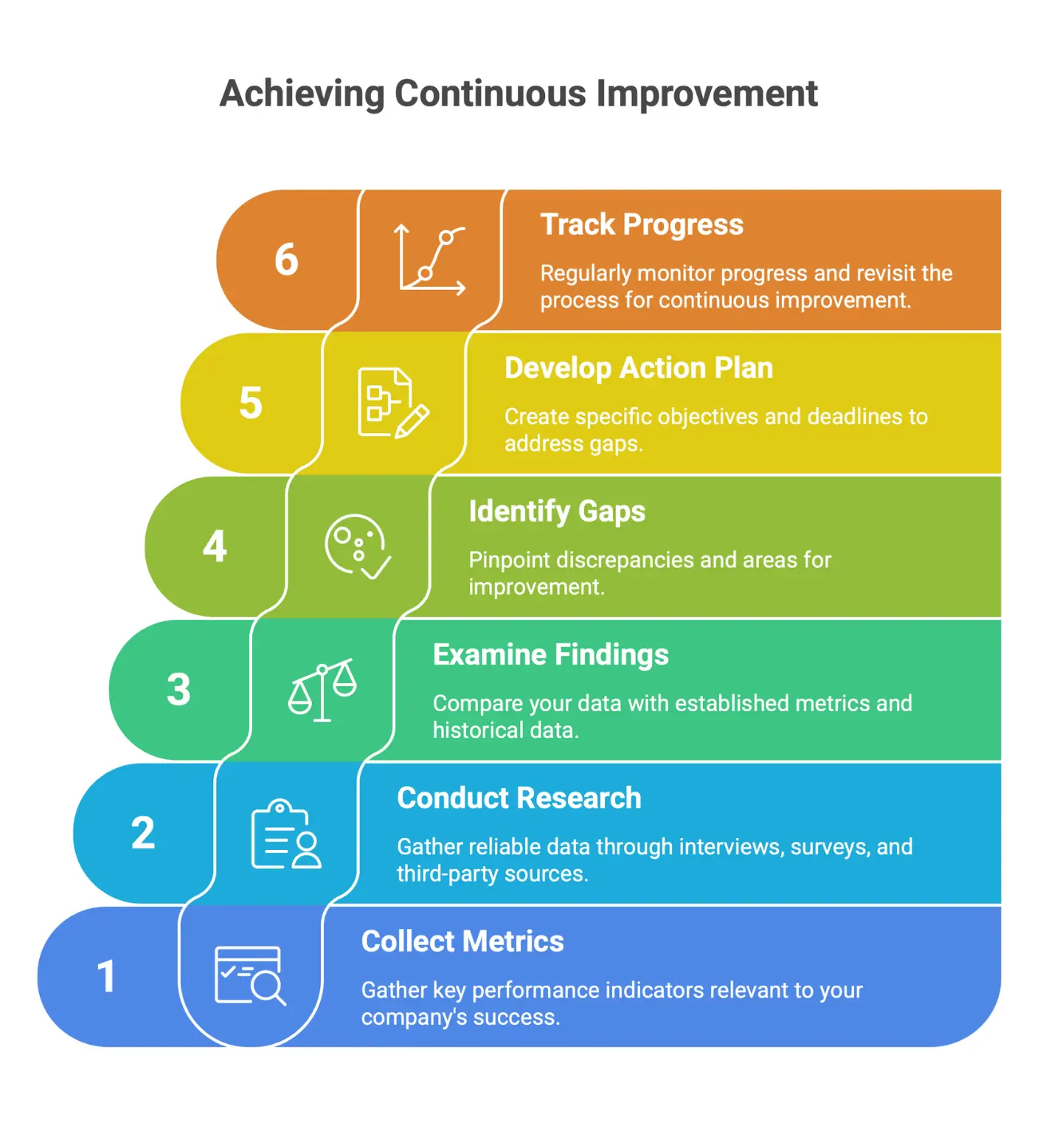
The benchmarking process typically follows these steps:
- Collect key performance metrics, focusing on what genuinely matters to your own company and business success
- Conduct research, interviews, or surveys to gather reliable quantitative data. Refer to company websites, marketing materials, and trusted third-party sources
- Examine your findings alongside established metrics, processes, or historical data
- Identify discrepancies, performance gaps, and areas with room for improvement
- Develop an action plan with specific objectives, deadlines, and relevant team members to address gaps
- Track progress regularly and revisit the benchmarking cycle for continuous improvement
With the benchmarking process, you move from putting out fires to having a clear map for improvement, operational efficiency, and real business growth.
Types of Benchmarking: Internal, External, and Competitive
Understanding benchmarking requires knowing its different forms. The right approach depends on your goals, industry, and access to benchmarking data.
Internal Benchmarking
Internal benchmarking means comparing metrics or practices across various aspects inside your own company. For example, you might assess productivity or costs between different departments, teams, or locations to determine the best ways to conduct business moving forward. This approach is a powerful way to streamline internal operations, track employee performance, and replicate success.
External Benchmarking
External benchmarking involves observing and adopting best practices from outside your organization. It means studying industry leaders, world class organizations, or even direct competitors to understand their operational elements, business processes, or services. External benchmarking helps organizations identify industry standards and see how their own company’s performance measures up.
Competitive Benchmarking
Competitive benchmarking is focused specifically on comparing your business to direct competitors. By analyzing competing products, customer satisfaction rates, and service levels, you identify performance gaps and find opportunities for differentiation. This type shines a light on areas where you need to catch up or can leap ahead to gain a competitive edge.
Functional and Strategic Benchmarking
Functional benchmarking examines particular processes or functions, even across different sectors or specific industries. Strategic benchmarking compares your results against top-performing leaders, whether a direct competitor or another business with world-class practices in a particular process.
Performance Benchmarking
Performance benchmarking measures the efficiency and success of your product lines, services, or business operations compared to the best in class. This is how companies identify areas to improve performance and achieve long term improvement.
The Benchmarking Process: Steps and Key Considerations
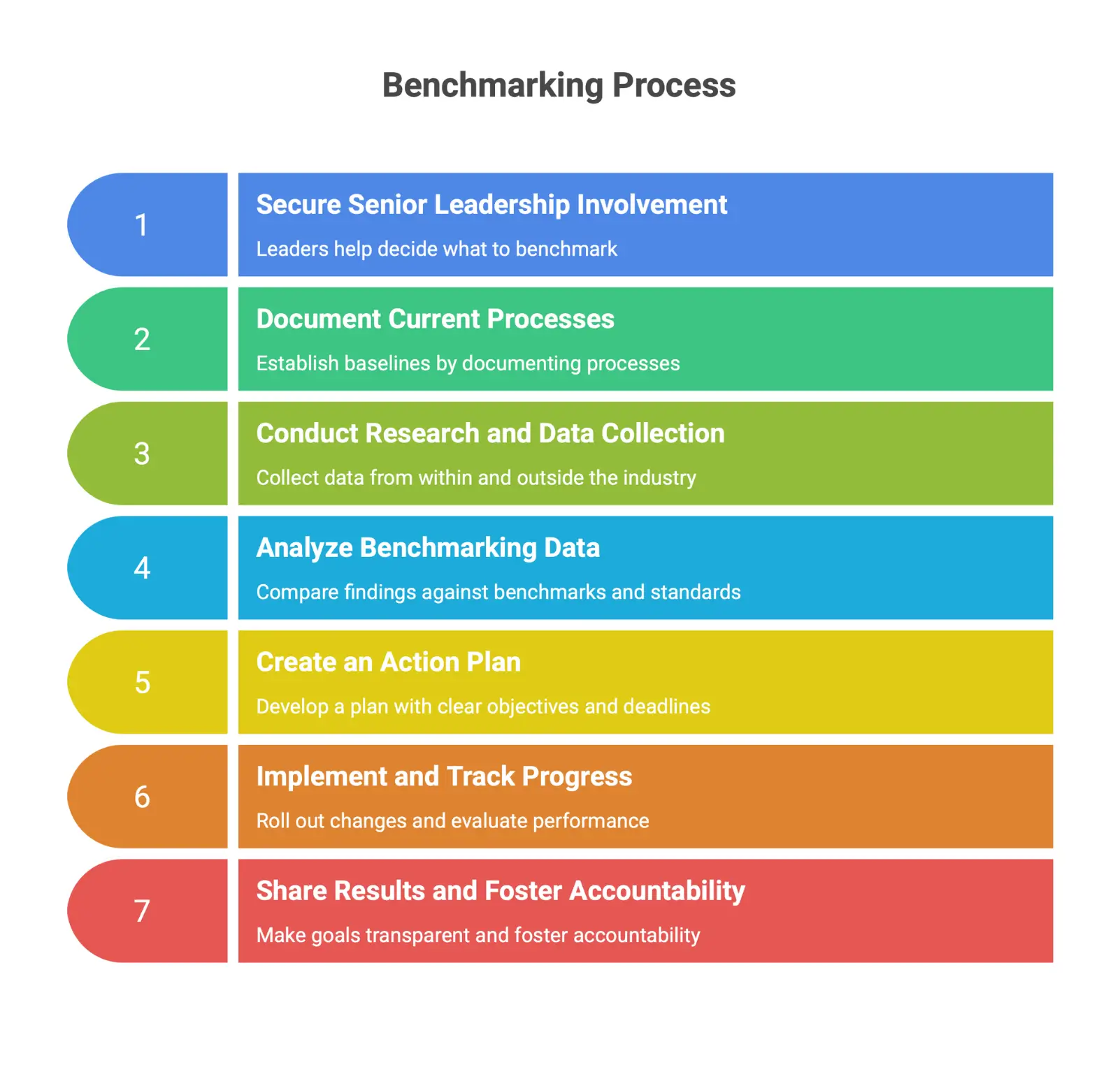
The benchmarking process is systematic. Here’s how to ensure it adds value:
- Secure Senior Leadership Involvement
Senior leaders must help decide what to benchmark. Their involvement ensures you’re focusing on elements most critical to your company’s success and aligning teams on the same page. - Document Current Processes
Establish baselines by documenting your current processes, business metrics, and historical data. This internal review sets the stage for meaningful comparisons. - Conduct Research and Data Collection
Start benchmarking by conducting research, interviews, and surveys. Collect data from within (internal benchmarking) and outside (external benchmarking) your industry. Ensure you know the source and reliability of all quantitative data. - Analyze Benchmarking Data
Compare your findings against established benchmarks and industry standards. Examine deviations and identify areas for improvement within your various business processes. - Create an Action Plan
After you identify performance gaps, develop an action plan. Set clear objectives, defined goals, key deadlines, and assign team responsibilities. - Implement and Track Progress
Roll out operational changes, then regularly evaluate new projects. Use benchmarking data to measure performance before and after these changes, adjusting the action plan as needed for maximum impact. - Share Results and Foster Accountability
Make goals transparent across the organization. Sharing results fosters accountability, boosts motivation, and aligns staff on measurable targets.
The Benefits of Benchmarking in Business
The benefits of benchmarking are far-reaching, impacting business performance, costs, quality, and employee satisfaction.
- Identify Performance Gaps and Improve Performance
Benchmarking helps you pinpoint specific gaps in your company’s performance, whether customer satisfaction, efficiency, profit margin, or employee performance. Comparing key performance indicators allows you to see exactly where to focus your efforts. - Better Decision Making and Resource Allocation
Reliable benchmarking data informs decisions on strategic planning, budgeting, and resource distribution, ensuring your action plan adapts quickly to market changes or regulatory pressures. - Enhanced Operational Efficiency and Cost Reduction
By examining processes and employee workflows, benchmarking helps identify where you can reduce costs or eliminate inefficiencies, whether through renegotiating supplier contracts or adopting better technology. - Continuous Improvement and Increased Accountability
Benchmarking instills a culture of continuous improvement by consistently encouraging teams to measure, analyze, and respond to their business performance data. Transparent metrics foster accountability across every level. - Quality and Customer Satisfaction Enhancement
Benchmarking identifies innovation opportunities, new service methods, and ways to raise customer satisfaction rates, making for tangible service and product improvements.

Driving Strategic Business Growth with Benchmarking
Benchmarking is a strategic tool that powers both short- and long-term success.
Enabling Data-Driven Leadership and Strategic Benchmarking
Leadership decisions powered by benchmarking data become less speculative and more targeted. Strategic benchmarking gives leaders context, allowing them to set realistic performance goals and make choices rooted in actual industry levels.
Platforms like CostOS provide accessible dashboards and metrics for leadership, allowing for ongoing monitoring and adaptation of strategy.
Supporting Operational Efficiency and Continuous Improvement
Benchmarking in business allows companies to streamline processes and operational elements for greater organizational health. Over time, it fosters continuous improvement, not just ad hoc fixes.
- Track improvement progress with key performance indicators
- Adopt best practices identified through both internal and external benchmarking
- Shift to evidence-based resource allocation
Building a Performance-Driven Culture
Benchmarking helps define success for every member of the team. With benchmarks clear, measurable, and shared, everyone understands how their work ties to the company's success.
By integrating benchmarking into daily operations and professional services, organizations build a motivated, accountable workforce. This improves performance at every level.
Benchmarking for Customer Satisfaction and Service Excellence
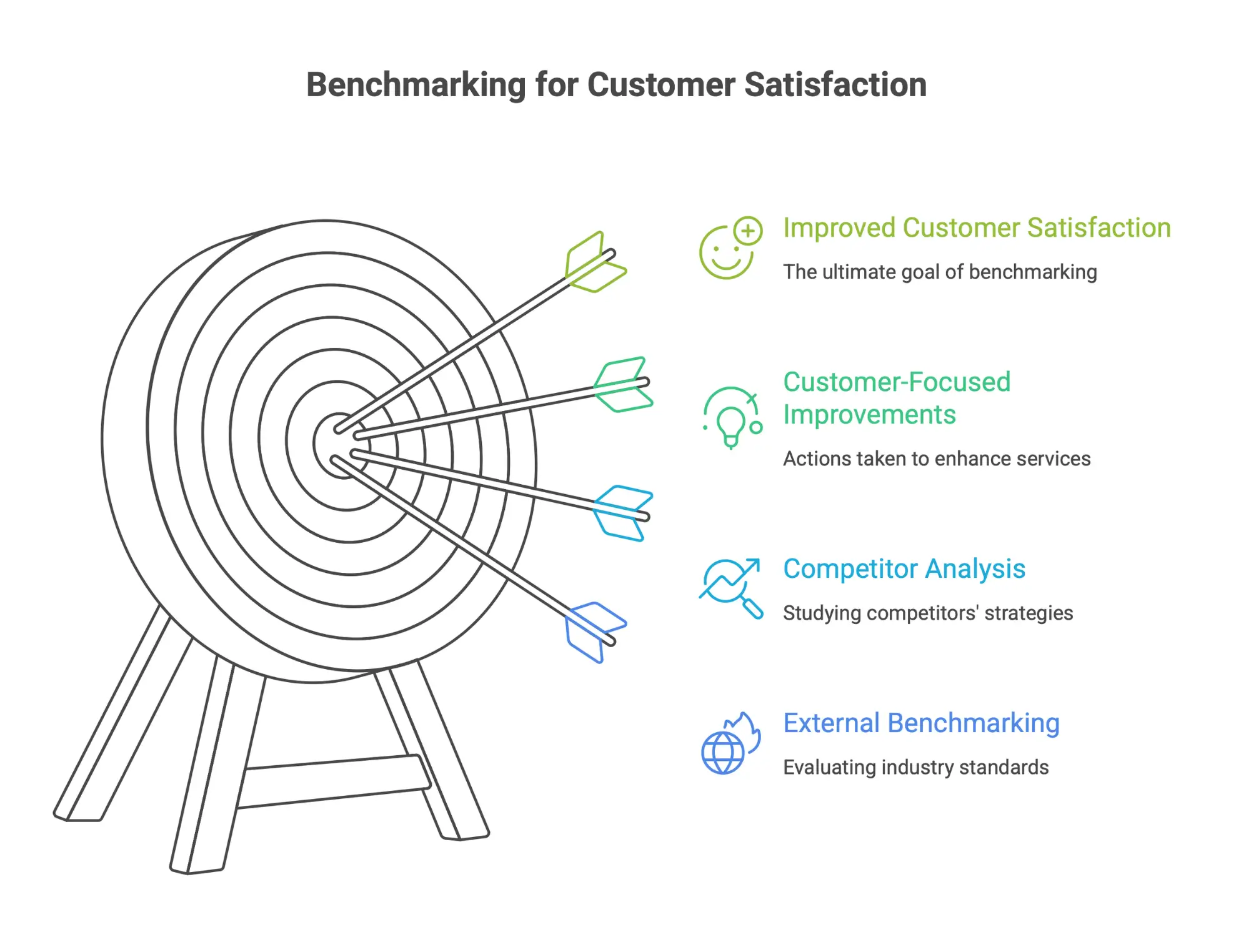
One of the most tangible benefits of benchmarking is improved customer satisfaction. By analyzing how leading competitors or industry standards meet customer needs, you gain actionable insights for enhancing your services or products.
- Evaluate customer satisfaction rates through external benchmarking
- Analyze competitor methods to boost your market standing
- Use benchmarking to identify and implement customer-focused improvements
Benchmarking for Professional Services and Specialized Industries
In professional services, benchmarking is especially vital, as competition is intense and standards constantly evolve. Whether comparing productivity, innovation, or client retention, benchmarking helps professional services firms uncover how their business compares and where to adjust.
Industry-specific benchmarking software makes it easier to gather, analyze, and act on relevant benchmarking data for specialized business operations.
From Data to Action Plan: Implementing Benchmarking in Your Organization
For benchmarking to drive long-term improvement and business success, commitment and planning are essential.
Step-by-Step Guide to Getting Started with Benchmarking
- Define What Matters
Decide, with leadership and key stakeholders, on the exact internal processes or areas to benchmark. - Gather Input and Baseline Metrics
Use interviews, process mapping, and surveys to collect the right key performance metrics. - Conduct Business Research
Leverage historical data, industry standards, and company websites to collect external data. - Analyze and Compare
Compare internal findings with the competition, benchmarking against industry leaders and leading competitors. - Identify Performance Gaps and Develop an Action Plan
Use your analysis to pinpoint areas needing attention. Develop strategies, assign roles, and outline operational changes. - Monitor, Track Progress, and Report
Benchmarking helps you track progress and ensures that any long term improvement is sustainable. - Refine and Repeat the Benchmarking Process
Benchmarking is not a one-off effort. Regular evaluation and adaptation are what create a culture of continuous improvement.
Common Challenges in Benchmarking
Organizations must be mindful of several factors to maximize the benefits of benchmarking:
- Choosing the right benchmarking process tailored to the company's needs
- Ensuring data sources are accurate, relevant, and current
- Avoiding the pitfalls of copying without adapting to the context of your own company
- Being transparent and keeping communication open across teams
- Making benchmarking an ongoing practice rather than a one-time event

Frequently Asked Questions About Benchmarking
What is benchmarking and why is benchmarking important in business?
Benchmarking in business is the process of comparing industry and business best practices and performance metrics to your own company’s data. Benchmarking is important because it helps identify performance gaps, supports evidence-based decision making, and drives continuous improvement.
How does benchmarking improve operational efficiency and cost reduction?
Benchmarking enables companies to identify areas of waste and operational inefficiencies. By comparing processes, you can reduce costs, streamline workflows, and boost profitability using proven methods from industry leaders.
How can benchmarking boost customer satisfaction?
Benchmarking helps you measure customer satisfaction rates and compare them to external standards. This reveals opportunities for improving your services, directly impacting customer loyalty and business performance.
What are the most effective benchmarking methods?
The most effective approaches include internal benchmarking (comparing within your own organization), external benchmarking (comparing with other companies), and competitive benchmarking (comparing with direct competitors). Strategic benchmarking is used for big-picture improvements, while performance benchmarking targets specific outcomes.
What is needed for a successful benchmarking program?
A successful benchmarking process needs leadership support, defined goals, accessible and accurate benchmarking data, ongoing analysis, and a culture committed to regular review and weaved-in continuous improvement.
Real-World Outcomes: Business Performance and Competitive Advantage
Benchmarking drives results across organizations:
- It provides a reliable data foundation for strategic planning and greater competitive advantage
- Pinpoints operational inefficiencies, supporting targeted cost reduction
- Aids in change management and talent recruitment by tracking impact and improving processes
- Drives improvement in customer satisfaction, service delivery, and overall business performance
- Allows leaders to base decisions on measurable industry standards, supporting budget planning, salary reviews, and evaluating the impacts of market trends
When organizations embrace benchmarking as a habit, they foster a culture equipped for resilience and long-term growth.
Conclusion: Sustaining Growth Through Continuous Benchmarking
The ultimate goal of benchmarking is continuous improvement and achieving competitive advantages. As markets and industries evolve, integrating benchmarking as a regular business operation keeps organizations relevant, agile, and ready to act.
By weaving benchmarking into your company’s operational elements, leadership reviews, and daily processes, you move beyond gut decisions. You use evidence to drive every action plan and improvement.
Whether you’re in professional services, manufacturing, or tech, benchmarking gives you an honest, real-world view of where you stand and what you need to do next.
Platforms like CostOS make benchmarking accessible and measurable, helping organizations of all sizes keep progress on track.
Ready to Start Benchmarking for Better Performance?
Interested in a cost estimation and benchmarking platform tailored to your business needs? Explore Nomitech’s full suite or reach out to discover the best starting point for your team. Start benchmarking with confidence and drive your company’s success forward.




Stay Up to Date
Subscribe to our Newsletter today and receive the latest updates, trends, expert insights, and exclusive offers tailored to your specific industry.