

What Is Cost Benchmarking? Strategies for Cost Efficiency
TL;DR: Cost benchmarking lets organizations compare their spending against industry leaders to pinpoint inefficiencies and drive smarter resource decisions. This guide walks you through what is cost benchmarking, its principles, the different types and benefits, and hands-on tips for cost efficiency, optimization, and continuous improvement.
What Is Cost Benchmarking?
Cost benchmarking is a valuable tool and a strategic process for measuring, refining, and analyzing your organization's spending by comparing it to market peers and industry leaders. At its foundation, cost benchmarking involves a comparative cost analysis. This is a deep dive into both your own cost data and the information from top competitors or industry benchmarks. This approach provides actionable insights that help businesses determine how efficient their operations are, identify areas for cost reduction, and set clear, achievable goals for cost management.
As the American Society for Quality (ASQ) explains, cost benchmarking is more than just comparing numbers. It requires a comprehensive understanding by examining not only the "how much" but also the "why" behind cost drivers across production costs, administration, and operations. This method shines a light on opportunities for cost optimization, competitive pricing, and process improvement. By tracking key performance indicators and comparing costs with relevant industry standards, organizations can anchor strategies in data-driven benchmarking analysis rather than assumptions.
Cost benchmarking also focuses on the continuous improvement of cost efficiency. By consistently monitoring cost performance compared to industry peers, benchmarking results support smarter decision-making, track progress, and enable informed decisions that enhance profitability.
Curious how historical data can strengthen what is cost benchmarking? Check out this guide to benchmarking with historical cost data.
How Cost Benchmarking Works
Cost benchmarking gives organizations a practical, structured way to gauge where they stand against competitors and industry peers. Using comparative and benchmarking analysis, companies can identify areas where their costs are higher, analyze root causes through behavior analysis, and implement targeted cost saving initiatives that drive potential cost savings.
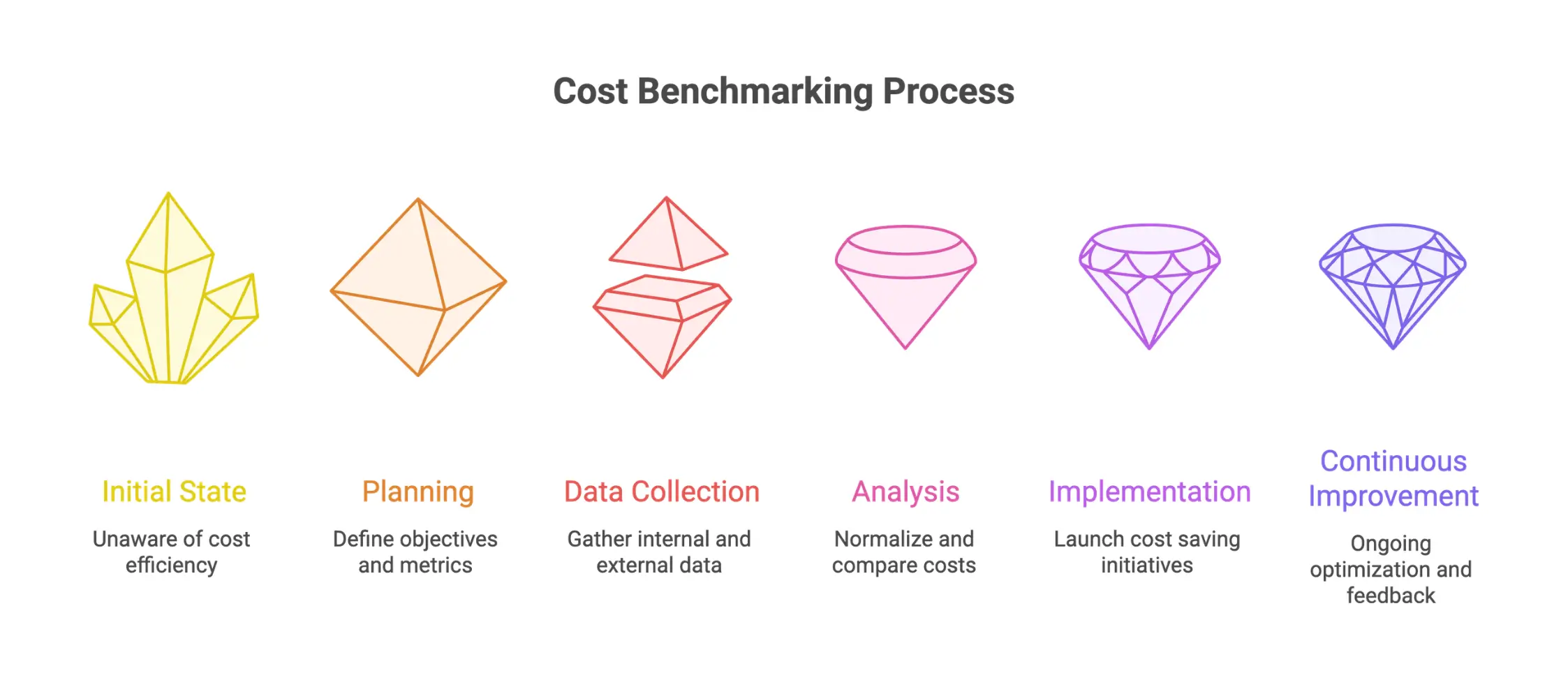
Most cost benchmarking programs move through these essential steps:
- Planning and preparation. Define your core objectives, scope, and the key metrics that best reflect cost efficiency within your processes.
- Data collection. Compile relevant data from your own records and trustworthy external benchmarks, ensuring quality and consistency.
- Analysis. Compare costs and performance metrics using normalization (adjusting for project scale, inflation, or location-specific costs) to ensure comparability and accuracy.
- Implementation. Launch cost saving initiatives and adopt best practices that benchmarking analysis reveals, whether for production costs, labor costs, or supplier contracts.
- Monitoring and continuous improvement. Track progress, analyze results, and use benchmarking as an ongoing feedback loop for optimization and continuous improvement.
For actionable insights and improved cost management, leveraging digital tools like CostOS can streamline the benchmarking process, automate data collection, and deliver easy-to-interpret benchmarking results.
Key Principles and Strategies of Cost Benchmarking
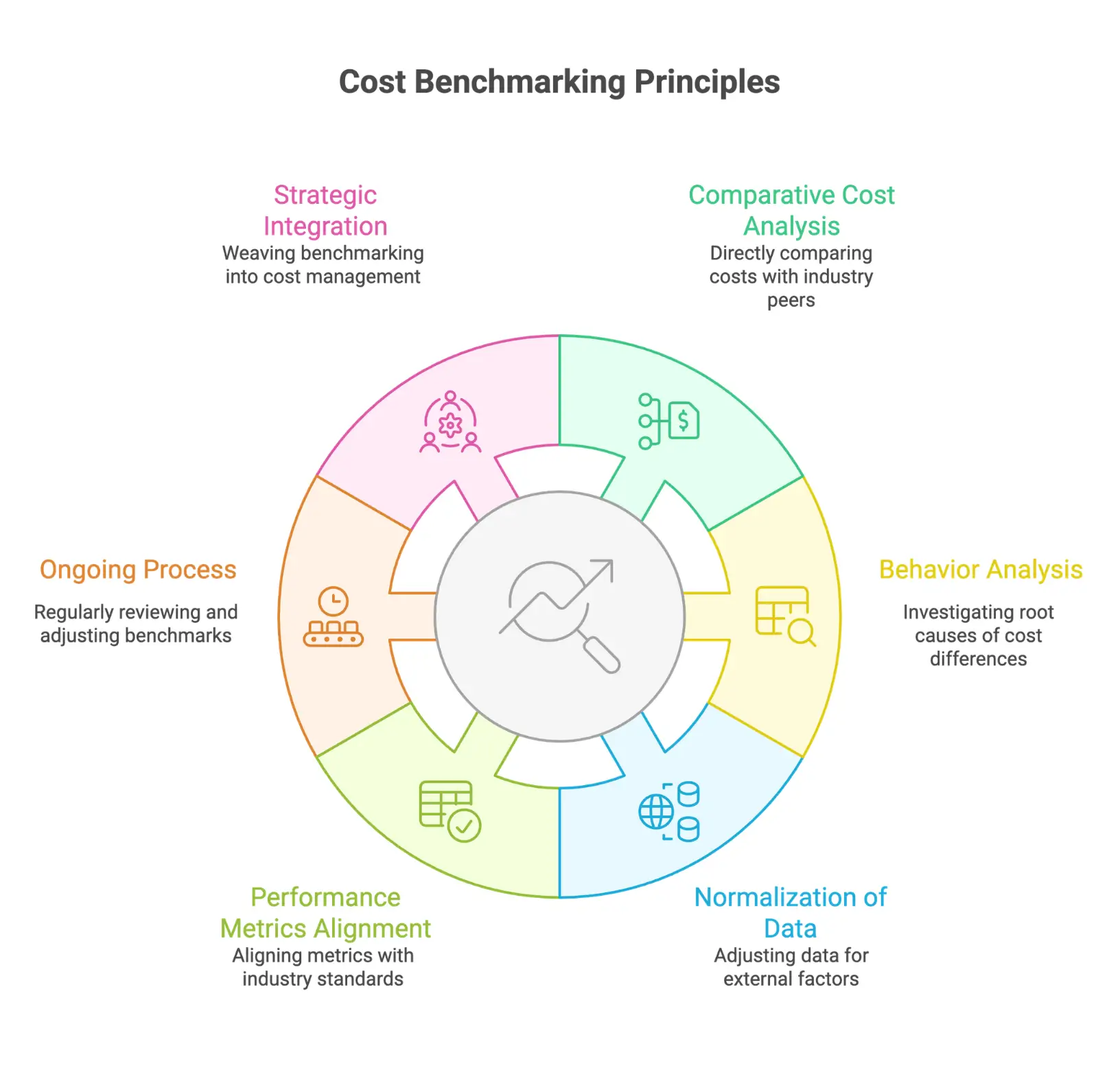
Cost benchmarking as a discipline is grounded in several essential principles:
- Comparative cost analysis: This is the foundation of cost benchmarking, involving the direct comparison of your own costs, cost performance, and cost models with those of industry peers or companies with similar business units.
- Behavior analysis: By investigating the root causes of cost differences, organizations can move beyond surface-level metrics and identify actionable strategies to improve performance and cost efficiency.
- Normalization of data: Adjusting data for external factors such as location, inflation, and market conditions is vital for ensuring accurate benchmarking analysis and benchmarking results.
- Performance metrics alignment: Benchmarking relies on quantifiable metrics, like cost per unit, operating expenses, or labor rates, that align with recognized industry standards and practices.
- Ongoing process: The benchmarking process is dynamic, requiring regular review and adjustment as market conditions, costs, and strategies evolve.
- Strategic integration: Results from benchmarking analysis should be woven into the organization’s broader cost management framework to support continuous improvement and enhance competitiveness.
By carefully identifying benchmarking partners and integrating benchmarking into core decision-making, organizations foster a culture of cost transparency and data-driven improvement.
Types of Cost Benchmarking for Cost Optimization
Cost benchmarking is a flexible toolkit with applications from the ground floor to high-level strategic planning. Understanding the types of benchmarking helps organizations achieve maximum cost efficiency and competitiveness.
Internal Benchmarking and External Service Benchmarks
Organizations usually turn to two primary approaches: internal benchmarking and external (price) benchmarking.
Internal benchmarking looks inward, comparing the costs and performance of different business units, departments, or processes within a single organization. By analyzing labor costs, production costs, and operation expenses, organizations can surface best practices and areas for cost reduction.
External benchmarking focuses on comparing costs with outside companies, competitors, and industry peers. This method uses market data or industry benchmarks to evaluate whether your expenditure, supplier pricing, and service levels match industry standards.
As MetricNet recommends, distinguishing between these two benchmarking strategies helps companies determine where their competitive advantage lies and what action to prioritize. This may include renegotiating contracts for potential cost savings or driving efficiency improvements internally.
Cost models, centralized cost estimating databases, and statistical cost modeling tools facilitate comprehensive analysis and standardize how organizations compare costs, enabling more informed decisions for cost management.
Cost Benchmarking in Regulated Industries
In regulated sectors such as utilities, cost benchmarking takes on added importance. Compliance requirements, public oversight, and strict accountability necessitate detailed, transparent benchmarking analysis and precise cost management strategies.
Statistical Approaches and Benchmarking Analysis in Utilities
Regulators often rely on quantitative benchmarking, using large data sets and advanced statistical analysis to assess cost efficiency, set fair rate structures, and identify cost outliers among other organizations in the sector. As discussed in the Journal of Regulatory Economics, these models provide a critical baseline for pricing, investment, and performance metrics that impact community services.
Systems like EPC and utilities estimation enforce best practices, ensure data comparability, and strengthen ongoing improvement in regulated environments.
Enhancing Cost Transparency Through Fee Benchmarking
Fee benchmarking is a valuable tool for cost analysis, making it possible to compare service provider costs and pricing with clarity and confidence. By benchmarking fees, organizations can evaluate proposals on an even playing field, highlight cost inefficiencies, identify areas for potential cost reduction, and challenge excessive supplier quotes.
Automated cost benchmarking software aggregates market data, flags outliers, and supports actionable fee benchmarking analysis to ensure procurement decisions result in increased profitability and quality without unnecessary risk.
Role of Fee Benchmarking in Procurement and Supplier Negotiations
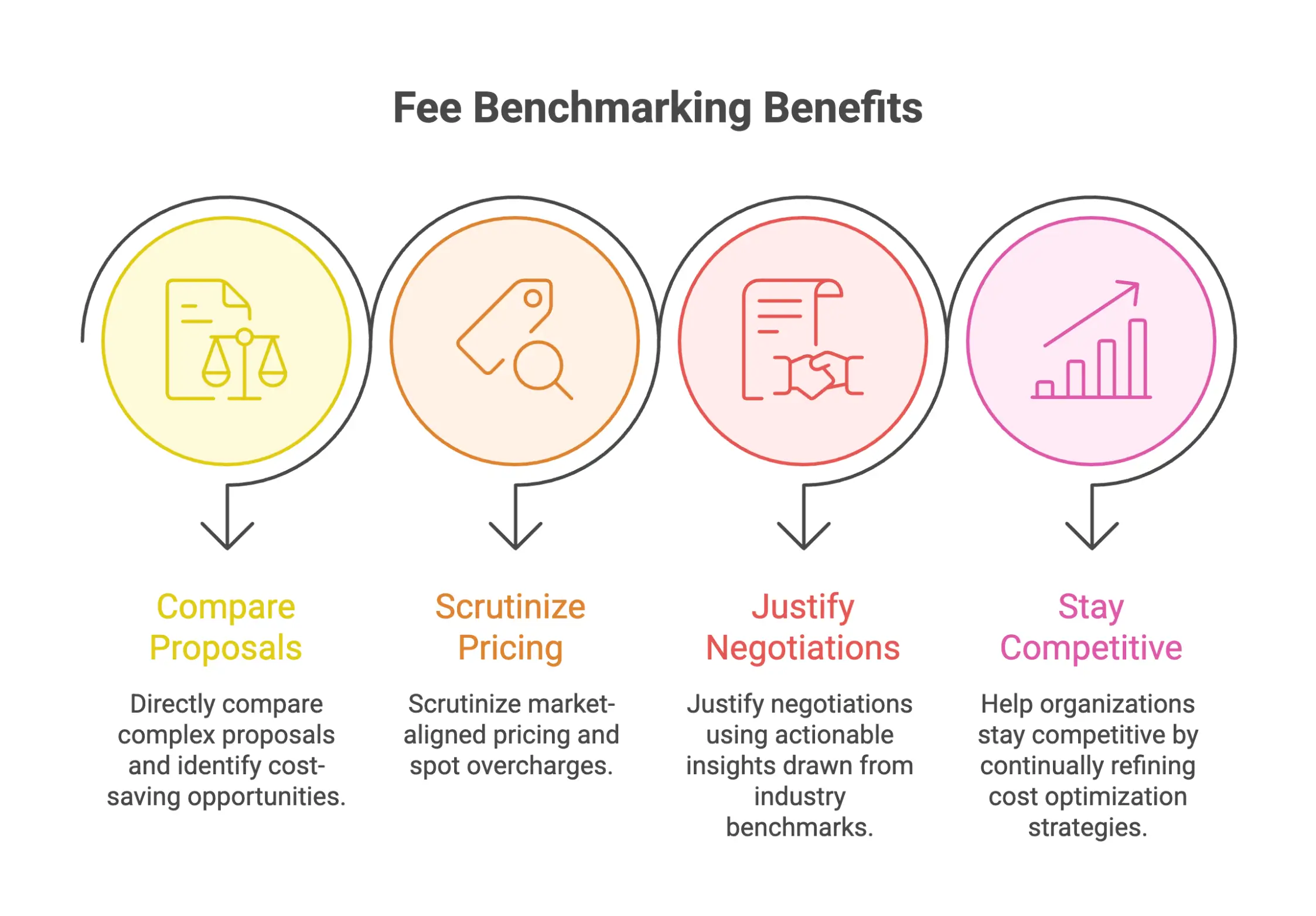
Fee benchmarking empowers teams to:
- Directly compare complex proposals and identify cost-saving opportunities
- Scrutinize market-aligned pricing and spot overcharges
- Justify negotiations using actionable insights drawn from industry benchmarks
- Help organizations stay competitive by continually refining cost optimization strategies based on benchmarking results
Fee benchmarking is also essential for balancing costs, quality, and efficiency in partner selection. Explore this cost estimating guide for practical ways fee analysis drives smarter procurement.
Strategic Benefits of Cost Benchmarking for Competitive Advantage
Cost benchmarking is more than routine reporting. It is a method for companies to achieve growth, improve performance, and gain a measurable competitive advantage. By comparing performance and cost data to industry peers, organizations uncover both their strengths and hidden areas for improvement.
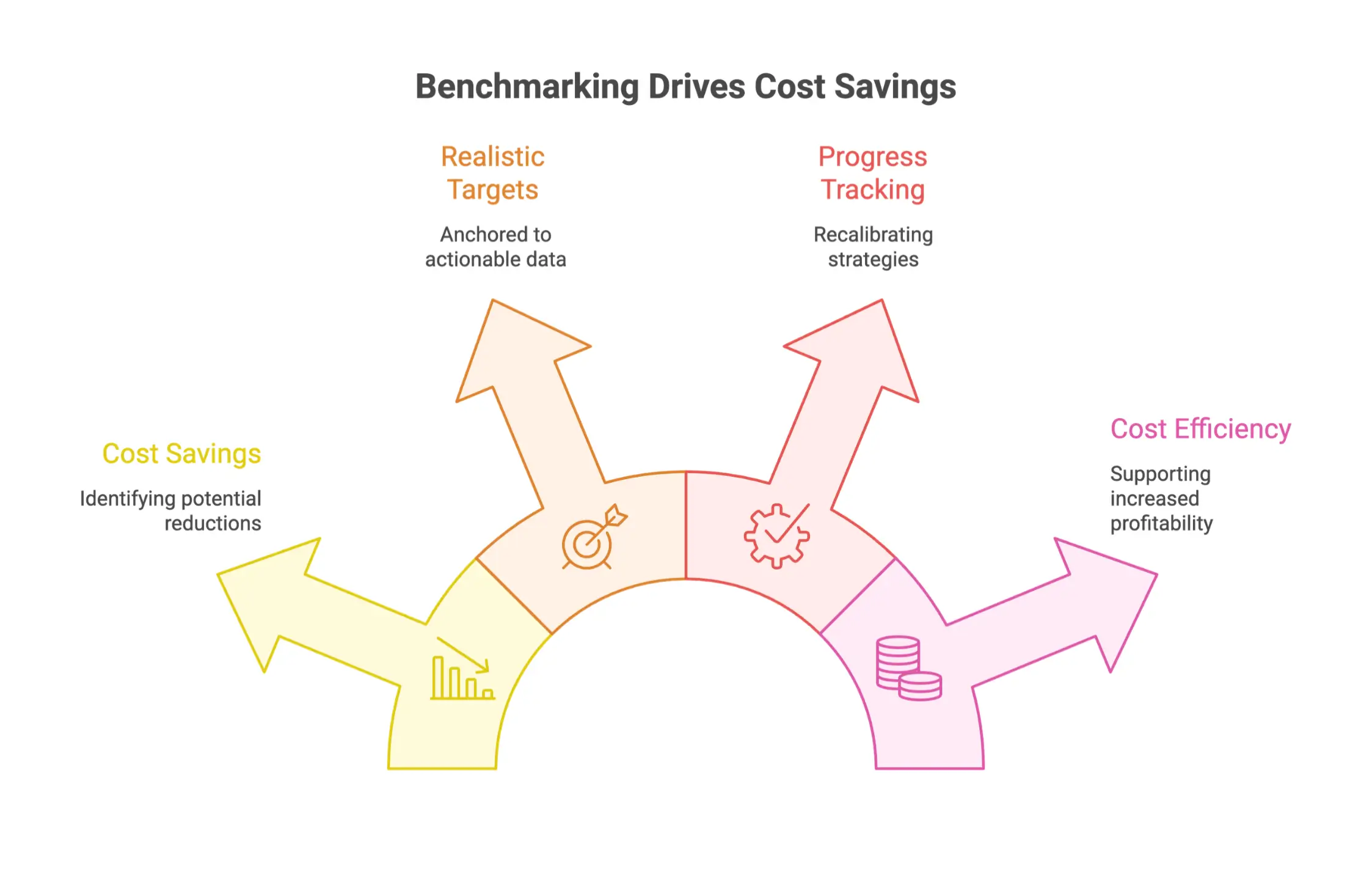
Benchmarking analysis helps companies:
- Identify areas for potential cost savings and improvement by directly comparing costs, key metrics, and performance against competitors and industry standards
- Set realistic targets anchored to actionable data and best practices
- Track progress over time and recalibrate strategies for continuous improvement
- Reveal opportunities for cost efficiency that support increased profitability
By implementing benchmarking into everyday cost management and business strategy, organizations sustain operational excellence and financial health.
Best Practices and Challenges in the Cost Benchmarking Process
Implementing an effective cost benchmarking process combines good practices with an awareness of common pitfalls.
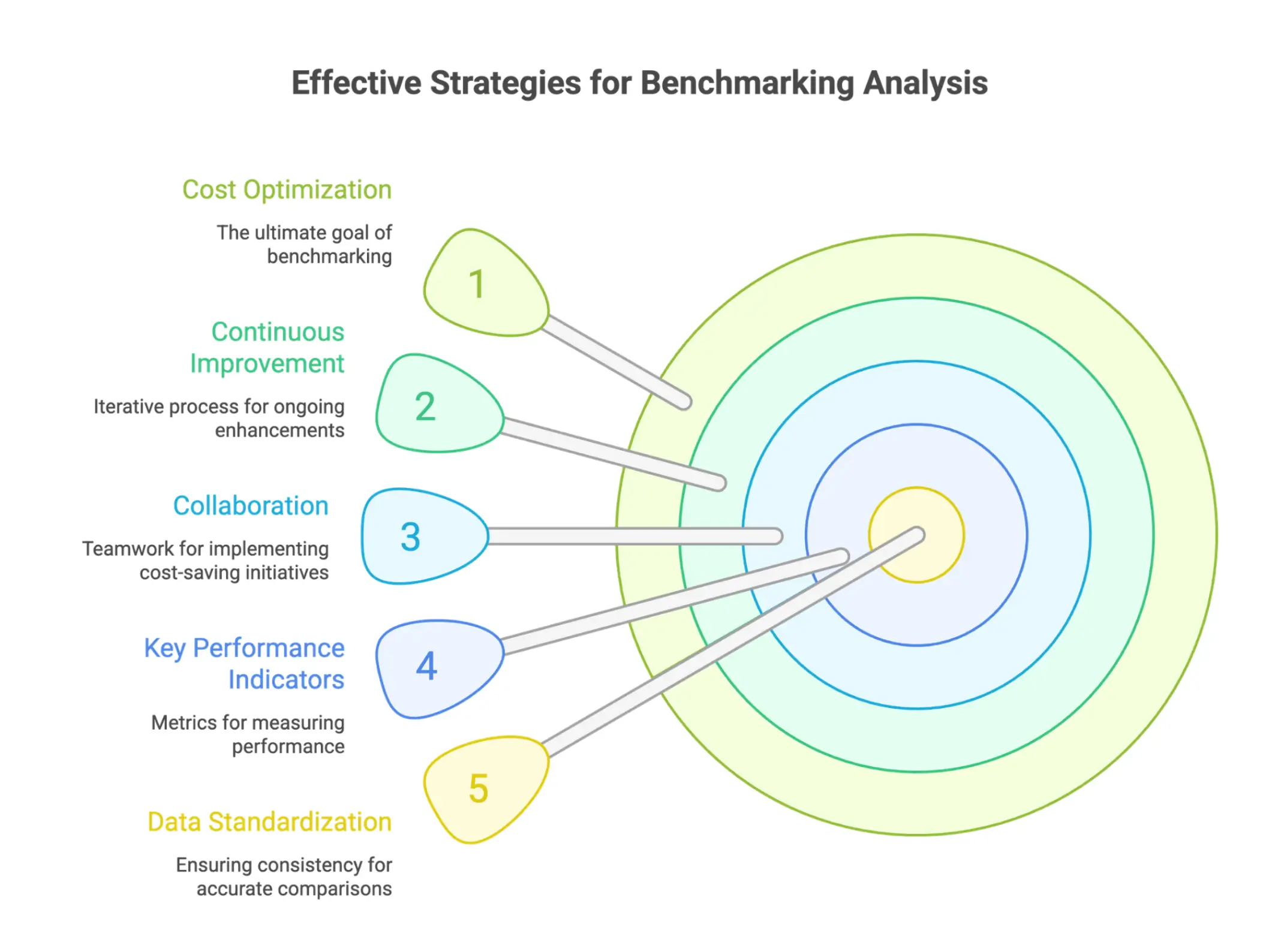
Effective Strategies for Benchmarking Analysis
- Gather accurate and relevant data from both internal systems and benchmarking partners, ensuring high quality for reliable comparisons
- Standardize collection and analysis to allow apples-to-apples benchmarking
- Use normalized cost data to make equitable comparisons and highlight cost differences by eliminating external distortions such as inflation or regional factors
- Rely on consistent key performance indicators and quantifiable performance metrics that resonate with industry standards
- Encourage collaboration across functions or business units to implement cost saving initiatives highlighted by benchmarking
- Integrate benchmarking analysis as a continuous improvement feedback loop. Benchmark, act, review, and iterate
Organizations that utilize cost benchmarking technology such as Nomitech's benchmarking software gain a valuable tool for comparing, analyzing, and tracking costs, turning actionable insights into informed decisions that directly impact the bottom line.
Frequently Asked Questions About Cost Benchmarking
What is cost benchmarking and why is it important?
Cost benchmarking is the systematic practice of comparing your organization’s costs and key processes with those of industry peers and best-in-class competitors. It helps you identify areas for improvement, achieve cost efficiency, and make decisions based on actionable benchmarking analysis rather than assumptions.
How does the cost benchmarking process work?
The benchmarking process generally follows these steps: set clear goals, collect accurate cost data, compare performance against industry benchmarks, conduct root cause and behavior analysis, implement cost saving initiatives, and monitor progress for continuous improvement.
What are the main types of cost benchmarking?
There are two main types: internal benchmarking (comparing business units or departments within your organization) and external benchmarking (comparing your costs and performance metrics to industry peers or industry benchmarks, including pricing and processes).
How does cost benchmarking benefit regulated industries like utilities?
In regulated sectors, cost benchmarking provides transparent, data-driven analysis that informs pricing, identifies underperforming business units, and drives regulatory compliance, enabling organizations to ensure comparability and implement effective cost management strategies.
What are the biggest challenges in implementing cost benchmarking programs?
Challenges include gathering reliable and relevant data, normalizing external market conditions, choosing the right metrics for meaningful comparisons, and maintaining objective benchmarking analysis that leads to real, actionable strategies and continuous improvement.
Summary: Unlocking the Value of Cost Benchmarking
Cost benchmarking is a strategic, data-driven approach for organizations to compare costs and performance, identify areas for improvement, and set actionable targets for cost management and cost efficiency. By systematically comparing production costs and processes to industry standards and competitors, companies can reveal hidden opportunities for cost savings, develop informed decisions, and stay competitive in an evolving market.
Integrate cost benchmarking into your cost management framework, use robust data and benchmarking analysis, and leverage digital tools for accurate, ongoing results. Doing so empowers your team to track progress, enhance profitability, and continually improve performance for long-term business growth.
Ready to Take the Next Step?
If you’re considering a more modern approach to cost benchmarking and cost management, explore Nomitech’s full suite or reach out to our team to find the proven tools that fit your workflows.





Stay Up to Date
Subscribe to our Newsletter today and receive the latest updates, trends, expert insights, and exclusive offers tailored to your specific industry.