

What Is Benchmarking? A Complete Guide to Strategic Comparison for Business Performance
TL;DR: Benchmarking is a structured process of comparing your business’s processes, outcomes, or products to industry standards or top performers. It drives performance improvement, goal setting, and competitive advantage by identifying actionable gaps. Learn how systematic benchmarking, the right tools, and best practices translate comparisons into real gains.
What Is Benchmarking? Understanding the Basics
Ever catch your team making choices based more on gut feeling than solid evidence, especially when there’s pressure to improve quality or control costs? In today’s business operations, relying on dated habits or scattered data just leads to missed opportunities and uncertainty about your organization’s performance. It becomes tough to measure progress, track performance targets, or identify areas for improvement.
This isn’t just an issue for new teams. Experienced groups can also lose sight of best practices or hidden inefficiencies. This is where benchmarking comes in. But what is benchmarking exactly, and why is it so vital for business performance?
Benchmarking enables organizations to gain clarity, uses benchmarking data to highlight performance gaps, and helps you measure progress with meaningful insights. Instead of merely reviewing spreadsheets, benchmarking methodologies support teams by tying practice benchmarking to actual improvement.
Stay with us, and by the end of this guide you’ll know what benchmarking is, how the benchmarking process works, and how the right benchmarking software and benchmarking partners unlock superior performance. Let’s start by defining what is benchmarking and why it matters.
Defining What Is Benchmarking
At its core, benchmarking is measuring performance by comparison. The Cambridge English Dictionary defines it as comparing your quality or performance against trusted industry standards or the best available.
In business benchmarking, this means looking at both financial and non-financial metrics and assessing your organization’s performance using relevant data from your field. BrandMentions adds that benchmarking involves comparing results, practices, or products with those of others in your market.
Benchmarking software, such as CostOS, assists in process benchmarking by transforming raw data into actionable benchmarking studies and meaningful comparisons.
The real strength lies in making benchmarking studies actionable. Instead of simply asking, “How do we compare?”, benchmarking enables organizations to make strategic decisions based on benchmarking data and industry benchmarks. It becomes a key driver for performance improvement, justifying investments and guiding best practice benchmarking. Modern benchmarking software automates analysis, making benchmarking an ongoing process woven into daily work.
Types of Benchmarking: An Overview
Understanding the types of benchmarking available enables organizations to match the correct benchmarking methodologies to their goals and available data. What types of benchmarking are there?
Types of Benchmarking Explained
The three primary types of benchmarking are internal benchmarking, competitive benchmarking, and strategic benchmarking. Each has unique objectives and best practices.
Internal Benchmarking
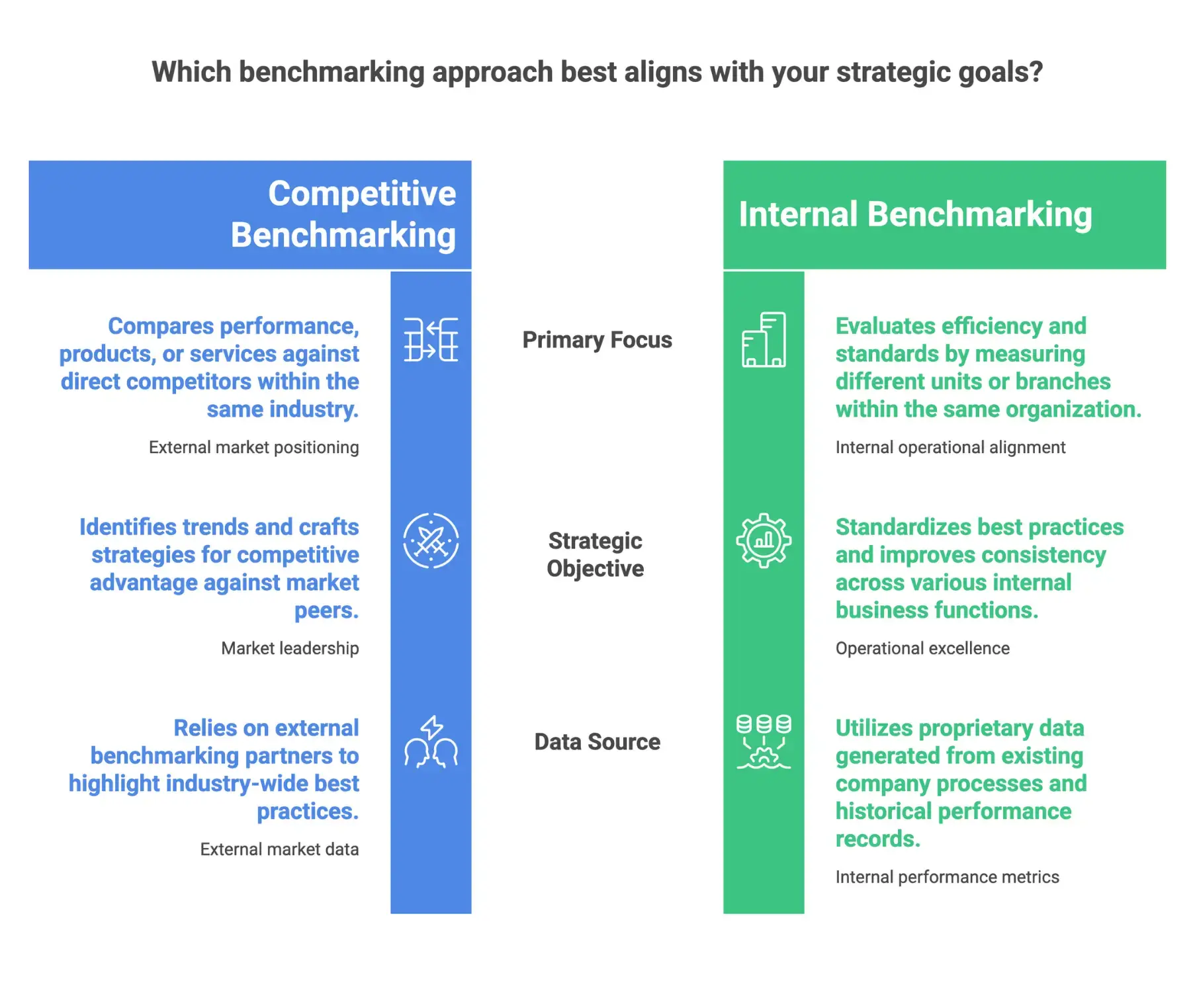
Internal benchmarking involves comparing performance within the same organization, such as between different departments, teams, or branches. This identifies best practices internally and helps spread innovation and efficiency in business operations. Internal benchmarking makes it easier to identify areas needing improvement using collected data that’s consistent across the organization.
Competitive Benchmarking
Competitive benchmarking focuses on comparing performance metrics against those of competitors in your industry or market segment. This type of benchmarking enables you to analyze benchmarking data to identify strengths, weaknesses, and areas where you can gain competitive advantage. The primary objectives include recognizing your market position, identifying trends, and leveraging innovative strategies from similar companies. Pigment underscores best practice benchmarking in this context, pointing out that you should identify suitable benchmarking partners and conduct benchmarking carefully for meaningful insights.
Strategic Benchmarking
Strategic benchmarking looks beyond your industry to world-class organizations. Here, the goal is to study operational processes across industries, adapt industry best practices, and apply superior strategies. Strategic benchmarking is especially valuable for organizations seeking future performance gains and forward-thinking approaches.
Performance Benchmarking
Performance benchmarking compares the performance levels of organizations for particular processes, business performance, or key activities. It uses both financial management and non-financial measures to identify trends and opportunities for performance improvement.
Functional Benchmarking
Functional benchmarking involves comparing specific functions or processes (like manufacturing process or customer service reps) with those of industry leaders, even if they’re outside your sector. This helps identify opportunities to boost operational efficiency and apply best practice benchmarking.
Best Practice Benchmarking
Best practice benchmarking is all about studying high-performing organizations and adapting the practices that lead to superior performance in your own business operations.
Practice and Informal Benchmarking
Practice benchmarking covers both structured and informal benchmarking approaches. Informal benchmarking includes ad-hoc comparisons, insights from industry conferences, or discussions with benchmarking partners outside of formal studies.
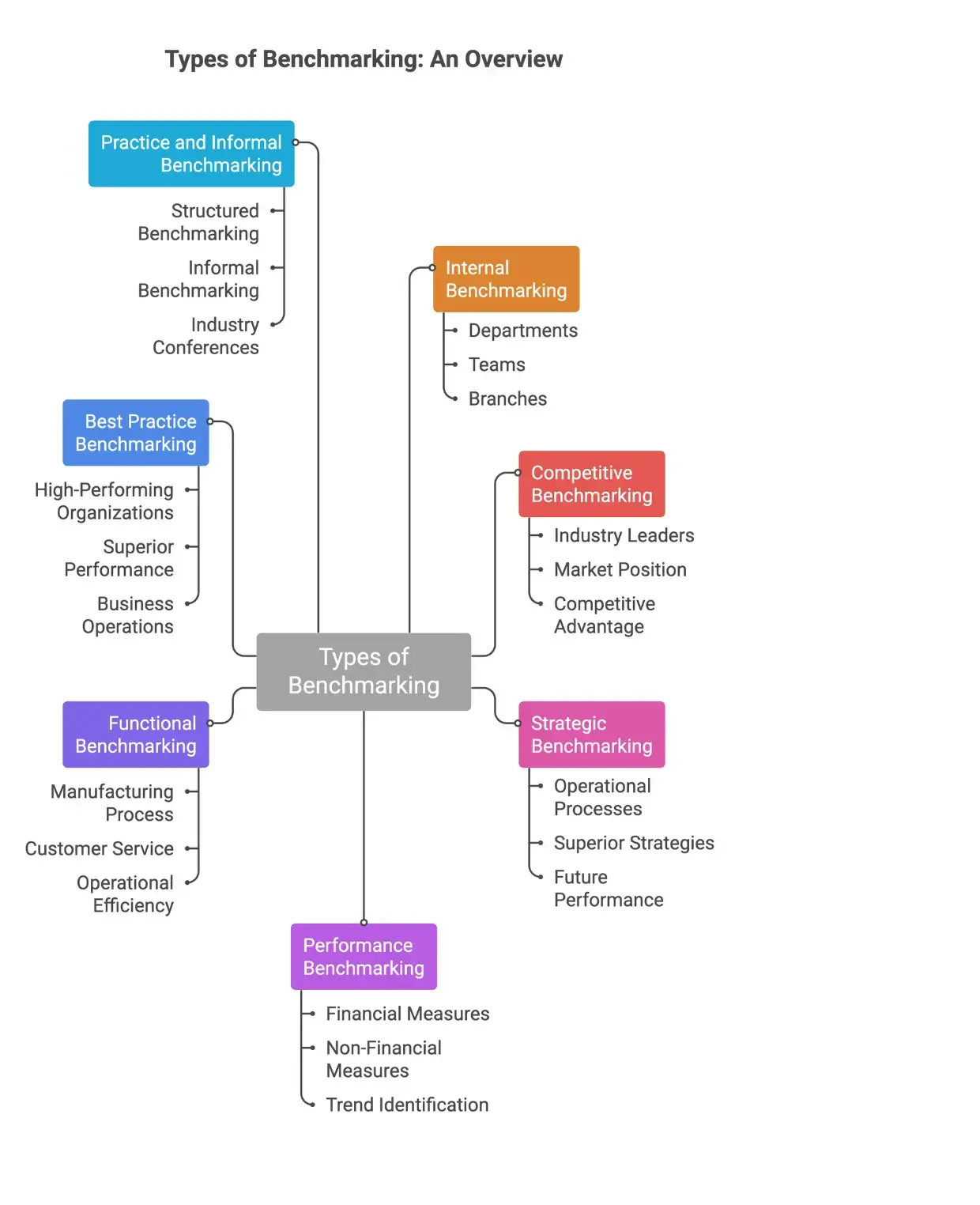
Table: Types of Benchmarking
Type
Description
Example
Internal Benchmarking
Compares departments/teams within the same organization
Sales teams comparing results
Competitive Benchmarking
Compares performance with direct competitors in the same industry
Product features vs. rivals
Strategic Benchmarking
Analyzes best practices across different industries
Adopting logistics from retail
Performance Benchmarking
Benchmarks specific process outcomes or KPIs
Order fulfillment speed
Functional Benchmarking
Compares a function/process with other industries’ best-in-class
HR processes across sectors
Best Practice Benchmarking
Focuses on industry leaders’ methods
Emulating top safety records
The Benchmarking Process: Steps and Methodologies
Understanding the benchmarking process is key to achieving valuable insights, performance improvement, and continuous improvement. This benchmarking initiative is not a single event but an ongoing commitment.
Core Steps in the Benchmarking Process
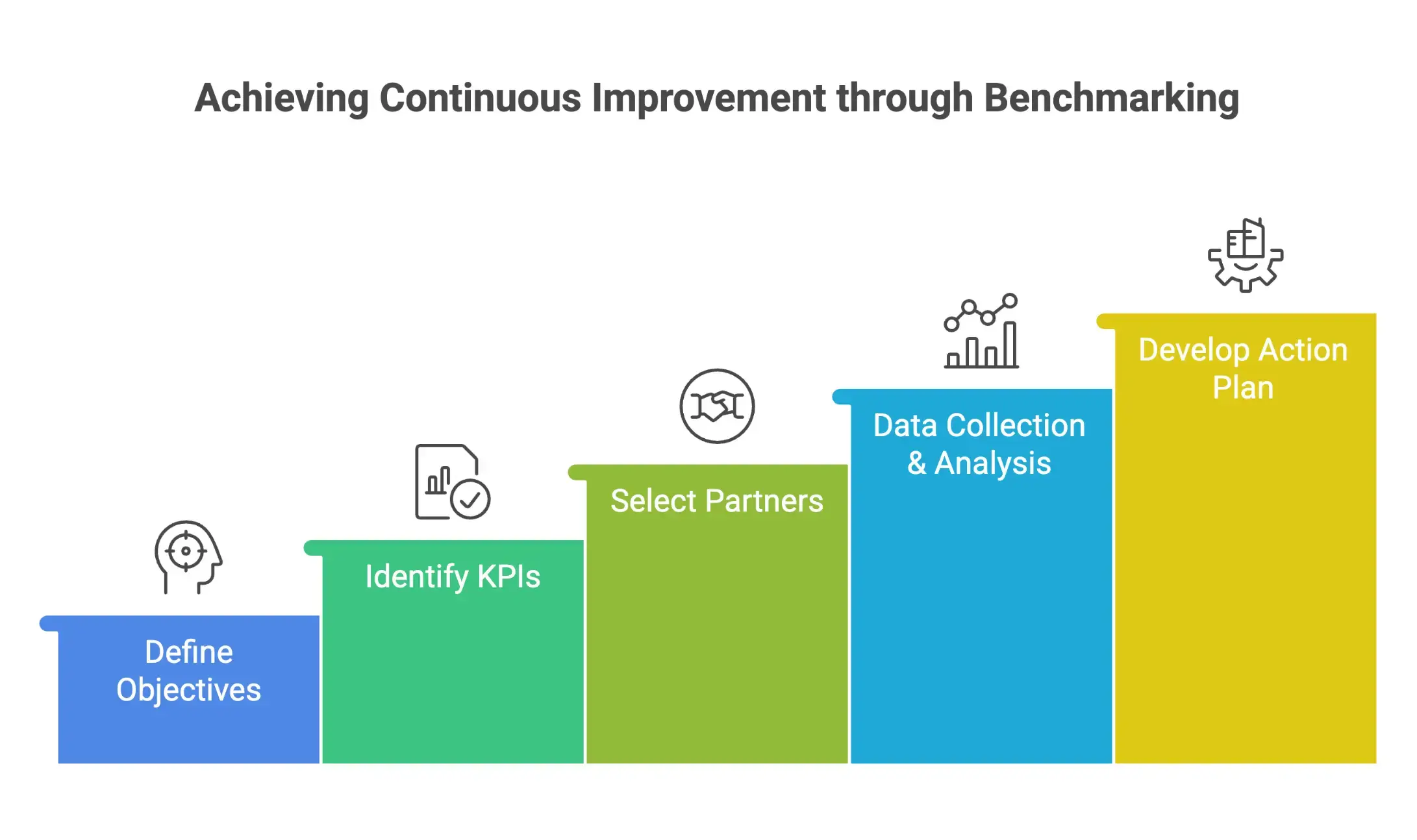
The benchmarking process typically involves five key steps:
- Define Objectives and Scope: Clearly outline what you want to achieve and which business performance or organizational goals to target.
- Identify Key Performance Indicators (KPIs): Select metrics that matter for measuring performance, such as customer satisfaction, efficiency, or cost.
- Select Benchmarking Comparisons and Partners: Identify suitable benchmarking partners, whether internal, external, or industry leaders, and ensure fair baselines.
- Data Collection & Analysis: Gather benchmarking data (quantitative data and qualitative insights), perform process mapping, and use benchmarking studies to identify trends and performance targets.
- Develop Action Plan for Continuous Improvement: Build a plan that details improvement steps, responsible stakeholders, and milestones to measure progress. Continuous improvement should be embedded in this plan, guiding each benchmarking initiative.
Additional Considerations in the Benchmarking Process
- Monitor progress regularly to confirm you are on track to meet benchmarks. Benchmarking code and dashboards from benchmarking software can help track progress.
- Ensure that relevant data and collected data are consistent, current, and comparable across partners or industry benchmarks.
- Adjust plans as new benchmarking data uncovers further opportunities for improvement.
Best Practice Benchmarking and Data Collection
Practice benchmarking starts with high-quality data collection. Having robust benchmarking studies and reliable benchmarking partners ensures you draw meaningful, valuable insights to drive business performance.
- Leverage Benchmarking Software: Tools help automate data collection, regression analysis, and comparison, enabling organizations to efficiently conduct benchmarking.
- Document Baselines: Recording your starting point is essential for measuring future performance.
Categories and Examples of Benchmarking
Benchmarking can be adapted to suit many contexts and business operations. Let’s review further:
Business Benchmarking in Services and Products
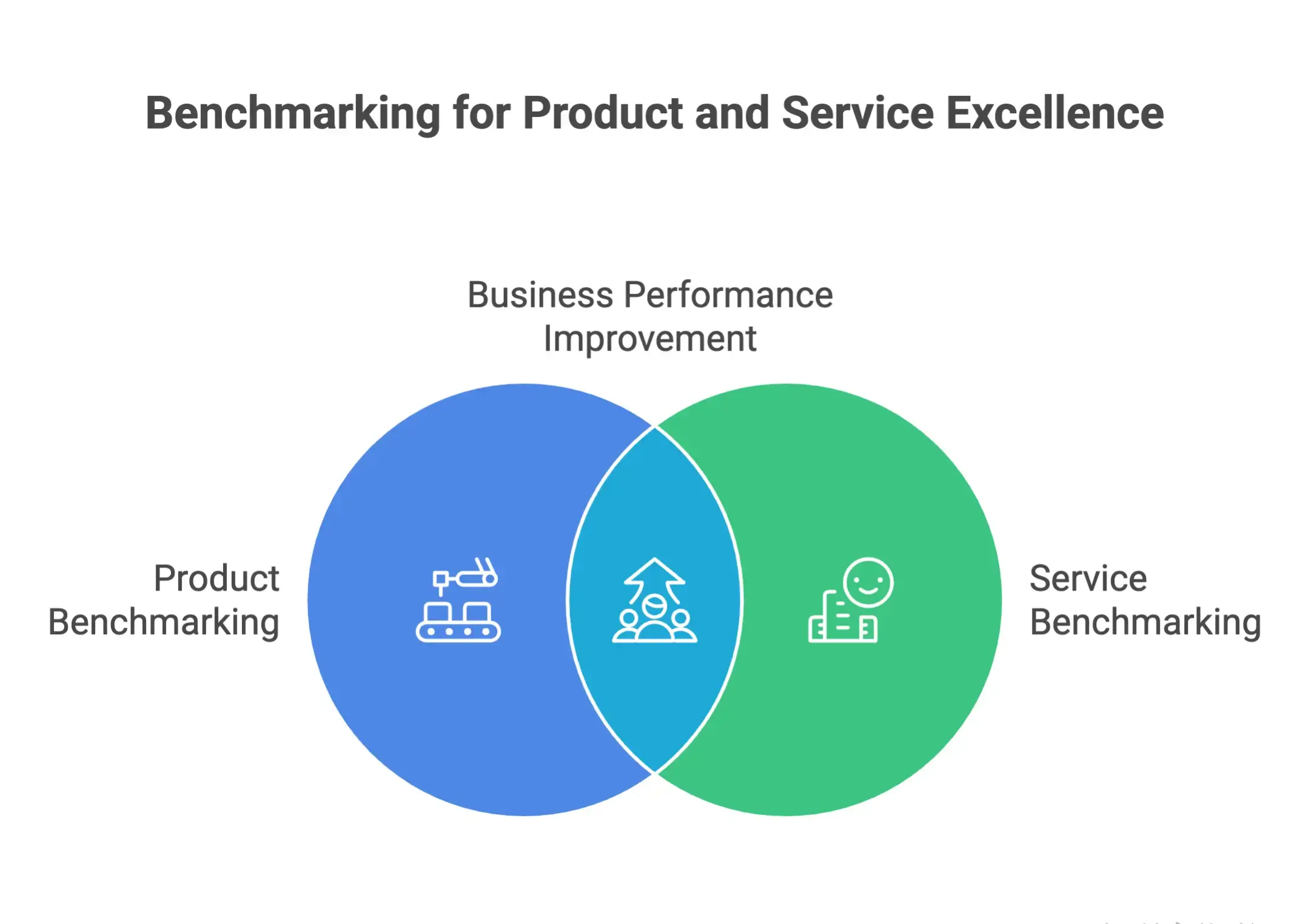
Business benchmarking often compares customer satisfaction, product quality, or business operations with those of industry leaders or top performers. Comparative analysis reveals performance gaps and best practices that boost productivity.
- For product-focused businesses, process benchmarking might map every step from manufacturing process to delivery, comparing each with competitors.
- For service businesses, key performance indicators may include customer satisfaction or service delivery times compared to the same industry peers.
Comparative Analysis in Business Operations
Comparing performance internally by benchmarking a department or process within the same organization or externally provides valuable insights. For business operations, performance benchmarking identifies bottlenecks, reveals areas to prioritize for operational efficiency, and helps you measure progress against industry best practices.
Key Objectives and Benefits of Benchmarking
Why conduct benchmarking, and what value does it bring?
Identifying Areas for Performance Improvement
Benchmarking helps businesses identify areas requiring attention by comparing their organization’s performance and key metrics against industry standards or best practices. This allows leaders to determine gaps, identify opportunities for improvement, and implement innovative strategies.
Setting Realistic Goals and Driving Competitive Advantage
When you engage in regular benchmarking, it’s easier to set actionable performance targets, track progress, and make data-driven decisions. The resulting performance improvement not only boosts efficiency but also bolsters your organization’s ability to compete. With clear benchmarking data, you can argue for investment or process changes and track progress toward measurable results.
Fostering a Culture of Continuous Improvement
Benchmarking naturally drives a culture of continuous improvement. It’s not just a one-and-done project but an ongoing process that encourages periodic reviews, informed pivots, and alignment with strategic goals.
Core Metrics and Standards in Benchmarking
Success in benchmarking relies on a clear understanding of what to measure and against what standards.
Identifying Key Metrics and Critical Success Factors
You can’t measure everything. Focus on the performance drivers and key performance indicators that matter to your company’s performance. Defining metrics makes practice benchmarking targeted and actionable. Examples include financial management measures, customer satisfaction scores, or quality metrics relevant for your market.
Establishing Accepted Performance Standards
Benchmarks only make sense if the standards and baselines are correct. Use industry standards, your own performance history, or direct competitor data as reference points. Modern benchmarking software helps codify benchmarks so you can keep up with changing industry trends and market trends.
Competitive Benchmarking Explained
Competitive benchmarking involves comparing your organization’s performance, products, or services against direct competitors within the same industry or market segment. Here are some best practices:
- Identify Strengths and Weaknesses: Analyze metrics to find out where you lead or lag in your market.
- Discover Benchmarking Partners: Pinpoint suitable benchmarking partners whose performance highlights new best practices.
- Set Reachable Goals: Use benchmarking data to set performance targets that align with industry standards.
- Leverage External Comparison: Gaining perspective from competitive benchmarking allows you to identify trends and craft strategies for competitive advantage.
Implementing Benchmarking Initiatives: Best Practices and Pitfalls
Best Practices for Implementing Benchmarking
- Select benchmarking partners and comparisons carefully to ensure meaningful insights.
- Utilize benchmarking software for consistent data collection and analysis.
- Make data-driven decisions based on clear benchmarking studies and dashboards.
- Integrate benchmarking into ongoing business operations, not just as a quarterly or yearly review.
- Encourage cross-functional collaboration and buy-in from your benchmarking team across departments.
- Use benchmarking methodologies and benchmarking code adapted to your organization.
Common Challenges and Limitations
- Avoid apples-to-oranges comparisons when selecting benchmarking partners.
- Ensure collected data is current, relevant, and gathered in the same way each cycle.
- Plan for monitoring progress and continuous feedback loops.
- Recognize that competitive benchmarking or process benchmarking is only as strong as the benchmarking data and benchmarking methodologies applied.
Industry Applications and Real-World Examples
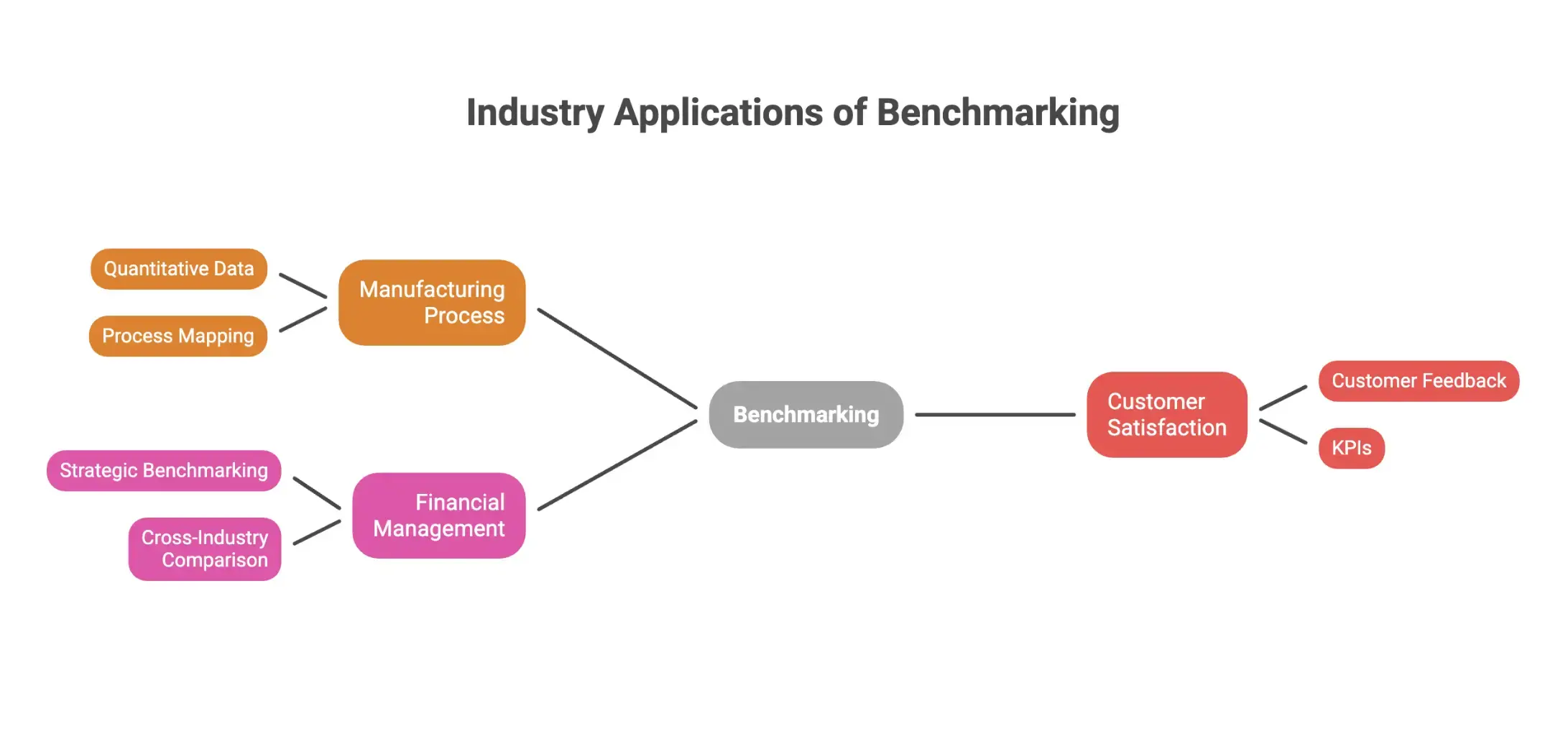
Benchmarking is flexible and can be applied across a variety of business operations, from manufacturing process optimization to customer service reps efficiency.
- Manufacturing Process: Compare output and costs using quantitative data and process mapping for higher operational efficiency.
- Customer Satisfaction: Leverage customer feedback and KPIs for service benchmarking.
- Financial Management: Benchmark financial performance for strategic benchmarking within and across industries.
Frequently Asked Questions
What is benchmarking in business and project environments?
Benchmarking is a structured, systematic process in business benchmarking that involves comparing your organization’s results, processes, or products to industry standards, best-in-class performers, or your own historical performance. It enables organizations to identify areas for improvement and strategic advantage.
What are the main types of benchmarking?
The most common types include internal benchmarking (within the same organization), competitive benchmarking (against external peers or industry leaders), strategic benchmarking (learning from world-class organizations), functional benchmarking, performance benchmarking, and best practice benchmarking.
Why is using specific metrics and accepted standards important in benchmarking?
Benchmarking only works if you’re clear about what you’re measuring and the standards you’re measuring against. Using key metrics and relevant benchmarks ensures comparisons are meaningful, actionable, and support performance improvement.
How does benchmarking help close performance gaps?
Benchmarking helps organizations identify areas requiring attention. By systematically comparing your current state to accepted standards or top performers, benchmarking highlights performance gaps. You can then set clear targets and action steps to close those gaps and track progress over time.
What are common mistakes to avoid when implementing benchmarking?
Many teams struggle with choosing poor comparison points, using inconsistent or incomplete data, and not creating a continuous improvement cycle. Good benchmarking code, solid benchmarking methodologies, and a culture of continuous improvement help avoid these pitfalls.
Ready to Conduct Benchmarking for Your Organization?
If you’re exploring business benchmarking or want to conduct benchmarking as an ongoing process, modern cost estimation and benchmarking software can streamline benchmarking data collection, analysis, and reporting.
To learn more, visit Nomitech’s full suite or get in touch with our team to find the right fit for your benchmarking initiative.




Stay Up to Date
Subscribe to our Newsletter today and receive the latest updates, trends, expert insights, and exclusive offers tailored to your specific industry.