

What Is Benchmarking Data? Guide, Types & Best Practices
TL;DR: Benchmarking data gives organizations objective reference points to see how they measure up, spot where they can improve, and set achievable targets. In this guide, you'll get a clear understanding of what benchmarking data is, the benchmarking process, data collection and analysis strategies, benchmarks types, actionable examples, and essential steps for linking competitive analysis to real results. All supported by practical insights and leading tools.
What is Benchmarking Data?
So, what is benchmarking data? Benchmarking data refers to the collection of key performance indicators (KPIs), metrics, or data points that are used as references to evaluate an organization’s performance in relation to competitors, industry benchmarks, or best practices. The U.S. Bureau of Labor Statistics explains benchmarking as a standard or point of reference by which data can be compared.
In essence, benchmarking data provides organizations with a way to understand how their own performance aligns with the broader market or similar organizations. These reference points serve to highlight performance gaps, opportunities for improvement, and potential for competitive advantage.
With benchmarking data, numbers transform from abstract figures into actionable insight. Whether you're assessing cost per unit, project timelines, or product quality, benchmarking applies clear industry standards and enables meaningful, data-driven decisions. This clarity shifts conversations from opinions to targeted action, making benchmarking a core part of business performance evaluation.
Why Is Benchmarking Data Important?
Understanding what is benchmarking data and why it matters can be a game-changer for organizations aiming to achieve superior performance. Benchmarking data shines a spotlight on areas where organizations are either excelling or lagging behind, enabling them to improve performance and stay competitive.
Employers and teams use benchmarking data to:
- Identify performance gaps and areas needing attention
- Set objectives grounded in real-world evidence
- Focus improvement efforts on factors that drive business performance
- Measure progress over time against consistent standards
Benchmarking data also supports long-term strategies, not just short-term fixes. It helps set realistic and data-driven performance targets that align with market expectations and drives continuous improvement.
Types of Benchmarking: Internal, External & More
An effective benchmarking process starts with understanding the different types of benchmarking. At a high level, these can be divided into broad categories: internal benchmarking and external benchmarking.
Internal Benchmarking
Internal benchmarking compares performances among teams, departments, or processes within the same organization. For example, a company might compare sales performance across different regions or examine how two departments handle the same process. This allows organizations to identify best practices internally and apply them universally to improve their own processes.
External Benchmarking
External benchmarking extends the comparison beyond internal operations to other organizations, such as competitors or industry leaders. This approach helps organizations compare performance based on established industry benchmarks and highlights competitive advantages or gaps. It might involve comparing your organization’s performance statistics, profit margins, or product quality with those of similar organizations in the same industry.

Additional Types of Benchmarking
- Performance Benchmarking: Focuses on comparing overall business performance metrics like revenue size, market share, or customer satisfaction to industry standards.
- Process Benchmarking: Compares internal workflows or business processes to those in top-performing organizations.
- Strategic Benchmarking: Examines strategy and direction, evaluating how leading competitors structure their approach for long-term growth or market entry.
- Functional Benchmarking: Targets specific functions, like human resources or finance, to identify effective policies and practices.
- Product Benchmarking: Looks at competitor research, comparing products or services, pricing strategies, and features.
- Financial Benchmarking: Analyzes key financial performance metrics against industry averages.
- Practice Benchmarking: Involves comparing operational practices and methodologies.
- Collaborative Benchmarking: Collects benchmarking data from trade associations or industry groups, increasing data points and reliability.
- Best-in-Class Benchmarking: Compares with the leading competitor in a particular function, process, or outcome.
- Energy Benchmarking: Applies benchmark analysis to utility data and energy consumption to optimize costs.
Benchmarking Examples
Let’s see benchmarking in action:
- Healthcare: Comparing patient care processes, readmission rates, and customer satisfaction against national standards to improve patient outcomes.
- Manufacturing: Evaluating production cycle times and defect rates versus industry benchmarks to optimize efficiency and product quality.
- E-Commerce/Retail: Analyzing customer retention, conversion rates, and average order values compared to similar organizations to refine strategies.
- Finance: Benchmarking performance using indices like the S&P 500, or tracking key performance indicators across financial institutions.
- Human Resources: Benchmarking HR metrics like employee engagement, turnover rates, and hiring practices across different departments and organizations.
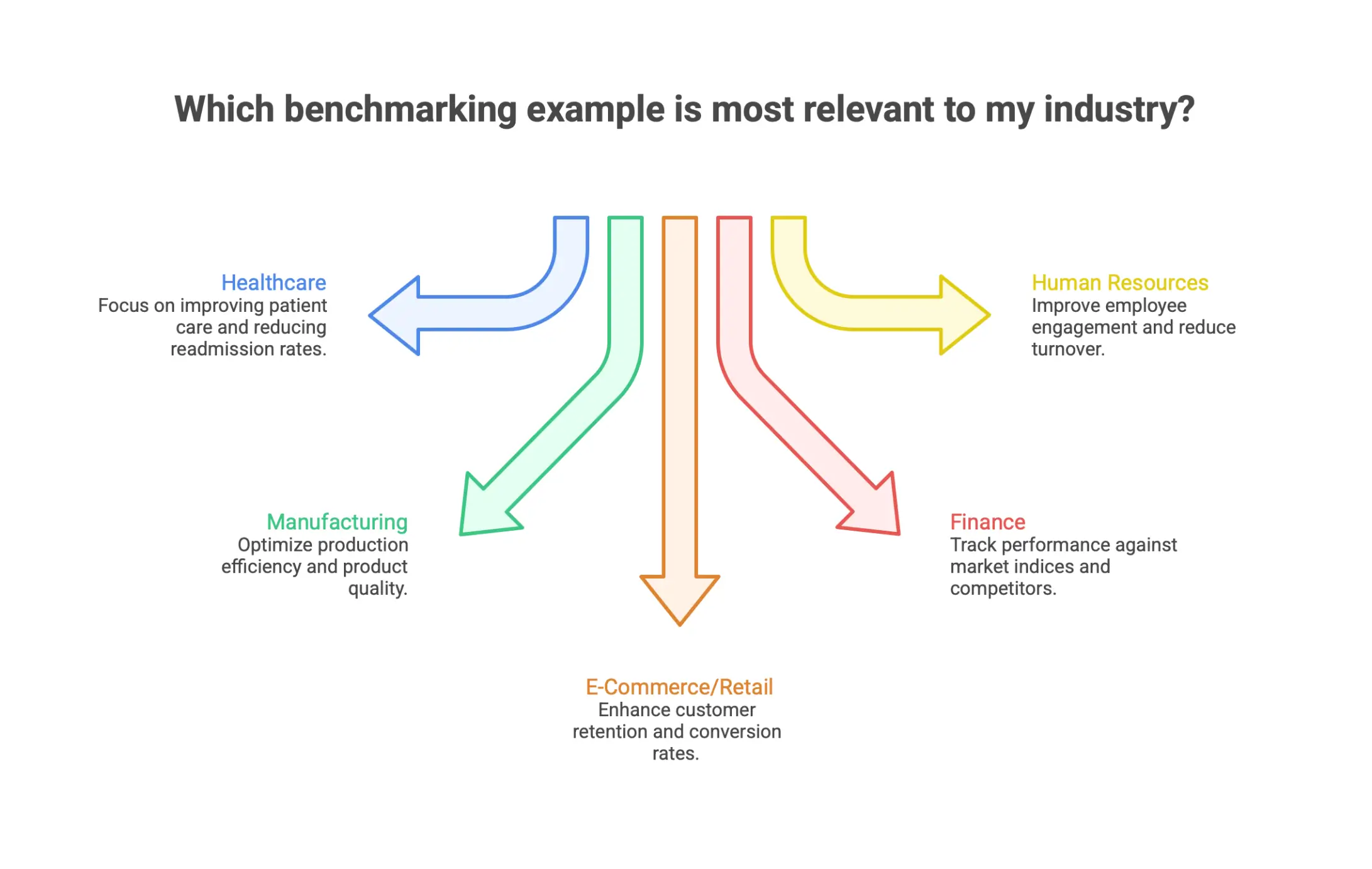
By exploring a variety of benchmarking examples across sectors, you can identify areas to improve performance and gain competitive edge.
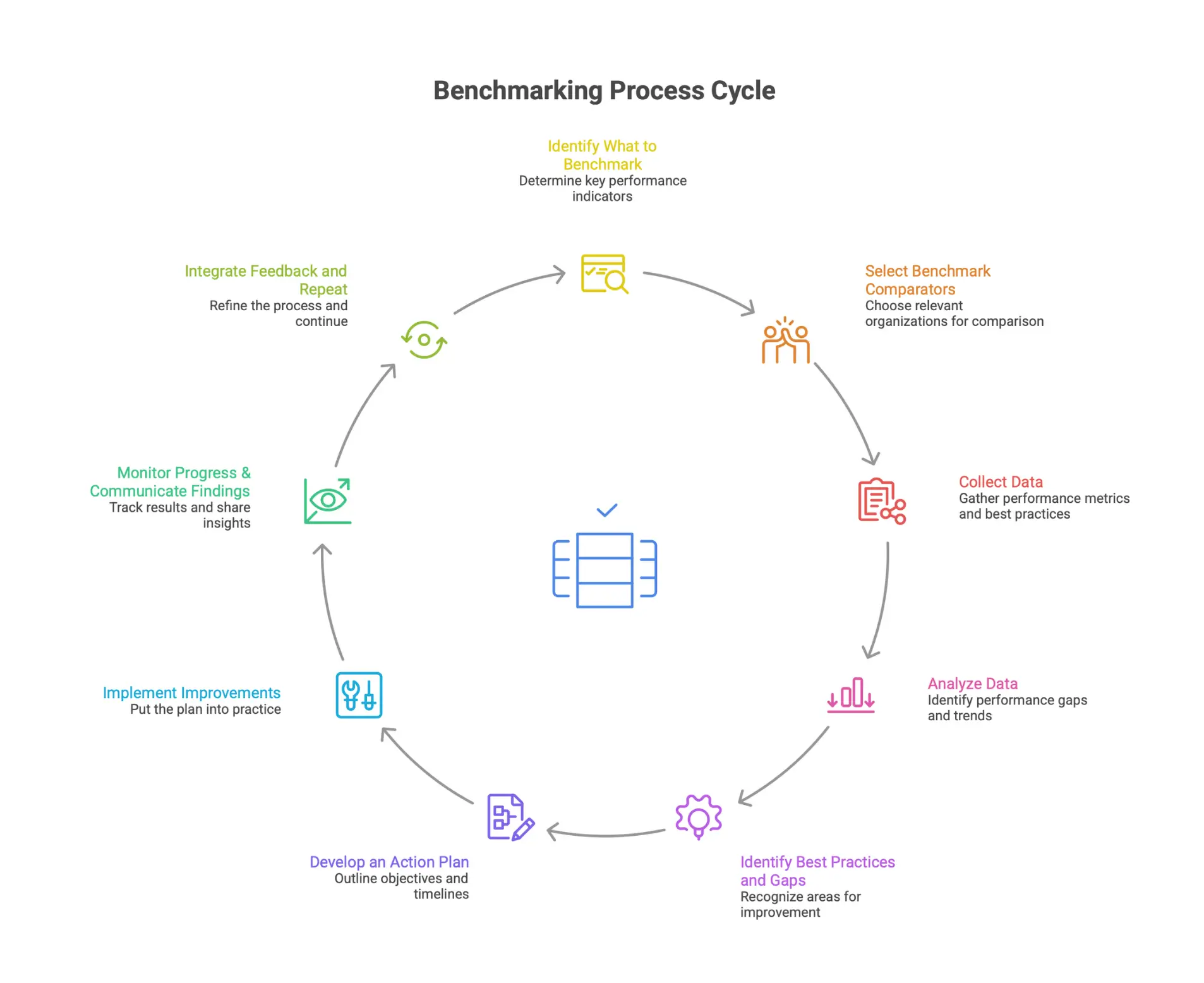
Benchmarking Process: Step-by-Step for Modern Teams
The benchmarking process is systematic and iterative. Here’s how organizations leverage benchmarking data to achieve better results and measure progress.
1. Identify What to Benchmark
Determine which key performance indicators, business processes, or outcomes are crucial to your organization’s performance. Consider your company's goals, operational needs, and competitive context.
2. Select Benchmark Comparators
Choose external organizations, industry leaders, direct competitors, or similar organizations for comparison. You may also compare internal departments or teams through internal benchmarking.
3. Collecting Data
The data collection stage gathers performance metrics, internal data, best practices, and relevant benchmarking data. This can include metrics from your organization’s own performance history, public data sets, and industry standards. Ensuring data sources are trustworthy and methodologies are consistent is important for meaningful analysis.
4. Analyze the Data (Including Statistical Analysis)
Once all necessary data points are gathered, analyze them to identify performance gaps, best practices, and trends. Statistical analysis and SWOT analysis (strengths, weaknesses, opportunities, threats) can help uncover opportunities for business performance improvement.
5. Identify Best Practices and Gaps
Use the benchmarking analysis to identify areas where competitors have superior performance or where the biggest performance gaps exist. Recognize best-in-class approaches and functions that could be adapted within your organization to improve your own performance.
6. Develop an Action Plan
Create a targeted action plan based on the findings. This should outline clear objectives, accountable owners, resources, realistic timelines, and performance metrics to track improvement. An effective action plan prioritizes improvement areas that will yield the most value.
7. Implement Improvements
Put your action plan into practice. This may include process redesign, adopting new operational methods, product benchmarking, or enhancing service delivery based on the benchmarking data collected.
8. Monitor Progress & Communicate Findings
Track results closely against the established performance targets. Monitoring progress ensures ongoing alignment with goals and helps measure which changes are most effective. Communicate results and plans across relevant teams and stakeholders.
9. Integrate Feedback and Repeat
Benchmarking is an iterative process. Integrate feedback mechanisms to continually improve the quality of benchmarking data. Repeat the benchmarking process regularly, adapting to changing industry trends and maintaining data-driven improvement over time.
Data Collection and Analysis: Best Practices
High-quality benchmarking depends on careful data collection and detailed analysis. Here’s how organizations should approach this vital step in the benchmarking process:
Collecting Data
- Focus on quantitative performance metrics like production costs, profit margins, or customer satisfaction ratings.
- Include qualitative information such as operational processes, policies, and best practices.
- Gather data from both internal benchmarks (historical or cross-departmental data) and external sources (public reports, trade associations, competitive analysis).
- Use consistent definitions and timeframes when collecting data points to facilitate apples-to-apples comparisons.
- Engage with valid benchmarking data sources to ensure reliability and relevance.
Analyzing Data
- Conduct thorough analysis to identify performance gaps, trends, and areas for improvement.
- Use statistical analysis or SWOT analysis to make sense of the differences between your own performance, internal peers, and external comparators.
- Pay attention to data relevance and ensure you are comparing metrics that truly matter for your particular function or business objectives.
- Track patterns that signal successful strategies as well as gaps in product quality, customer satisfaction, or operational efficiency.
Real-World Benchmarking Applications
Benchmarking isn’t just about spreadsheets and numbers. It’s a core tool that fuels competitor research, operational decisions, and long-term business growth.
Vendor & Peer Comparisons for Competitive Advantage
Benchmarking helps organizations compare supplier offerings, rates, and service levels against industry benchmarks and leading competitors. Using this valuable information, teams can negotiate better deals during contract renewals and select the right vendors with confidence.
Peer benchmarking supports internal improvement by comparing division, department, or team results to leading practices or similar organizations. These insights drive adoption of best practices and identify areas for competitive edge.
Operational Improvements
Benchmarking turns data points into actionable steps for business process improvement. By leveraging benchmarking data, companies can:
- Isolate steps, workflows, or business processes that lag behind industry benchmarks
- Prioritize changes that drive efficiency or customer satisfaction
- Set strategic goals grounded in market evidence
- Foster a culture of continuous improvement guided by performance benchmarking
Strategic Benchmarking for Long-Term Growth
Strategic benchmarking compares your business strategy, structure, and priorities to the top performers in your field. This helps you spot new industry trends, forecast marketplace shifts, and plan for sustainable growth.
Companies often use benchmarking data to inform long-term business strategies, identify new product or market opportunities, and make data-driven decisions about resource allocation and competitive positioning.
Energy Benchmarking and Other Niche Uses
In sectors like utilities or manufacturing, energy benchmarking is used to compare energy consumption, costs, and efficiency metrics. Benchmarking can also help improve product development, marketing, customer service, and human resources functions.
Benefits of Benchmarking Data
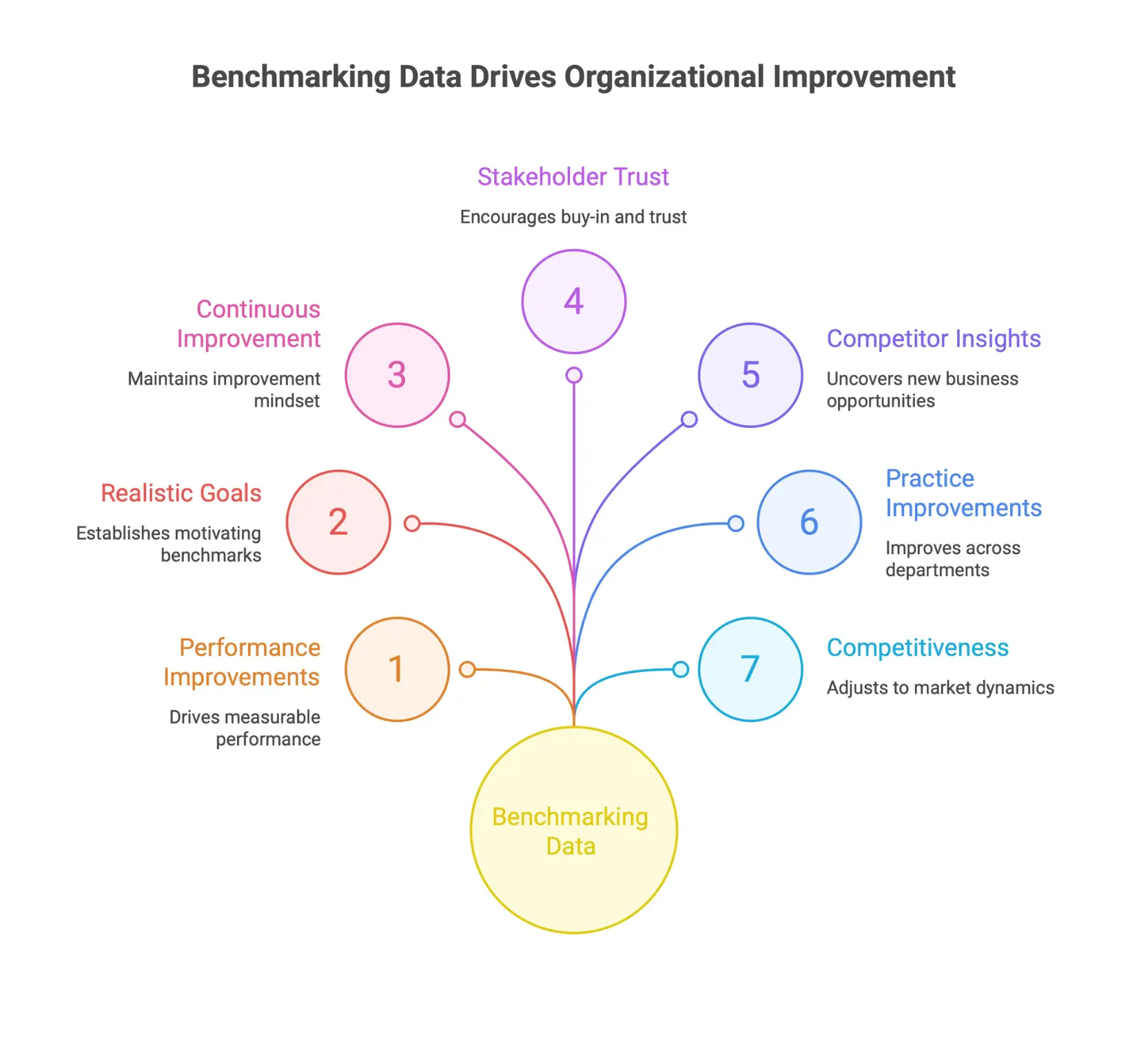
Bringing benchmarking data into your workflow empowers organizations to:
- Drive measurable performance improvements, not just surface-level tweaks
- Establish realistic benchmarks and motivating goals based on real data and similar organizations
- Maintain a continuous improvement mindset by regularly updating targets and adapting to market changes
- Measure progress in a way that encourages buy-in and stakeholder trust
- Gain insight into competitor strengths and uncover new business opportunities
- Improve practices across human resources, customer service, and operational efficiency
- Stay competitive by adjusting to shifting industry standards and market dynamics
Common Challenges in Benchmarking
While benchmarking delivers major benefits, it isn't without hurdles.
Ensuring Relevant Benchmarking Data and Comparability
Selecting data sources and benchmarks that truly fit your organization's needs is critical. It's easy to compare apples to oranges if your definitions, timing, or methodologies differ from competitors. Therefore, ensure that the data you are collecting and analyzing supports your unique business objectives and workforce drivers.
Overcoming Implementation Barriers
Turning benchmarking insights into actionable change involves overcoming resistance, managing change, aligning resources, and ensuring consistent follow-through. Engage stakeholders, develop a clear action plan, and commit to regular progress checks for best results.
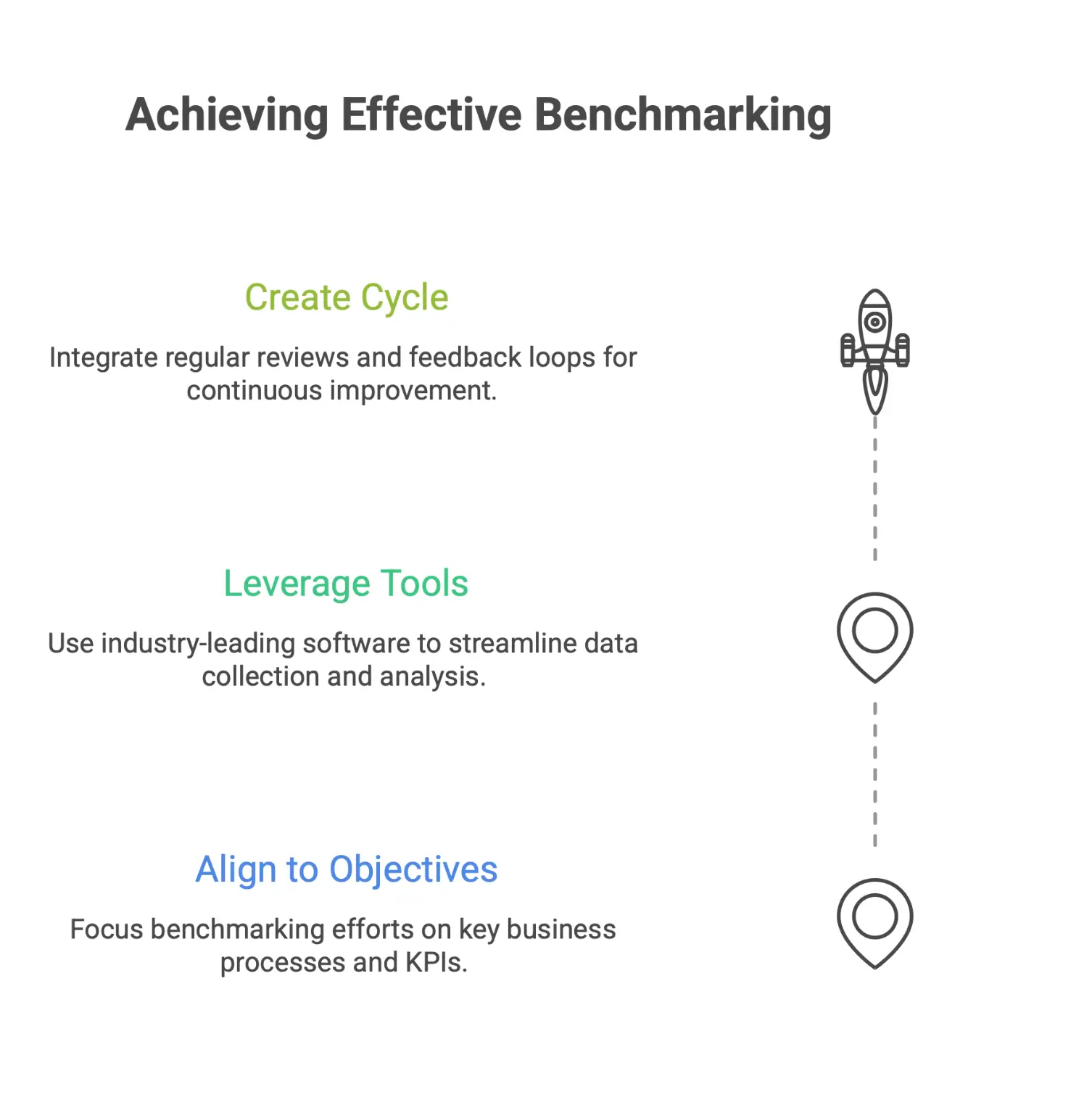
Best Practices for Effective Benchmarking
For benchmarking to drive continuous improvement and superior business performance:
Align to Business Objectives
- Focus benchmarking efforts on the business processes or key performance indicators that truly move your organization forward.
- Define clear objectives for benchmarking, considering short-term gains and long-term strategy, and stick to those priorities.
- Bring relevant teams and leadership into the process early, building consensus and clarifying expectations.
Leverage Tools and Modern Software
- Use industry-leading solutions, like Nomitech’s benchmarking software, to streamline data collection, analysis, and action planning.
- Employ an enterprise estimating suite to bring together all relevant benchmarking data, performance metrics, and continuous improvement tools across your organization.
Create a Feedback and Iteration Cycle
- Benchmarking is not a one-off activity. Integrate regular reviews, periodic data collection, and feedback loops so you can keep adapting to new industry standards and emerging competitor strategies.
- Celebrate improvements and wins, and use benchmarking to set even higher standards for product quality, customer satisfaction, or operational excellence.
Frequently Asked Questions
What is benchmarking data and why does it matter?
Benchmarking data refers to the KPIs, metrics, and reference points used to compare your organization's performance with that of other companies, competitors, or industry standards. It matters because benchmarking provides context, helps identify performance gaps, and sets a foundation for data-driven decisions and improvement plans.
How do organizations collect and use benchmarking data?
Companies collect benchmarking data from both internal sources (historical performance, different departments) and external sources (public indexes, trade associations, competitors’ products, industry reports). This data is then analyzed to identify strengths, weaknesses, and opportunities, supporting action plans and ongoing business process redesign.
What are the most common challenges with benchmarking?
Organizations often struggle with collecting relevant benchmarking data, ensuring comparability, integrating benchmarking with overall strategy, and making changes based on the findings. Managing change and fostering engagement across functions are ongoing challenges.
How does the benchmarking process drive better business decisions?
Following a systematic benchmarking process, identifying what to benchmark, analyzing collected data, creating action plans, implementing changes, measuring progress, and iterating, gives leaders clearer direction. They can focus resources, establish realistic performance targets, and improve business operations using true market context.
Can benchmarking benefit all industries and team sizes?
Absolutely. Benchmarking is valuable for any organization aiming to stay competitive and improve performance. From manufacturing and healthcare to HR and retail, benchmarking is flexible and applies to organizations of all sizes and industries.
Ready to Take the Next Step?
Curious about how modern cost estimation platforms can help you leverage benchmarking data and streamline the benchmarking process? Explore Nomitech’s full suite or get in touch to discover the right approach for your workflow. With the right tools and a focused, data-driven strategy, your team can identify areas for improvement, gain competitive advantage, and stay ahead of industry trends.





Stay Up to Date
Subscribe to our Newsletter today and receive the latest updates, trends, expert insights, and exclusive offers tailored to your specific industry.