

What Is a Benchmarking Model? Complete Guide & Best Practices
TL;DR: Benchmarking models compare your results to industry leaders, allowing you to identify gaps and drive continuous improvement. This guide explains what is a benchmarking model, explores core types and frameworks, highlights best practices, and shows how digital tools support ongoing business process analysis and strategic operational improvement.
What Is a Benchmarking Model?
Ever wonder why project costs get out of hand even after detailed planning, or how your business process compares to your competitors? Not knowing how your performance matches up to industry requirements can leave your organization guessing about which areas need improvement. You might also miss out on opportunities.
In today’s fast-moving business landscape, fragmented information and scattered data sources often challenge organizations. Reliable performance analysis is tough when decision-making is based on rough assumptions instead of facts. If you don’t know how you compare, it’s hard to identify where better processes or best practices will move the needle.
That’s exactly where benchmarking models come into play. Through a structured process, a benchmarking model enables organizations to measure and analyze the performance of specific products, services, or workflows against industry leaders or international standards. Applying evidence-based benchmarking, especially through tools like Nomitech's CostOS, helps teams clarify where change is needed, compare their performance to others, and act with confidence.
Benchmarking serves as a compass for continuous improvement and optimized operations. It doesn’t stop at simply showing you the numbers. It identifies areas, systems, or processes for improvements, whether incremental or dramatic. Competitive benchmarking directly evaluates your organization against competitors to understand market positioning and pinpoint ways to gain a competitive edge.
So, what is a benchmarking model? In short, it is a repeatable business process that measures, analyzes, and compares key performance metrics and practices with those of industry bests. The goal is to close performance gaps. This drives ongoing improvements that ensure your organization doesn’t just keep up but moves ahead.
Today’s benchmarking software breathes life into these models, supporting everything from cost analysis and vendor management to strategic market research and more. It collects critical data, makes comparisons easier, and empowers teams to use data for better, faster decision making.
Benchmarking Model Frameworks and Steps
A standard benchmarking model consists of several essential elements that guide the process from planning to execution. To reap the rewards, organizations need a systematic approach. This turns benchmarking into an embedded business practice rather than a one-off project. Most established frameworks outline four main stages:
- Planning and Setting Objectives
Define the purpose and scope, clarify key performance indicators, and select benchmarking partners. Understanding which products, services, or business processes to evaluate is essential in this first step. - Data and Performance Analysis
Gather metrics and qualitative information, comparing actual results to industry requirements or best-in-class organizations. Data-driven analysis helps teams identify true performance gaps and areas for improvement. - Gap Identification and Strategy Development
Assess where your organization trails competitors or falls below desired benchmarks. This stage uses analysis to prioritize specific changes needed for better results. - Implementation and Continuous Improvement
Act on findings by changing processes, investing in new tools, or improving management practices. Ongoing efforts ensure benchmarking remains a continuous improvement habit, not just a periodic review.
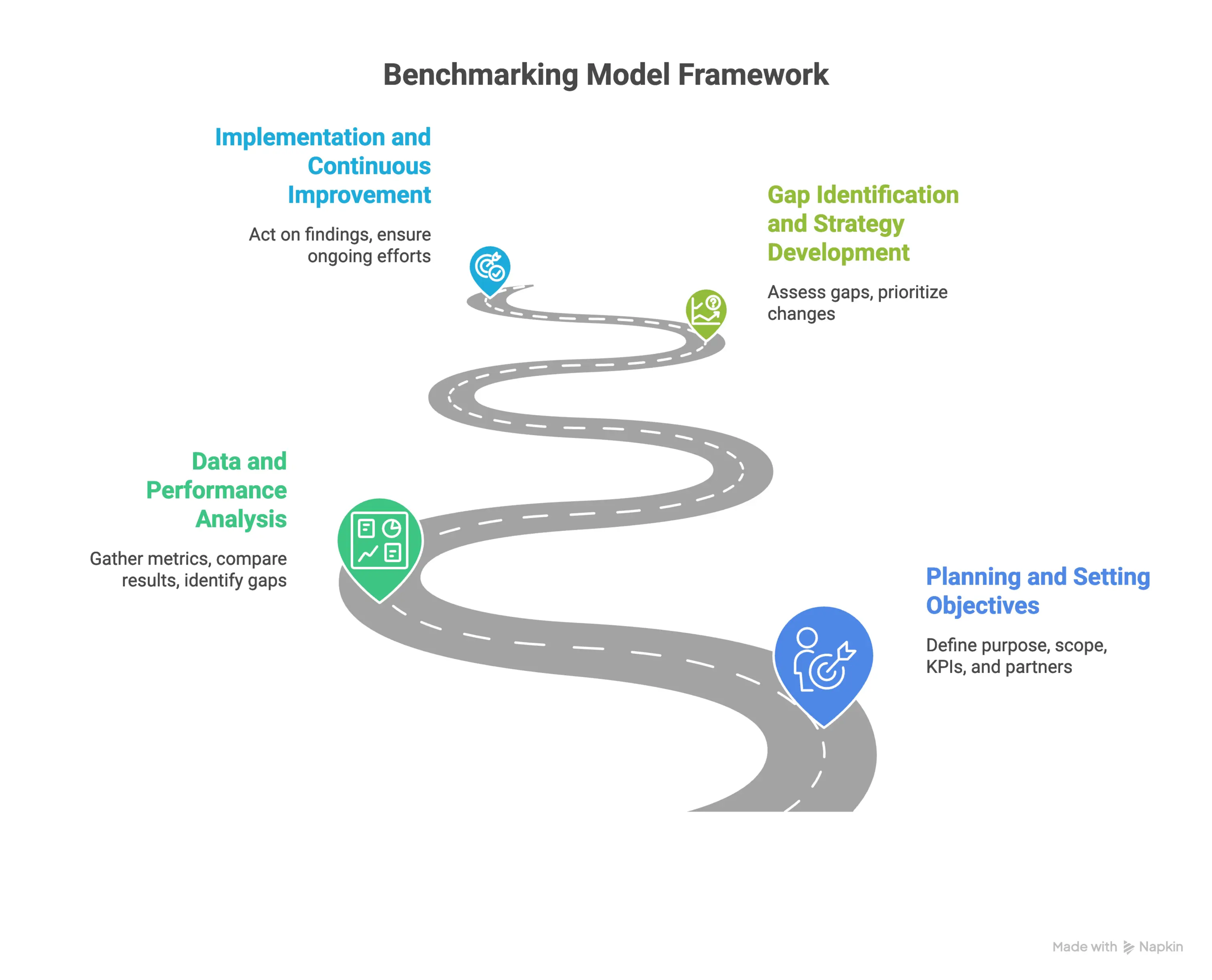
Running this framework as a continuous loop keeps organizations aligned with evolving industry standards and top competitors. Regular performance reviews drive the adoption of best practices, supporting better decision making and sustainable improvement.
Core Types of Benchmarking Models
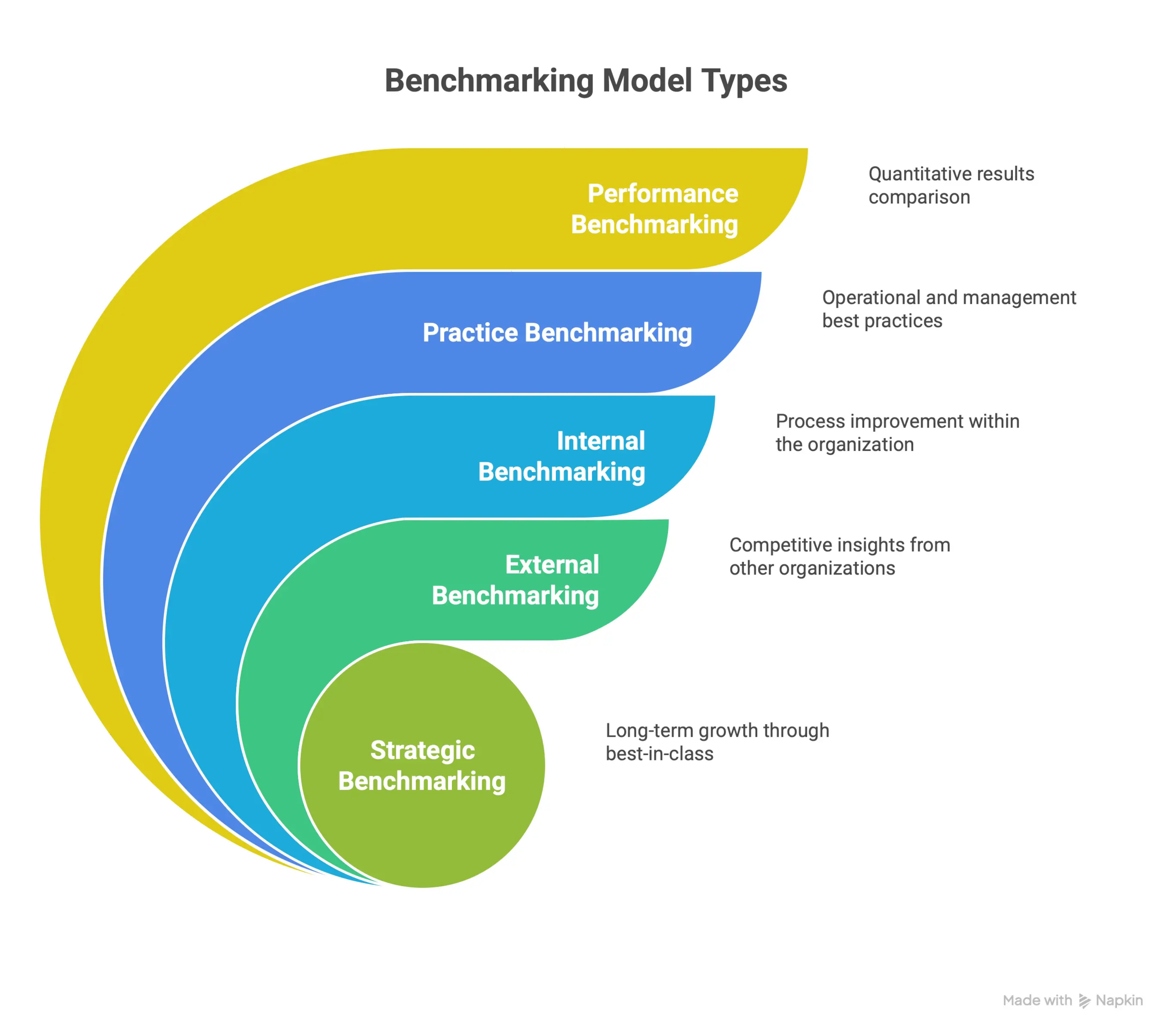
Understanding the four main types of benchmarking gives organizations a playbook for focusing on what matters most:
Performance Benchmarking
This is often the first benchmarking step any organization takes. It involves gathering quantitative metrics to assess where your results stand versus others. Performance benchmarking highlights gaps through clear, number-based comparisons.
Practice Benchmarking
Here, organizations look at operational and management practices, drawing insights from how high-performing groups execute their business process. Best practices gathered through external research or internal analysis become a roadmap for better operations.
Internal Benchmarking
This type compares metrics or processes from different departments or divisions inside your own organization. Internal benchmarking is especially useful for big organizations wanting to spread effective practices between teams.
External Benchmarking
Instead of just looking inward, organizations compare their metrics or practices against one or several other organizations. This exposes areas for competitive improvement and often leads to new insights about industry standards.
Strategic Benchmarking
Strategic benchmarking goes beyond immediate competitors, looking to best-in-class organizations, even those in a different business or serving a group of customers unlike your own. These comparisons fuel high-level, long-term changes for sustainable growth.
Technical vs. Competitive Benchmarking
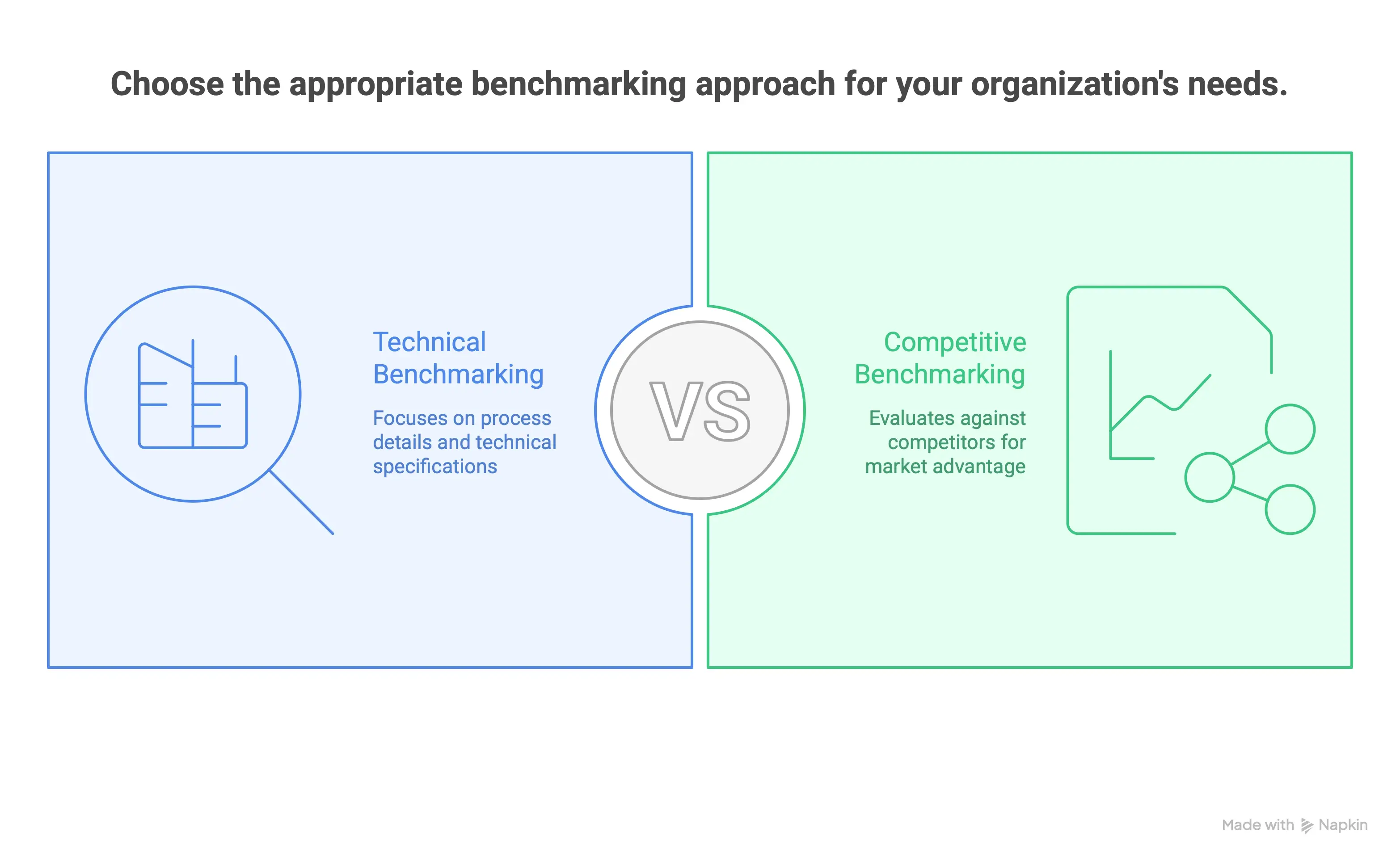
Two important categories often get the most attention:
Technical Benchmarking
Focuses on process details and technical specifications. It allows organizations to compare product features, quality, or operational steps. Technical benchmarking is crucial for fine-tuning products and improving process efficiency.
Competitive Benchmarking
This evaluates your organization directly against competitors. Whether analyzing market share, cost efficiency, or customer satisfaction, competitive benchmarking gives a direct view of where your organization sits in the market and what changes are required for a competitive advantage.
Cost and Financial Benchmarking
Cost benchmarking is the reality check that runs your expenses alongside those of competitors or industry standards. Accurate cost benchmarking helps organizations sharpen pricing strategies and eliminate waste.
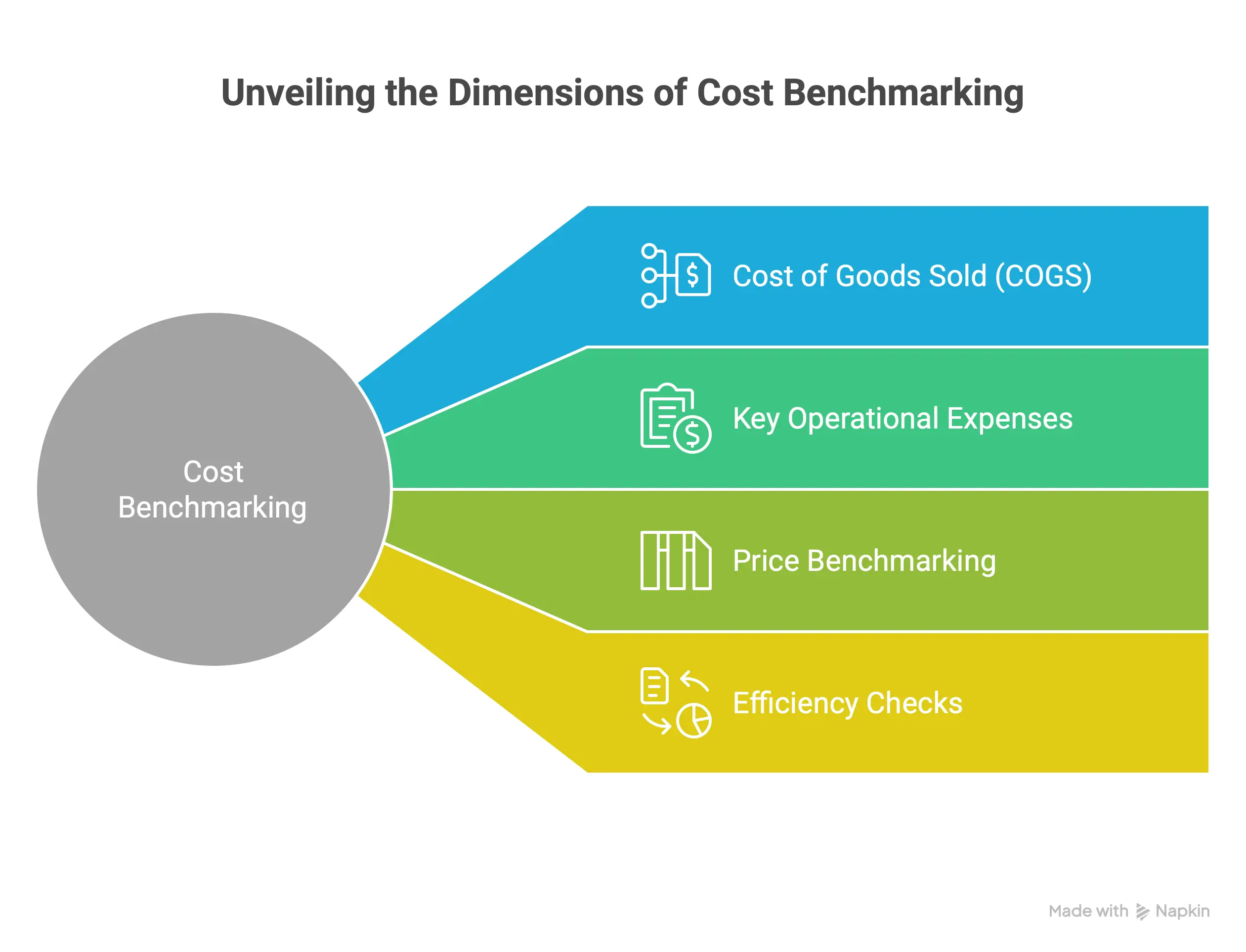
Common cost metrics include:
- Cost of Goods Sold (COGS)
- Key operational expenses
- Price benchmarking to check your offering against competitors
- Efficiency checks to tie spend to output
Organizations use benchmarks like Gross Margin, Net Profit Margin, and Asset Turnover Ratio to gauge financial health against industry averages. For teams looking to optimize every dollar, cost benchmarking tools streamline both data collection and analysis, ensuring your business remains efficient and competitive.
Process Benchmarking for Business Improvement
Process benchmarking focuses on how activities are performed within an organization or compared to best-in-class peers. Instead of just the end results, the analysis asks: are there more efficient ways to achieve our goals?
Benchmarking often reveals bottlenecks, inefficiencies, or gaps in the business process that waste resources or slow down improvement efforts. By examining both qualitative and quantitative data, organizations may find opportunities for streamlined operations or new tools to automate repetitive tasks.
Operational efficiency thrives when benchmarking uncovers weak points in process or systems. This enables leaders to set realistic, data-driven goals instead of relying on abstract targets or outdated trends.
Benchmarking in Industry and Sector Analysis
Benchmarking analysis isn’t limited to one industry or sector. For example, healthcare facilities benchmark clinical outcomes such as mortality rates, readmission rates, and patient wait times. In manufacturing, organizations compare production efficiency, defect rates, and time-to-market metrics. Even in service sectors, customer satisfaction and service delivery times are focal points for external and internal benchmarking efforts.
Understanding the industry status quo through research and ongoing comparison lets businesses adapt best practices, improve customer satisfaction, and outperform rivals. Benchmarking provides the information needed to understand how your organization compares with others, even those with different products or customer groups.
Benchmarking in Vendor Performance and Market Analysis
Comparing vendors through performance benchmarking allows organizations to choose suppliers who offer both better value and higher quality. Vendor benchmarking means reviewing supplier outputs and delivery against recognized benchmarks or top-performing organizations. Analysis covers quality, pricing, delivery time, and more, all supporting better management and improved results in procurement.
Market analysis driven by benchmarking doesn’t just show you where costs are high. It identifies specific areas where competitors achieve greater efficiency, which can lead to better resource allocation and increased profitability.
Modern tools simplify this process, bringing real-time performance metrics and actionable information to the table. Regular use of benchmarking models helps organizations stay proactive, making informed choices, negotiating from a position of knowledge, and improving supply chain management.
Best Practices for Implementing Benchmarking Models
Rolling out a successful benchmarking model requires preparation and an understanding of best practices. The process should fit your business goals and available resources.
Best Practices for Continuous Improvement
- Let your project objectives and top-line targets drive your benchmarking approach.
- Benchmarking is most effective as a continuous process, not a one-off project.
- Use benchmarking tools to automate data gathering, analysis, and reporting.
- Focus on critical success factors that keep the business moving forward.
- Foster a culture where improvements, big or small, are regularly pursued.
- Engage team members from each relevant department to ensure broad buy-in and shared insights.
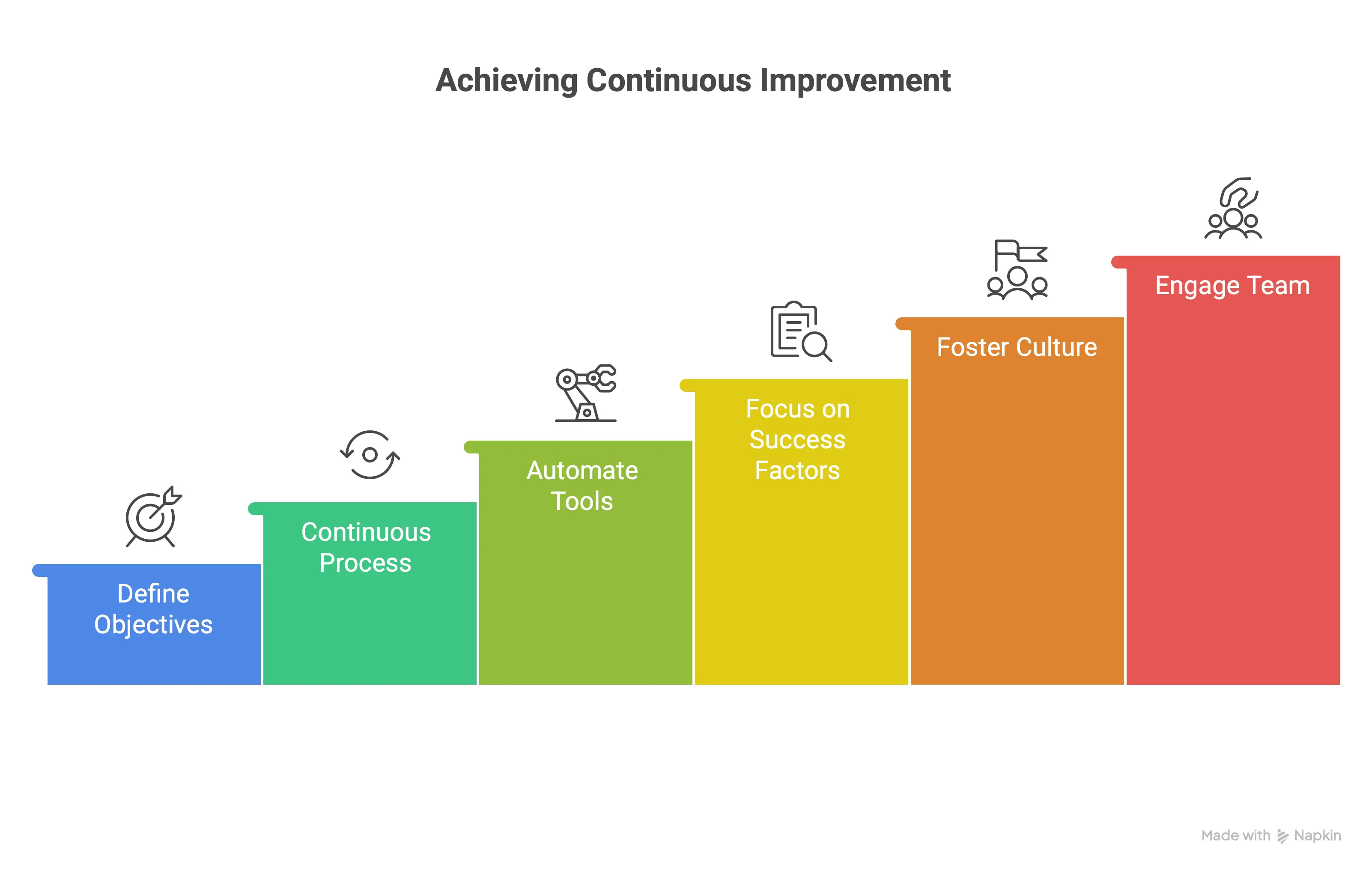
When benchmarking becomes routine, it supports continuous improvement, keeping organizations on track to reach new heights and adapt to evolving industry expectations. Best practices aren’t just something you read about. They become everyday tools for improvement.
Frequently Asked Questions
What is a benchmarking model?
A benchmarking model is a structured process that allows organizations to compare the performance of their products, services, or workflows to those of industry leaders. By identifying and analyzing performance gaps, organizations develop strategies for continuous improvement in both efficiency and competitiveness.
What are the main types of benchmarking models?
There are four main types: performance benchmarking, practice benchmarking, internal benchmarking, and external benchmarking. Performance benchmarking relies on quantitative data, while practice benchmarking focuses on how leading organizations operate. Internal benchmarking helps departments or teams learn from each other, while external and strategic benchmarking bring in perspective from peers or even unrelated best-in-class organizations.
How does the benchmarking process work?
The benchmarking process follows four essential steps: planning and objective setting, data analysis, identifying performance gaps, and implementing improvements. This cycle encourages teams to measure, compare, and achieve new standards year after year.
Why do organizations use benchmarking models?
Organizations use benchmarking models to turn assumptions into measurable insights. Benchmarking analysis helps organizations see their position within the industry, clarify improvement opportunities, and set priorities. This fosters ongoing improvements, so organizations can maintain a continuous advantage.
How can benchmarking software help?
Benchmarking software automates data collection, analysis, and reporting, saving valuable time. With these tools, organizations can find, compare, and act on critical performance information much faster. This accelerates the improvement process and allows flexible use of different benchmarking models.
Leadership and Strategy Benefits from Benchmarking
Leaders rely on benchmarking for evidence-based decision making. By using benchmarking to identify areas where competitors are more cost-effective or efficient, leaders set achievable, data-driven goals. This optimizes resource allocation, sharpens profitability strategies, and helps management stay focused on continuous improvement.
Benchmarking fosters a culture of learning and adaptation, enabling organizations to develop new practices and improve existing ones. As insights from benchmarking accumulate, teams can see where they excel and what aspects need changes, achieving operational improvements with each cycle.
The Role of Data and Metrics in Benchmarking Success
Benchmarking is successful when the right data is available and used efficiently. Organizations often measure critical business metrics such as:
- Financial indicators (gross margin, asset turnover ratio)
- Process-related efficiency (cycle time, defect rates)
- Service delivery (customer satisfaction, wait times)
- Department or team-specific KPIs
High-quality data informs better practices and ongoing improvement. Benchmarking analysis relies on accurate information and clear measurement criteria to drive results. Modern benchmarking tools integrate these metrics and automate comparisons, improving efficiency across departments.
Conclusion: Use Benchmarking for Long-Term Success
Benchmarking is more than a management buzzword. It is the systematic business process of measuring, comparing, and improving performance across products, services, and processes. Whether focusing on internal or external practices, strategic direction, or continuous process improvement, benchmarking helps organizations learn, adapt, and achieve better results.
With benchmarking embedded into company culture and amplified by digital tools, organizations can set the pace in their industry. This raises quality, drives operational efficiency, and ensures sustainable business growth.
Curious about how modern cost estimation platforms can raise your game? Explore Nomitech’s full suite or connect with our team to find solutions tuned to your workflows.





Stay Up to Date
Subscribe to our Newsletter today and receive the latest updates, trends, expert insights, and exclusive offers tailored to your specific industry.