

What Is Benchmarking Analysis? Guide to Outperforming Competitors
TL;DR: Benchmarking analysis is a structured way to compare your organization against industry benchmarks and the best in your market. This process exposes where you’re ahead, where performance gaps exist, and pinpoints the most important areas for continuous improvement. By using benchmarking data, regular benchmarking studies, and ongoing reviews, teams get the valuable insights they need to make better decisions and gain competitive advantage.
Introduction to Benchmarking Analysis and Benchmarking Data
Ever wonder why some competitors finish projects faster and with superior performance while your team struggles with the same challenges? With scattered benchmarking data, shifting industry trends, and constant pressure to do more, it’s easy to lose track of your company’s performance and improvement efforts.
Even experienced managers who don’t use a solid benchmarking process often miss improvement opportunities, leading to higher costs and missed goals. In today’s competitive environment, guesswork is a liability.
Enter benchmarking analysis. Instead of depending on hunches, this methodology uses reliable benchmarking data and performance metrics to measure your organization against industry standards and competitors. Benchmarking software and benchmarking tools, such as CostOS, provide a foundation to conduct effective benchmarking studies and deliver actionable insights rooted in best practices. In this guide, you’ll see how benchmarking analysis, supported by robust data analysis, helps teams identify areas to improve. This helps achieve operational efficiency.
Let’s dive into the benchmarking process, types of benchmarking, and strategic benchmarking studies that drive continuous improvement.
What Is Benchmarking Analysis and How Does It Work?
Benchmarking analysis is the process of comparing performance metrics, processes, and outcomes of your organization with industry leaders and competitors. As described by the National Institutes of Health, the goal is to raise your organization’s performance by learning from the best. Benchmarking involves systematic measurement, regular data collection, and thorough data analysis to provide valuable insights for continuous improvement.
Key Components of Benchmarking Analysis:
- Identifying relevant data and key performance indicators for your operation
- Selecting benchmarking partners, which may include direct competitors, industry leaders, or organizations in industries with transferable best practices
- Gathering quantitative and qualitative benchmarking data from sources such as financial reports, customer surveys, and industry publications
- Data analysis using statistical techniques like regression analysis or SWOT analysis to identify areas for improvement and performance gaps
- Applying findings to the company’s performance improvement efforts
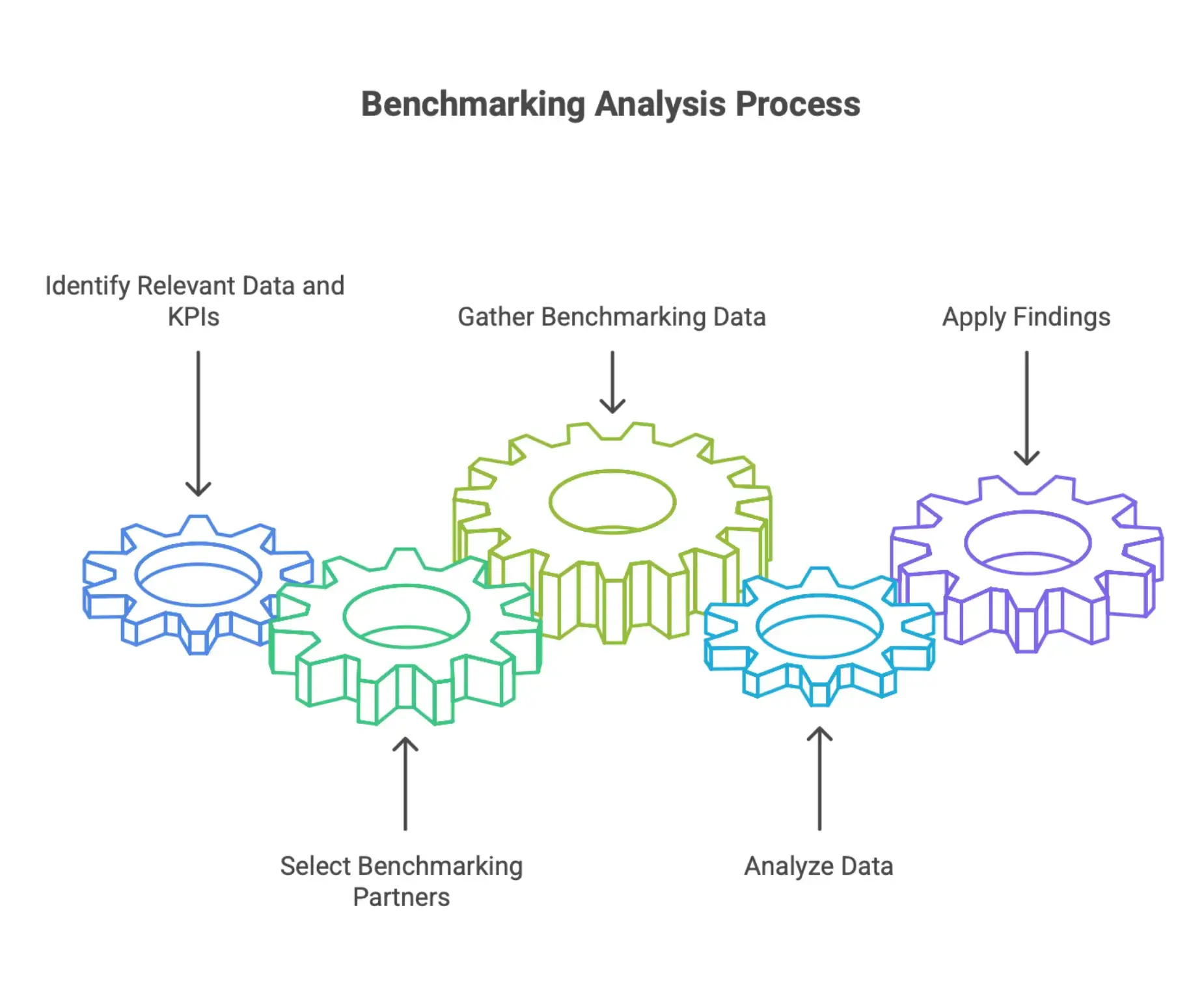
Benchmarking analysis is a cornerstone of strategic benchmarking and performance benchmarking, guiding teams toward adopting best practices and driving superior performance.
The Benchmarking Process: Data Collection, Partners, and Best Practices
The benchmarking process involves a series of actionable steps that help organizations achieve a competitive edge:
- Identify Subject and Objectives
- Select areas or production processes needing improvement, such as customer service department, supply chain management processes, or product quality.
- Define clear strategic objectives and desired outcomes.
- Select Benchmarking Partners
- Choose internal benchmarking partners within your own organization for internal benchmarking.
- For competitive benchmarking, compare against direct competitors or leaders in the same industry to identify areas for improvement.
- Consider generic benchmarking partners from outside your market segment for innovative solutions and process optimization.
- For best practice benchmarking, look to industry leaders for industry best practices you can adapt.
- Data Collection and Data Analysis
- Use standardized and transparent data collection methods for consistent, reliable benchmarking data.
- Gather both quantitative and qualitative data from various sources such as industry reports, research reports, and customer satisfaction surveys.
- Ensure collected data is relevant and captures key performance metrics.
- Analyzing and Comparing Performance
- Analyze benchmarking data using appropriate statistical techniques.
- Identify trends, performance gaps, and successful strategies used by benchmarking partners.
- Compare your organization’s performance metrics and process efficiency to industry benchmarks and standards.
- Implementing Improvements
- Develop actionable strategies to address identified gaps.
- Assign responsibilities and set clear timelines for improvement efforts.
- Monitor progress and adjust improvement initiatives to ensure alignment with organizational goals and to provide valuable insights into further opportunities.
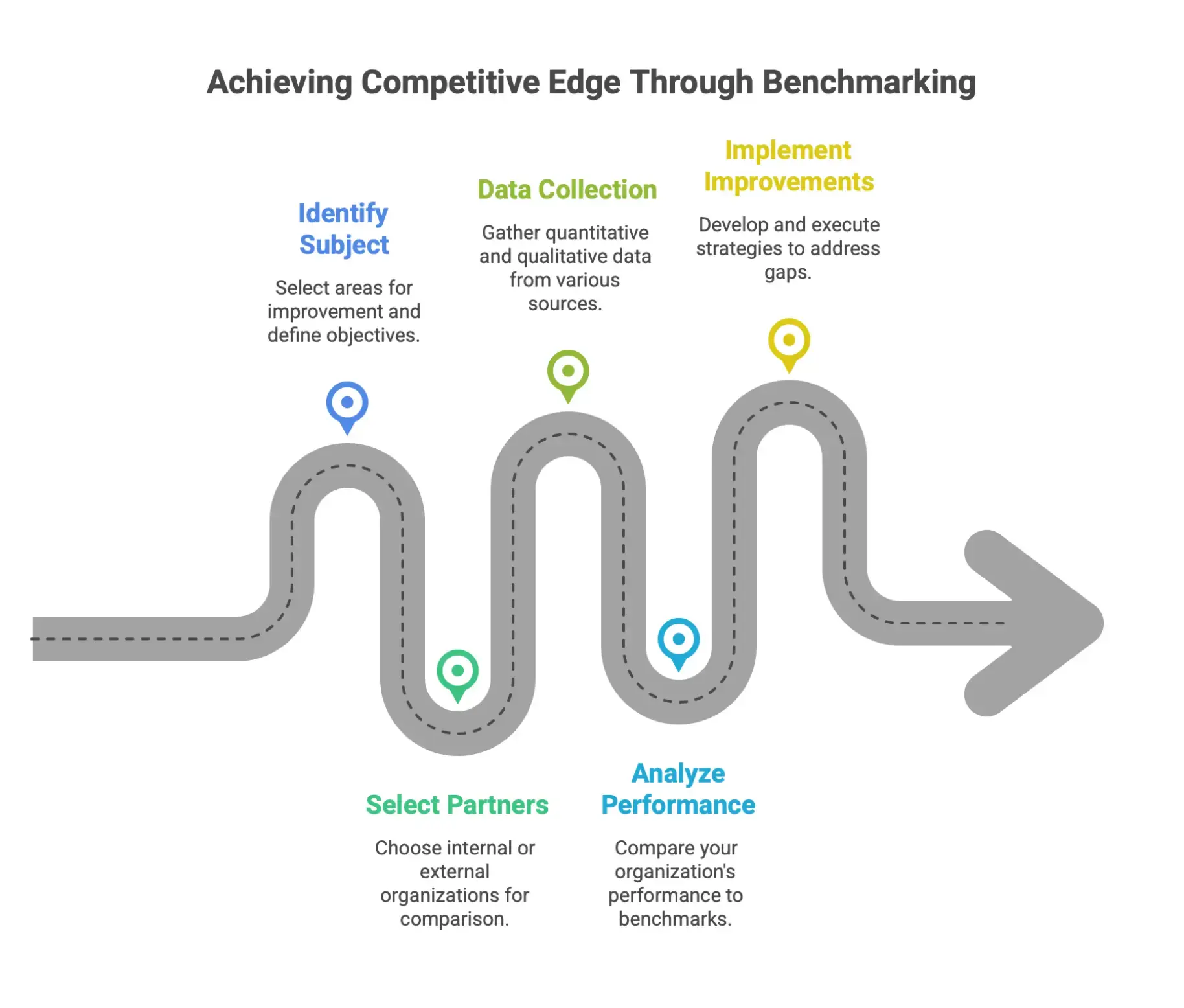
This systematic benchmarking process is integral to fostering continuous improvement, optimizing business processes, and enhancing operational efficiency.
Types of Benchmarking: Approaches and Competitive Advantage
Main Types of Benchmarking
There are four main types of benchmarking to drive continuous improvement and identify best practices:
- Internal Benchmarking
- Comparing performance metrics and practices between departments or divisions within the same organization to identify areas for improvement. This type is useful for highlighting discrepancies in customer satisfaction or process effectiveness across teams.
- Competitive Benchmarking
- Comparing your company’s performance directly against industry competitors to gain a competitive edge. This helps identify performance gaps in operational efficiency, customer service, or quality, allowing you to develop targeted strategies for improvement.
- Functional Benchmarking
- Focusing on particular processes or functions (like supply chain or customer service) and comparing them to organizations recognized for excellence, regardless of industry. This approach provides valuable insights and transferable best practices, revealing new methods that can enhance efficiency and product quality.
- Generic Benchmarking
- Looking outside your own industry segment to identify best practice benchmarking opportunities and innovative solutions. By adopting successful strategies from organizations in different fields, you gain unique perspectives to improve performance.
- Best Practice Benchmarking
- Examining the processes of industry leaders using benchmarking studies to uncover the best practices driving superior performance and continuous improvement.
Most organizations blend thes
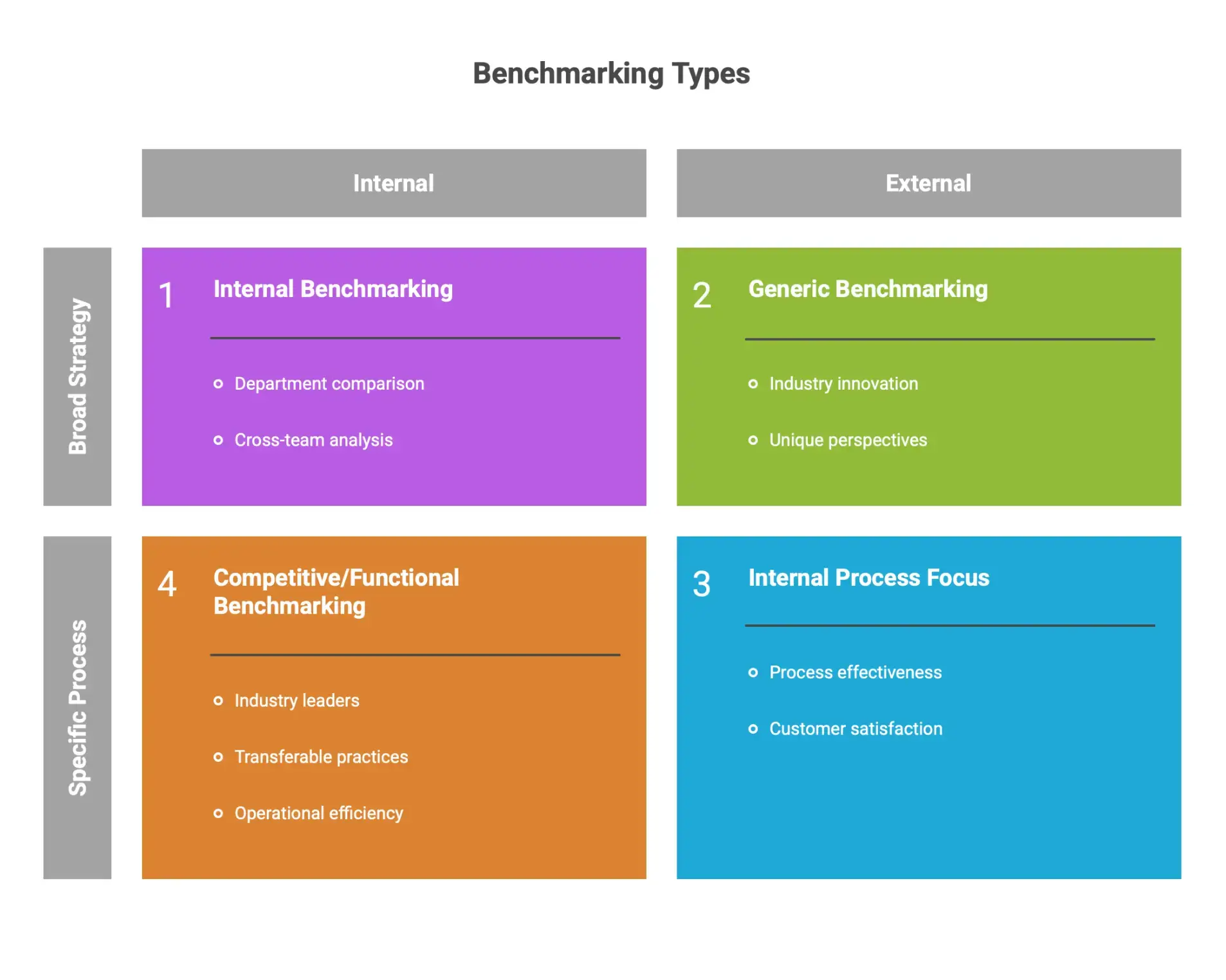
e types to address different needs and drive competitive advantage across business processes.
Benchmarking Data: Collecting and Using Data for Performance Improvement
Benchmarking data is the engine behind effective benchmarking analysis. Without high-quality, relevant data, benchmarking studies can’t identify performance gaps or provide actionable insights.
How to Collect and Use Benchmarking Data:
- Gather benchmarking data that reflects industry standards, customer satisfaction, service quality, cost, quality, and schedule metrics.
- Use standardized data collection protocols to ensure integrity in the benchmarking process.
- Apply data analysis to compare your performance metrics to industry benchmarks, using key performance indicators to measure progress.
- Track performance metrics such as unit cost, operational efficiency, and product quality for both internal benchmarking and external comparisons.
By regularly collecting data and analyzing trends, organizations can quickly identify areas for improvement and adapt to market trends.
The Role of Benchmarking Software and Specialist Software
Modern benchmarking relies on benchmarking software to streamline data collection, normalization, and analysis. Specialist software allows you to run benchmarking studies efficiently and provides deep, actionable insights.
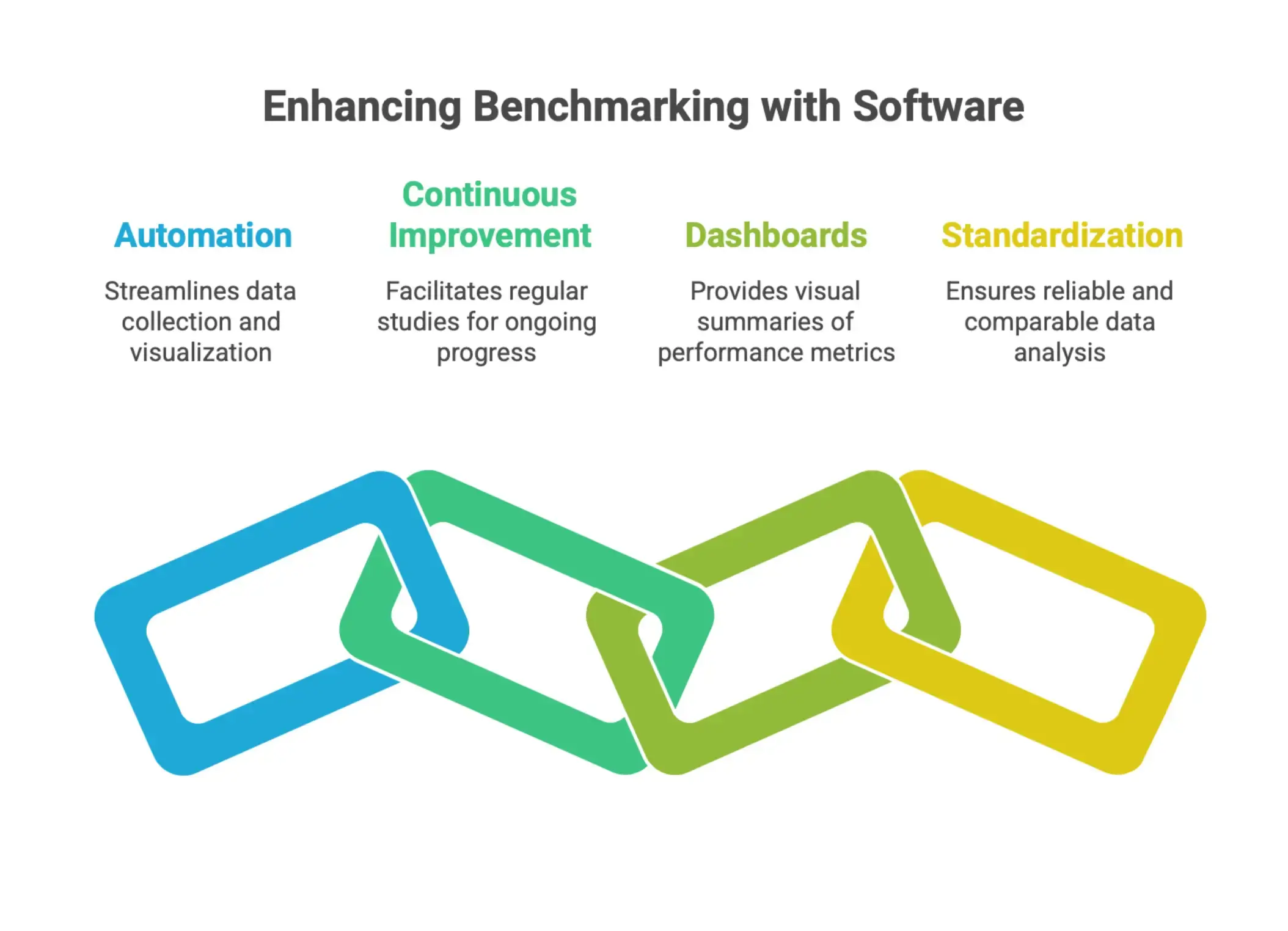
Benchmarking software helps:
- Automate the benchmarking process, from collecting relevant metrics to visualizing performance gaps
- Maintain regular benchmarking studies for ongoing continuous improvement
- Provide dashboards for performance benchmarking, process benchmarking, and competitive benchmarking analyses
- Standardize data analysis for more reliable and comparable results
Benchmarking Methodologies: Systematic Measurement and Process Benchmarking
Systematic Performance Measurement
To build trust in benchmarking data, organizations must use tightly controlled environments and standardized procedures. Consistent measurement and data analysis ensure meaningful, apples-to-apples comparisons with internal benchmarking partners and competitors.
- Set clear baselines for own performance and company-wide performance metrics
- Use comparable groups and similar controls
- Analyze collected data with robust statistical techniques to ensure accurate comparisons
Process Benchmarking for Best Practices and Continuous Improvement
Process benchmarking is about studying workflows and procedures to adopt best practices. This can reveal bottlenecks, unlock process optimization opportunities, and build a culture of continuous improvement.
Using benchmarking partners recognized for their process excellence, organizations can:
- Map out their own processes alongside leading performers
- Identify opportunities to enhance efficiency, reduce rework, or boost customer satisfaction
- Foster continuous improvement by embedding benchmarking findings into strategic objectives
Competitive Benchmarking: Gaining a Competitive Edge in Your Industry
Competitive benchmarking is essential for understanding your company’s performance relative to competitors and industry leaders. By comparing metrics and analyzing benchmarking data, organizations identify areas where they lag and where they can drive continuous improvement.
How Competitive Benchmarking Delivers Competitive Advantage:
- Provides valuable insights into market trends and customer preferences
- Highlights performance gaps compared to industry standards
- Enables targeted improvement efforts to enhance your competitive edge
Industry benchmarks and up-to-date industry reports let organizations identify best practices and translate benchmarking analysis into actionable strategies that improve business outcomes.
Benchmarking Studies in Action: Examples and Market Perspective
Benchmarking studies span various sectors and processes. For instance, a retail company may use benchmarking analysis to compare customer satisfaction and service quality with industry leaders, revealing improvement opportunities for the customer service department. Manufacturers may benchmark production processes and product quality to catch up with industry benchmarks.
In the hospitality industry, benchmarking studies might focus on guest satisfaction or operational efficiency. Across sectors, benchmarking partners and comparative analysis of key performance indicators allow businesses to provide valuable insights and implement successful strategies for superior performance.
Strategies for Implementing Improvements from Benchmarking Findings
Implementing improvements from benchmarking studies involves:
- Developing targeted strategies to address identified performance gaps or operational inefficiencies
- Creating actionable plans with clear steps, set timelines, and assigned responsibilities for each improvement effort
- Monitoring progress with relevant data and performance metrics to ensure alignment with strategic objectives and industry best practices
- Adjusting initiatives as new benchmarking data and industry trends emerge, keeping your organization’s performance ahead of the curve
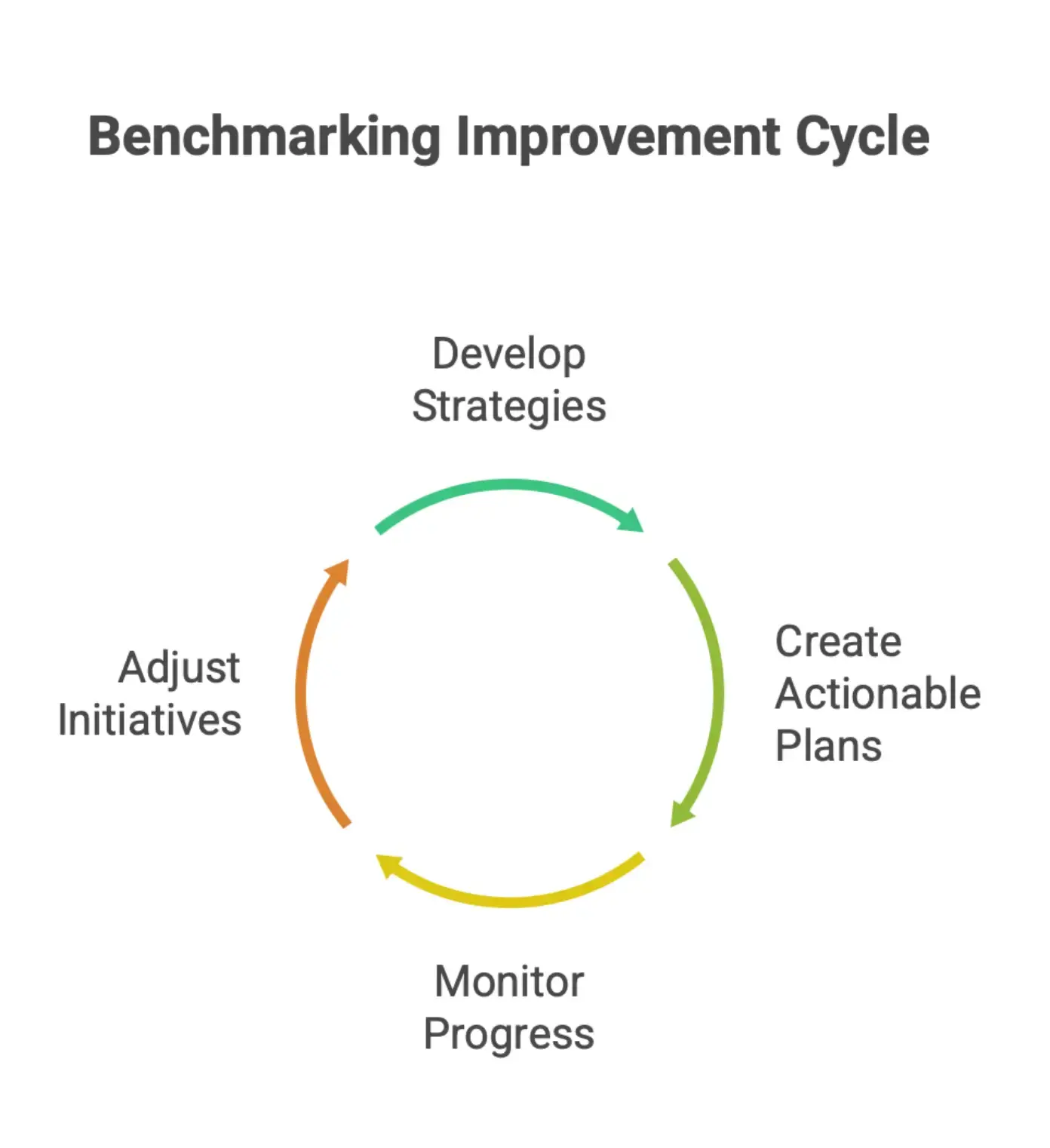
Fostering continuous improvement is not a one-time task. It requires a cycle of benchmarking analysis, best practice adoption, and regular review for lasting impact on business processes.
Frequently Asked Questions
What is benchmarking analysis, and why is it important?
Benchmarking analysis is a systematic way to compare your organization’s services, processes, or products to those setting the industry standards in your field. This benchmarking process highlights where you excel, where you need to improve performance, and where you can gain competitive advantage. These insights ensure you can act on facts and industry benchmarks.
What are the main types of benchmarking?
The core types are internal benchmarking (within your own organization), competitive benchmarking (against industry peers), functional benchmarking (comparing particular processes across industries), generic benchmarking (measuring universal workflows that apply anywhere), and best practice benchmarking (studying industry leaders). Each approach provides different ways to identify opportunities and adopt best practices.
How do you ensure you are gathering the right benchmarking data?
Gather benchmarking data by selecting relevant metrics tied to your most important goals, such as costs, customer satisfaction, service quality, and operational efficiency. Use standardized and transparent data collection methods to keep comparisons accurate and actionable.
What is the difference between technical and competitive benchmarking?
Technical benchmarking measures how particular processes or products perform against benchmarks and alternatives. Competitive benchmarking compares your company’s performance to that of industry leaders or direct competitors, identifying gaps that can be closed for a competitive edge.
How does regular benchmarking drive continuous improvement?
Integrating benchmarking into your workflow allows organizations to spot trends, address performance gaps, and identify areas for improvement earlier. This routine approach to benchmarking analysis fosters continuous improvement and keeps your organization’s performance aligned with industry standards.
Conclusion: Benchmarking Analysis as a Continuous Improvement Tool
Benchmarking analysis is an indispensable tool for organizations aiming to improve performance, adopt industry best practices, and maintain competitive advantage. When you use data analysis and benchmarking studies to compare your performance metrics and own processes with industry leaders, you identify areas for improvement and unlock innovative solutions that deliver superior performance in any market segment.
By relying on regular benchmarking studies, specialist software, and actionable insights, your company’s performance can continuously adapt to meet shifting industry trends and customer preferences. Benchmarking analysis is not just a snapshot. It is a cycle of data-driven excellence and lasting growth.
Ready to Take the Next Step?
If you’re searching for a better way to handle benchmarking analysis or cost estimation, check out Nomitech’s full suite or get in touch to see which benchmarking software solution matches your workflow.





Stay Up to Date
Subscribe to our Newsletter today and receive the latest updates, trends, expert insights, and exclusive offers tailored to your specific industry.