

Cost Estimating in Power Projects: Strategies for On-Budget Success
TL;DR: For cost estimating in power projects, precision is mission-critical. Every dollar counts for project costs, overhead costs, and material costs. This article breaks down best practices, digital tools, the construction estimating process, and real-world lessons. Your team can estimate costs smartly, mitigate cost overruns, and deliver electrical projects on time and within budget.
Cost Estimating in Power Projects: The Foundation of Success
Missing the mark on cost estimation in power projects? That’s a headache most teams can’t afford. The stakes are high: strict deadlines, tight budgets, and little forgiveness for mistakes. Let a number slip, and suddenly you’re battling scope creep and cost overruns, funding gaps, and difficult questions from investors, regulators, or electrical contractors. The bidding process relies on accurate estimates to win work and avoid unprofitable projects. Confused estimates buried in spreadsheets or email trails only cause chaos for construction projects.
The pressure to deliver on lean budgets grows each year. Margins are razor-thin and project scope keeps expanding. It is crucial to evaluate certain projects to ensure they align with your company’s expertise and resources. Too often, outdated estimating costs methods rely on best-case guesses, especially in electrical projects. Professional estimators are essential for preparing reliable estimates and reviewing bid packages. This optimism backfires, resulting in lost profit margin, overblown total project costs, and credibility issues. Estimators must use all available data to determine whether a specific project proposal fits their type of work, experience, and timeline.
Fortunately, robust cost estimation frameworks and construction estimating software such as data-driven platforms like CostOS bring order and transparency to the estimating process. By pairing disciplined methods, historical data, and digital tools, project managers can control risks, overhead costs, and deliver reliable cost estimates with more confidence. Estimating mistakes can cause a project to become unprofitable, motivating teams to ensure accuracy in every estimate.
Stick with us as we walk through strategies for accurate estimates, leveraging electrical estimating software, and the digital tools that keep your next power project steady, on time, and on budget.
The Crucial Role of Cost Estimates in Power and Electrical Projects
Ensuring Financial Feasibility and Avoiding Cost Overruns
Solid cost estimates are the backbone of every successful construction project, including power and electrical projects. It's not just about tallying construction cost at the outset; it's about forecasting total project costs, including overhead, maintenance, and indirect costs that occur over a project’s lifecycle. When teams structure a construction estimate with life cycle costs in mind, it’s far easier to avoid runaway project costs and frustrating cost overruns.
Take it from Archit's Estimating: a well-structured cost estimation worksheet is not a checkbox. It’s vital for the project's overall financial health. If final project costs veer away from the initial estimate, completion is threatened and operating expenses can spiral, hurting profit margin years later.
Electrical contractors know that building a competitive bid and securing funding requires accurate construction estimating. Cost estimating software helps teams track actual project costs, organize the estimation process, and keep project management accountable.
Historical data from past jobs shows a pattern. Old-school, best-guess estimates invite budget overruns and delays. ScienceDirect points to optimism bias, while construction business archives reveal decisions based on historical estimates that missed the mark.
Managing Stakeholder Expectations and Project Approval with Accurate Estimates
Cost estimates are critical for more than just the contractors. They influence every step in the construction estimating process, especially communication with investors, regulators, project managers, and electrical contractors.
Delivering credible cost estimates builds trust, supports project management decisions, and moves a construction project forward. Inadequate or overly optimistic estimates slow approvals and erode stakeholder confidence. Multiple studies, including ScienceDirect's analysis, show repeated gaps between cost estimation and actual project costs can make stakeholders and clients wary of committing resources.
To secure funding and keep electrical projects viable, contractors must communicate a detailed breakdown, model what-if scenarios, and demonstrate how the construction estimate adapts to changing site conditions, labor costs, and material prices. In some regions, accurate estimates are make-or-break for project scope approval, especially when construction materials are subject to volatility.
Construction Estimating Process: Fundamentals for Power and Electrical Projects
Smart cost estimating in construction projects always starts with fundamentals. Understanding the construction process is essential for evaluating project scope, estimating costs, and preparing competitive bids. By following a structured construction estimating process, breaking down project scope, quantifying resources, and adding up direct and indirect costs, teams sidestep surprises and stick to target profit margin. Estimating is a crucial part of the construction process, as estimates are used to build bids and win work.
Understanding Life Cycle Costs and Material Takeoff
Sticker price tells only part of the story for total project costs. Life cycle cost analysis includes every cost from groundbreaking through years of operation: construction cost, labor costs, equipment costs, maintenance, and overhead costs like insurance and legal fees.
Key details in the construction estimating process include:
- The current carrying requirements, how much power the system needs to handle
- Material takeoff and required materials, tables listing all construction materials needed, based on construction documents and plans. Quantity takeoff is the process of listing and measuring all materials, equipment, and tasks required for a project.
- Sizing conductors based on code and system design
- Factoring in labor units, productivity rates, and labor costs
Takeoffs are the estimated quantities of items that electrical contractors need for a project, determined from plans or drawings.
A comprehensive estimate incorporates both direct costs (materials, labor, equipment) and indirect costs (overhead, insurance, project management, utilities, etc.), ensuring a detailed breakdown and no hidden project costs.
A well-structured cost estimation worksheet lets estimators ensure every cost for material costs, labor costs, permitting, and overhead costs is captured accurately.
Breaking Down Costs: Major Categories in Electrical Construction Projects
Key Elements of the Construction Estimate
Every power or electrical project incurs the following core costs:
- Direct Costs: Tangible items such as construction materials, electrical work, labor costs, and equipment.
- Indirect Costs: Overhead costs like project management staff, insurance (including general liability insurance), temporary facilities, utilities, office expenses, and legal fees.
- Contingency Costs: Allowances for site conditions, scope changes, or unforeseen issues. These are crucial for controlling budget overruns.
- Escalation Costs: Built-in buffers for inflation or rapidly changing material prices, especially in complex projects.
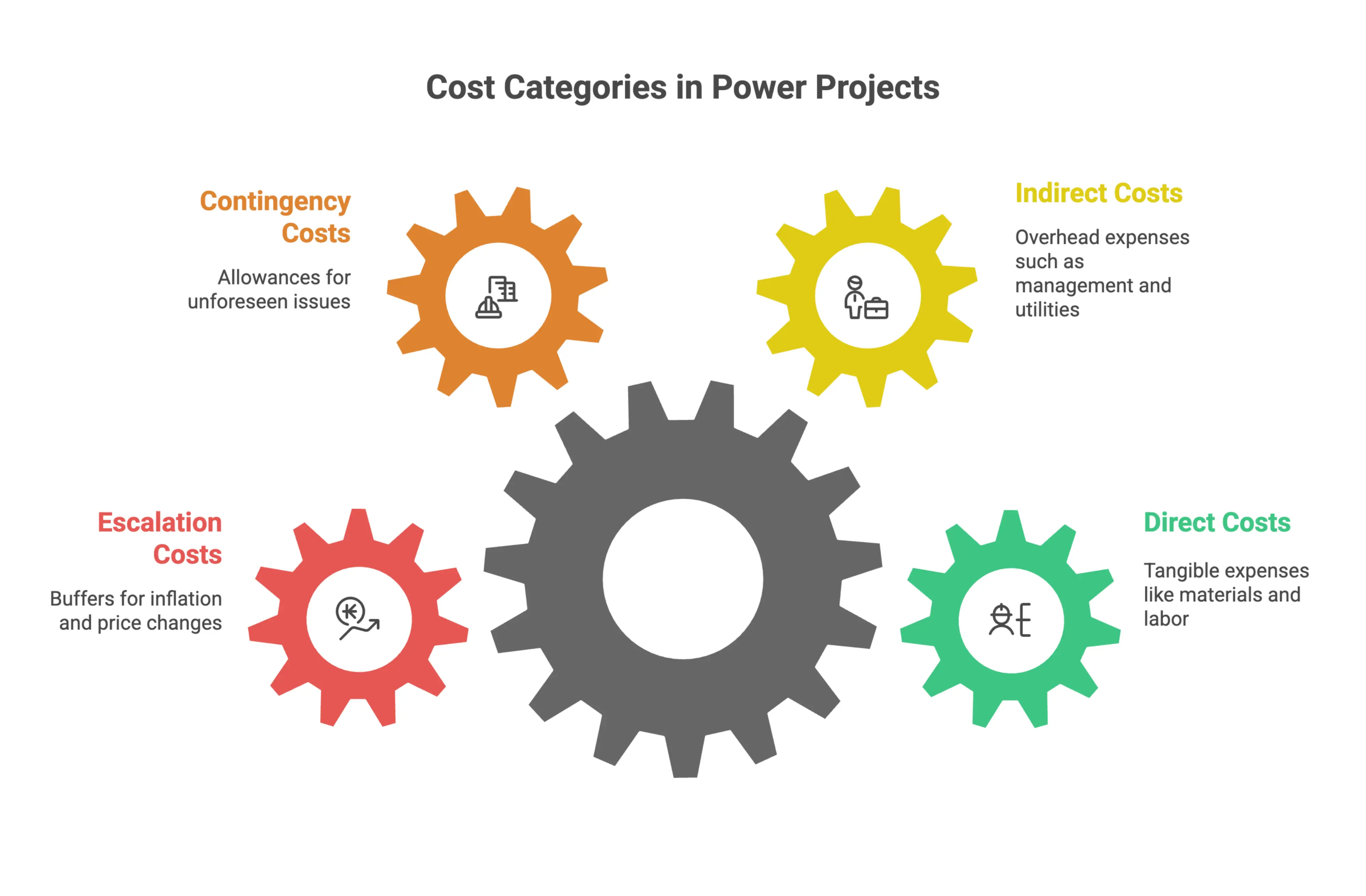
A robust construction estimate includes both direct and indirect costs, quantifies every required material and labor hour, determines how many hours of labor are required for each task, and provides a detailed breakdown for electrical contractors and project owners.
Estimators must include all costs associated with employing someone for the duration of a construction project to accurately reflect labor costs.
Electrical Estimating: Specifics for Contractors
Electrical estimating involves capturing every aspect, including material costs, labor costs, equipment, permits, and job-specific site conditions. For electrical contractors, labor is often the biggest variable and can depend on firm size and labor units. Estimators must cover all costs tied to an employee’s time on site, including taxes, insurance, and benefits, ensuring the final job cost reflects reality.
Advances in Digital Tools: Electrical Estimating Software and Data Analytics
The Role of Construction Estimating Software and Digital Tools
Digital tools and electrical estimating software have revolutionized cost estimation for construction projects. Manual spreadsheets, with a high risk of human error, are being replaced with specialized estimating software that automates material takeoff, labor calculations, and rapid updates when material prices or labor costs change.
Key ways digital tools and construction management software improve estimation:
- Automating repetitive tasks and calculations, reducing errors
- Quickly pulling field data for labor and material rates for accurate estimates
- Streamlining the estimating process for electrical contractors managing multiple job types
- Enabling on-site quotes and real-time adjustments through mobile estimating tools
- Integrating estimating, scheduling, and billing for seamless project management
- Allowing for customized templates and consistent bids, saving time and boosting accuracy. Automating parts of the estimating process with digital tools can save time and reduce costly revisions.
Cutting-edge software integrates historical data from past jobs and actual job costs, providing contracting businesses with evidence-based benchmarks and more accurate construction estimates.
Harnessing Data Analytics and Machine Learning in Cost Estimation
The true leap forward is in how historical data and analytics now drive more accurate estimates for electrical projects. Software like DataCalculus leverages machine learning to analyze records from past jobs, identify cost drivers, and improve accuracy. Features like clustering, benchmarking, and anomaly detection are crucial for complex projects.
- Data analytics help project managers identify trends, anticipate pricing changes for materials and labor costs, and adapt to dynamic project scope changes
- Algorithms can flag outlier costs or highlight opportunities for bulk pricing and savings
- Machine learning models draw on historical estimates to inform new project estimates
Modern electrical estimating software not only increases accuracy in cost estimates but saves time and adds transparency for all stakeholders in the construction business.
The Estimation Process: Step-by-Step for Reliable Construction Estimates
Structured, Multi-Step Cost Estimating in Power Projects
The most reliable cost estimation comes from following a formal estimating process:
- Define Project Scope: Develop clear construction documents and drawings.
- Break Down Tasks: Quantify every component such as material takeoff for all required materials.
- Gather Pricing and Labor Data: Use vendor quotes, bulk pricing, and historical job data to populate material costs and labor costs.
- Estimate Indirect Costs: Include overhead, insurance, rent, utilities, legal fees, and project management costs.
- Add Contingencies: Assign allowances for risk, site visit findings, and potential scope changes.
- Develop and Review Estimates: Revise estimates at each milestone, applying past projects' insights and comparing estimates to actual costs.
- Double Check All Calculations: Review the construction estimate for accuracy and completeness.
- Finalize Control Budgets: Set a realistic, detailed construction estimate ready for bid submission or board approval.
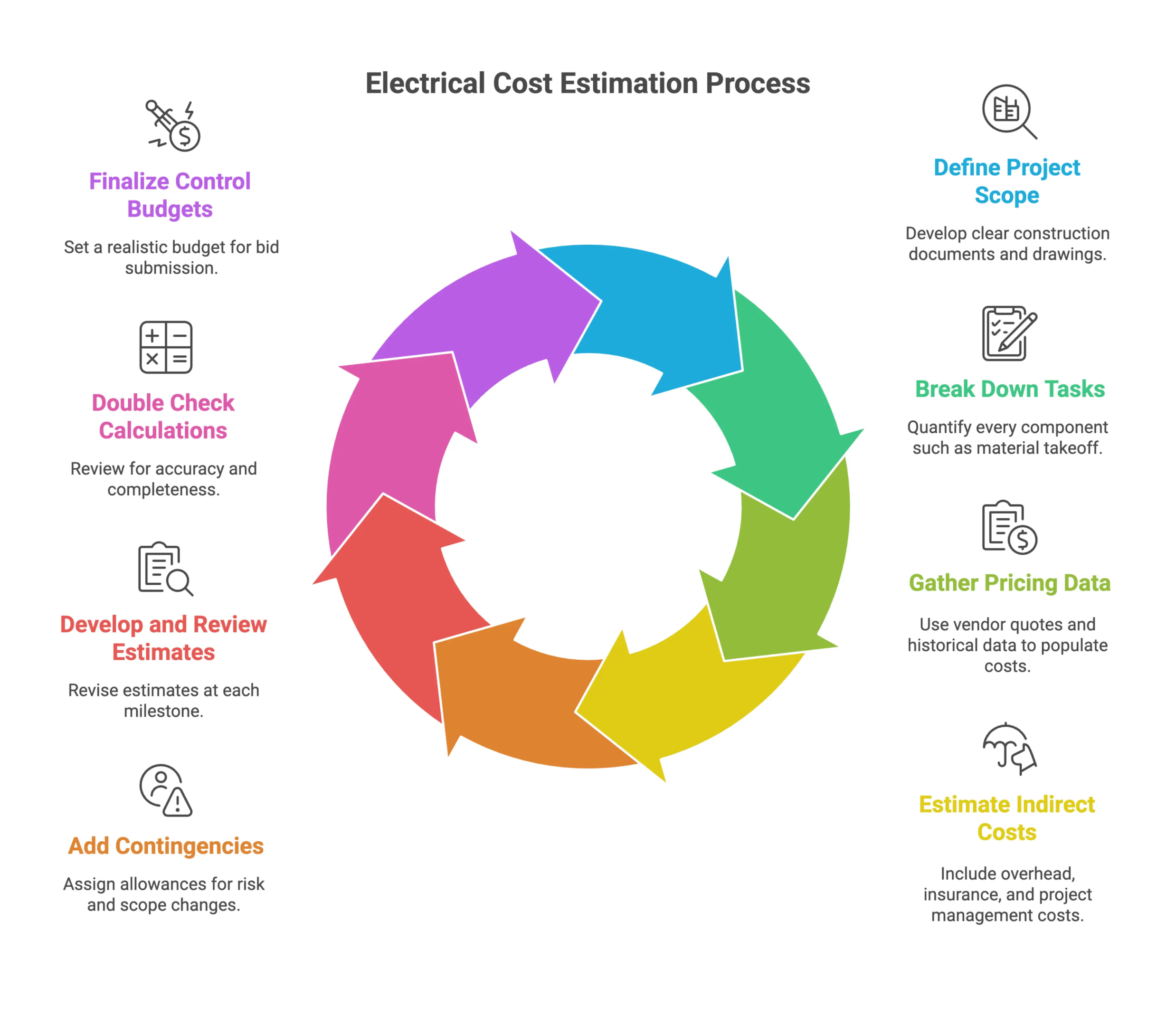
Estimators should refine cost estimates iteratively as the project progresses and always review old projects for relevant lessons.
Combining estimation techniques such as analogous, parametric, and bottom-up methods improves consistency and accuracy. Best practice includes a formal cost risk analysis, involving multiple stakeholders, and ongoing review as market conditions shift.
Risk Assessment, Overhead Costs, and Contingency Planning
Why Overhead Costs and Indirect Costs Matter
Overhead costs are easy to overlook, but crucial for the profitability of electrical projects. These indirect costs include accounting fees, marketing, insurance, rent, utilities, legal fees, and ongoing office expenses. Accurate estimation of overhead costs prevents jobs from being underpriced and ensures the construction business maintains a healthy profit margin.
Every estimator should add up all indirect costs and confirm their construction estimate covers both obvious and hidden expenses.
Probabilistic Modeling and Cost Estimation Risk Management
Simple “single number” estimates are risky. Probabilistic modeling, especially Monte Carlo simulation, predicts a range of possible project costs. Tools that run thousands of “what if” scenarios reveal true risk exposure, letting project managers set appropriate contingency reserves.
Energy Project Execution found that robust risk modeling lowers cost overruns by about 20%. Modern construction management software and benchmarking tools help teams adjust for uncertainty using historical data from past jobs.
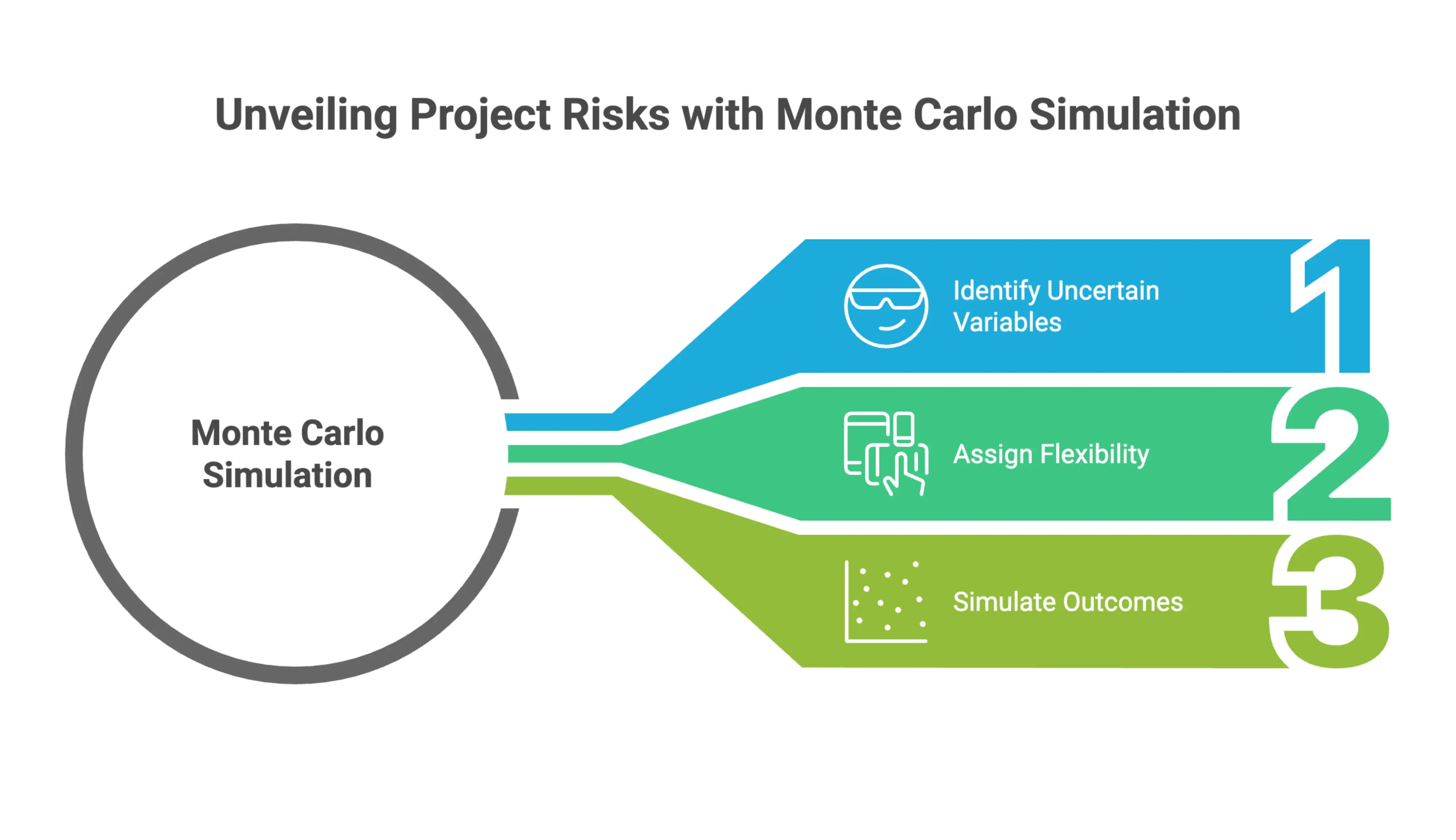
A Monte Carlo-based approach:
- Identify variables with the most uncertainty such as labor costs, material prices, site conditions
- Assign flexibility for each key cost
- Simulate a spectrum of outcomes, enabling project management to match contingency reserves to genuine risks
Optimizing for Electrical Contractors: Best Practices and Accuracy
The Value of Historical Data and Reviews
Access to past projects and historical cost data is vital. Comparing old estimates to actual job costs improves the accuracy of new estimates and helps estimators avoid previous mistakes. Construction estimating software often includes data banks for this purpose, saving time and supporting ongoing learning for project managers.
Mobile time tracking and digital tools help contractors create quotes during site visits, and reviewing old projects ensures pricing is dialed in and estimation process flaws are addressed.
Improving Accuracy with Digital Tools and Iterative Planning
Mobile estimating tools and real-time data entry enable on-site estimates and accurate labor cost calculations. Market volatility and changing commodity prices, especially in large, complex projects, can quickly make cost estimates obsolete. This is why ongoing reviews, scope clarification, and up-to-date vendor pricing are essential.
Templates built into electrical estimating software create consistency across bids and expedite the estimating process for electrical contractors, especially larger firms managing numerous job sites.
Combining Methods and Continual Learning
No single method ensures accuracy. Combining analogous, parametric, and bottom-up estimating is most effective. Learning from past jobs, double checking estimates, and incorporating lessons from experienced estimators all drive improvements in new project estimates.
Real-World Case Studies: Lessons in Power Project Cost Estimation
ITER Project: Multi-Phase Estimation Excellence
The ITER project remains a gold standard for estimating costs in massive construction projects. Cost Engineering Consultancy details how the ITER team:
- Integrated a wide range of construction documents, activities, and contracts across multiple job sites
- Built phased construction estimates, refining them as more data became available
- Balanced early planning with increasingly accurate estimates, updating as needed over the long project timeline
- Standardized disparate jobs and contracts in a unified estimation framework
This approach shows why structured, digital cost estimation using analytics and real-world project management lessons is vital for large-scale electrical projects.
For more insights: browse Nomitech case studies for practical lessons from other electrical contractors and general contractors.
Other Lessons: Overhead, Estimates, and Learning from Data
Reviewing past jobs, realigning cost estimates with labor and material pricing trends, documenting every detail from site visit through project scope closeout, all these steps help contractors identify gaps in their construction estimate process and improve future project success.
Cost Estimation FAQ
Why is accurate cost estimation vital for electrical and power projects?
Accurate estimates are the foundation for funding, project feasibility, and profitable delivery. Reliable cost estimates prevent runaway project costs, show stakeholders the project is sound, and secure competitive bids for electrical contractors and general contractors.
Which cost categories matter most in a construction estimate?
- Direct costs: materials, labor, equipment, required materials
- Indirect costs: project management, insurance, utilities, overhead costs
- Contingency costs: for unexpected changes or site conditions
- Escalation costs: for market-driven material costs or wage changes
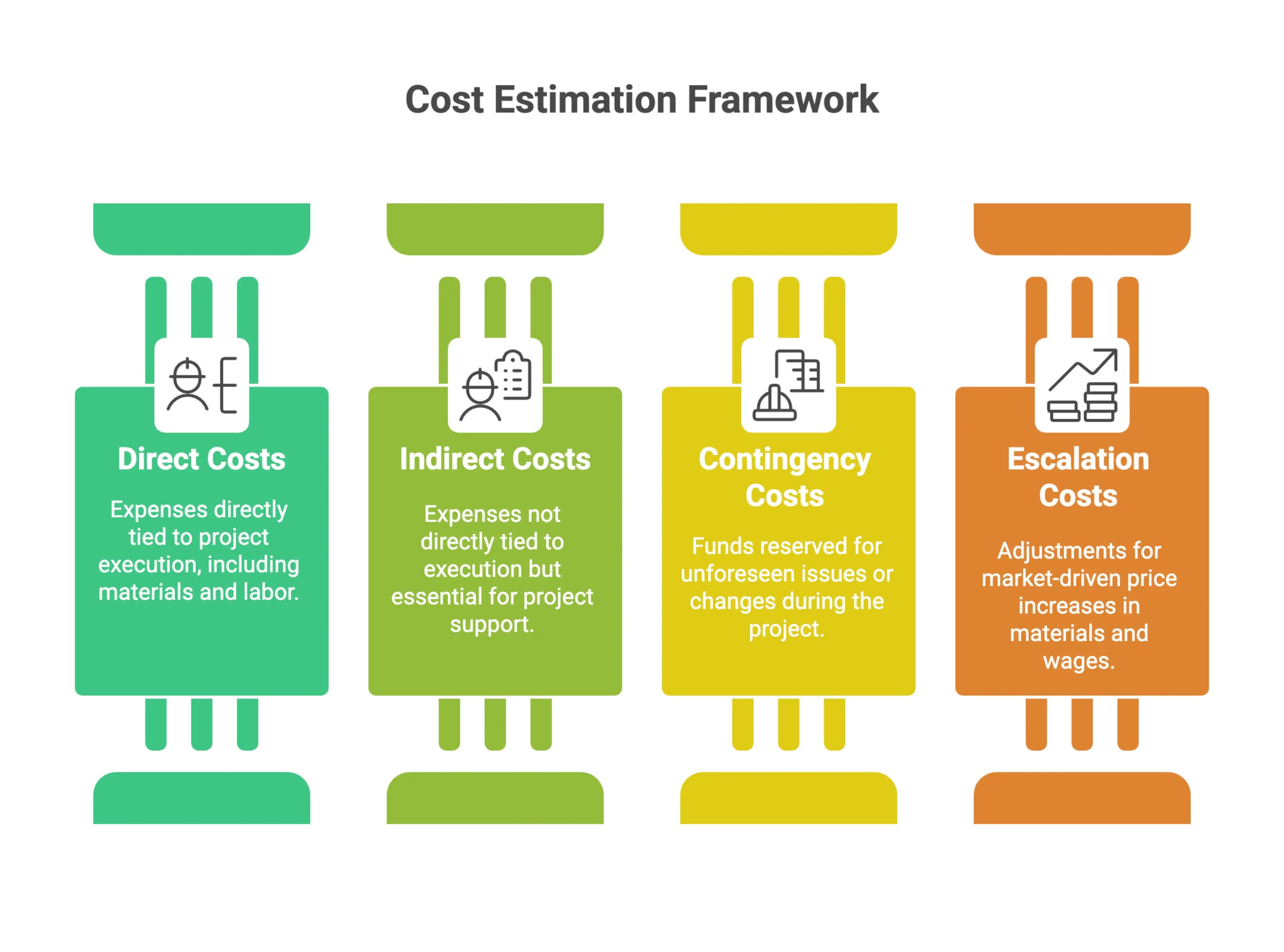
Leaving out any cost category increases the risk of cost overruns and budget failures.
How do digital tools and electrical estimating software enhance estimates?
They automate calculations, minimize human error, and pull real-time labor and material rates for more accurate construction cost projections. Templates, historical data, and integration with project management keep electrical projects running efficiently.
What’s the role of probabilistic modeling or Monte Carlo simulation?
Monte Carlo simulation predicts a range of total project costs by modeling thousands of possible outcomes based on the estimating process’s key variables. This ensures contingency funds are based on real risk, not guesswork.
How does historical data improve future project estimates?
Past jobs and historical estimates allow estimators to double check assumptions, validate estimates against real outcomes, and fine-tune both margin and pricing for competitive, accurate bids.
What is the construction estimating process for power projects?
It breaks project scope into tasks, quantifies materials and labor, prices them, includes contingencies, and develops control budgets. Accurate, iterative cost estimation and detailed planning prevent budget shortfalls and project delays.
Why must estimators consider overhead costs?
Without accurately calculating all overhead and indirect costs, contractors risk underbidding and losing profitability. This includes insurance, office expenses, legal fees, and management overhead across the job site.
How do you ensure labor costs are fully captured?
Include all expenses tied to employee time, including taxes, insurance, and overhead, for every person on the job site, regardless of project size or labor units.
Conclusion: Modern Cost Estimation Powers Profitable Electrical Projects
Cost estimating in power and electrical projects is a cornerstone for technical success and profitability. By combining digital tools, diverse estimating methods, and continual review of past projects, electrical contractors and project managers deliver construction projects that meet stakeholder scrutiny and maintain profit margin.
With construction estimating software, up-to-date historical data, and disciplined project management, you can improve accuracy, avoid cost overruns, and deliver successful outcomes no matter how complex the electrical project.
Ready to Take the Next Step?
Curious about how digital tools and modern estimating software can improve your construction estimating process? Explore Nomitech’s full suite, or reach out to see which solution fits your next electrical project.





Stay Up to Date
Subscribe to our Newsletter today and receive the latest updates, trends, expert insights, and exclusive offers tailored to your specific industry.