
What is the Best Cost Estimating Software in 2026?
TL;DR: Choosing the right cost estimating software can dramatically improve accuracy, reduce costly errors, and streamline workflows across your construction projects. Below is a quick comparison of top solutions to help you get started. Want the full breakdown? Keep reading for detailed feature analysis, pricing breakdowns, pros and cons, and expert recommendations to help you make the smartest choice for your business.
Introduction: The Search for the Best Cost Estimating Software
If you’ve ever watched a project budget unravel, you know just how brutal it can be. A missed number here, an unchecked formula there. Suddenly, profit disappears or you have to explain costly mistakes to clients. Tight bids, tight schedules, and mountains of spreadsheets make it all too easy to slip up.
In construction businesses today, no one has time for error-prone methods. Clients demand fast, accurate estimates. Project data is scattered. Pressures mount from all directions. The old ways of estimating simply can’t keep up.
That’s why more teams rely on digital construction estimating software. Solutions like CostOS provide better accuracy, faster turnarounds, and streamlined collaboration for construction businesses. In this article, we’ll detail how the best construction estimating software helps you work leaner and smarter, while boosting your competitive edge.
Why Cost Estimation Software Is Essential
Construction Estimating: Moving Beyond Spreadsheets
For busy contractors and developers, construction estimating software is essential. Projects move too fast and involve too many variables for anyone to gamble on manual methods. When balancing shifting labor and material costs, complex data, and multiple stakeholders, digital estimating software keeps you organized and competitive.
Estimating software has transformed construction planning. Instead of relying on static spreadsheets, top solutions provide a centralized database with live cost data, built-in templates, and regional pricing updates, all features that result in more accurate estimates. Advanced tools integrate with project management platforms and accounting software for true end-to-end visibility.
Construction estimating software save time and help contractors make better-informed decisions. By catching errors early and standardizing estimates across your organization, you start projects with strong budgets and realistic schedules, while reducing potential errors and costly surprises.
Trends and Innovations in Project Estimating

Cloud-based access is standard for modern construction cost estimating software. This enables seamless collaboration and allows teams to work from anywhere, whether they're on-site or in the office. Real-time sync ensures everyone sees the latest updates.
At the forefront, AI and machine learning are elevating accuracy. Some platforms analyze old project data, utilize public or locally hosted LLM's to provide quick matches with historical data, and perform faster takeoffs. AI-powered estimating solutions bring speed without extra effort.
Many tools feature digital takeoffs, which dramatically cut time and reduce human error. By performing measurements directly on-screen from digital plans, teams complete takeoffs faster and more accurately. Linking takeoffs with estimate items within the same platform provides better audit trail and helps avoid costly mistakes.
Despite these benefits, moving to a new estimating solution can bring technical difficulties, particularly during the transition from spreadsheets to centralized platforms. That’s why many top products include imports and support services to help with data migration.
The Impact of Estimating Software on Business Performance
Accurate Estimates Lead to Accurate Bids
With cost estimating, there’s no room for vague guesses. A single error, a missed cost element, or a botched calculation can devastate profits. Construction estimating software flips that dynamic.
Platforms like CostOS are built for scale and complexity, offering proprietary features that reduce errors, leverage custom assemblies, and ensure accurate estimates. Automated templates and standardized workflows minimize risky manual entry and save time, letting estimating professionals focus on high-value strategy.
Accurate cost estimating software helps construction businesses:
- Pursue the right jobs with confidence
- Develop budgets that match the real construction cost environment
- Avoid project costs spiraling out of control or underbidding
- Keep cash flow healthy across multiple projects
Speeding Up the Estimating Process and Bid Management
Time is everything in construction estimating. The best construction estimating software helps you generate detailed estimates and accurate bids faster, without sacrificing quality.
Bridgit highlights platforms like ProEst, which combine digital takeoffs, bid management, job costing, and proposal-building into a unified workflow. No more jumping between multiple apps.
With robust estimating software solutions, teams can:
- Manage more projects without extra headcount
- Respond rapidly to client inquiries
- Deliver polished, clear estimates that impress
- Keep project data, communications, and revisions properly tracked
Bid day analysis features, offered by many estimating software options, analyze estimates and project costs side-by-side so decision-makers always work from reliable, data-driven information.
Seamless integration with construction management software, including Procore and Viewpoint, ensures your entire estimating process, from proposal to project close-out, remains connected and efficient. ERP integration is increasingly essential for large and small businesses alike.
Key Features of the Best Estimating Software
Finding the best estimating software is not about the longest feature list. It’s about what empowers your team.
1. Customization and Flexibility
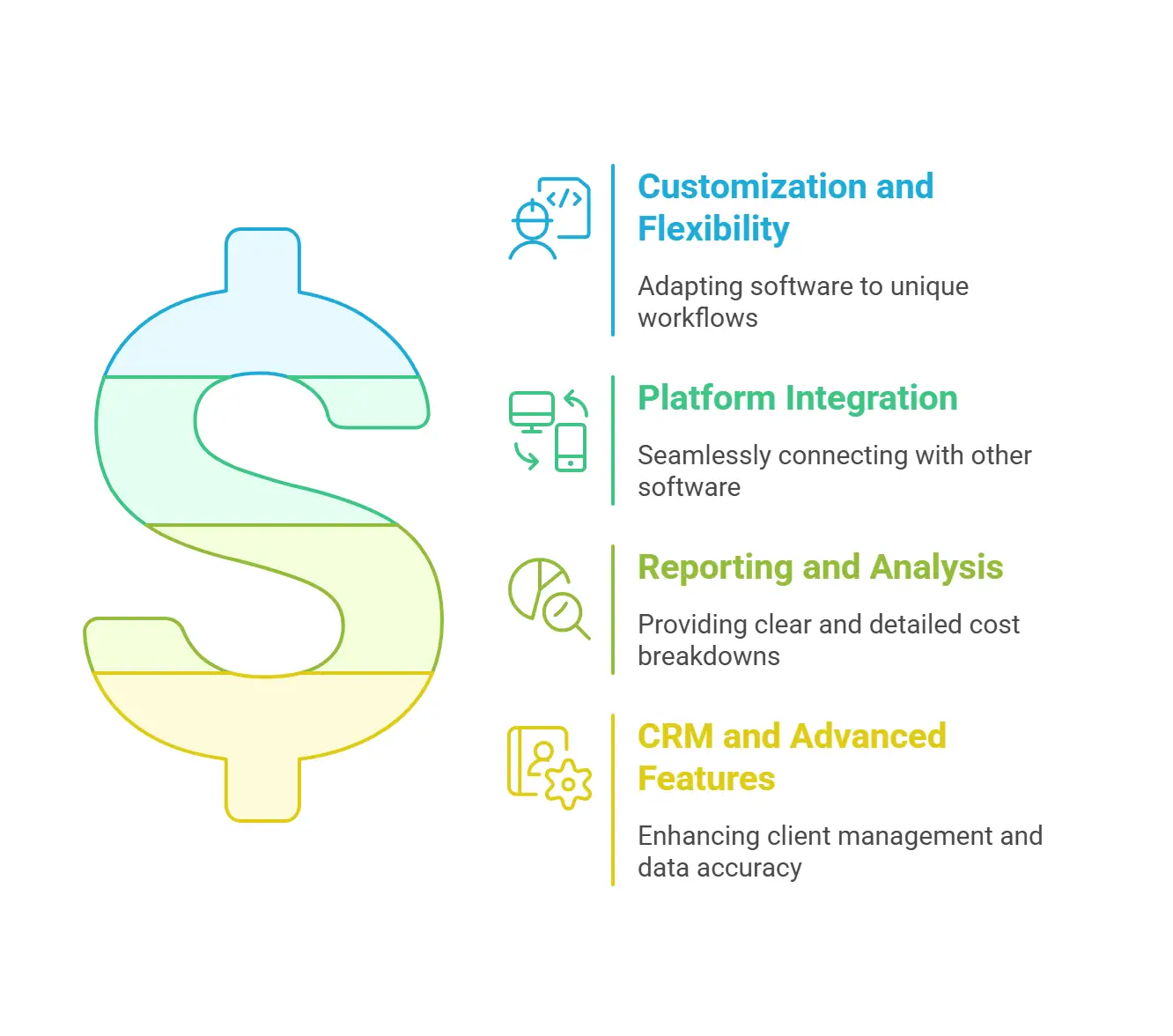
Your estimating software must adapt to your workflow. Look for flexible templates, customizable databases, custom assemblies, and the ability to use your own proven formulas. STACK’s quantity takeoff tools excel here, letting you tailor estimating tools for any trade, perfect for unique construction businesses.
Signs of customizable, user-friendly software:
- Adjustable templates and cost elements
- Real-time price database updates for local rates
- Support for custom integrations with other software (like project management or accounting software)
2. Platform Integration & Project Management
Cost estimating tools that integrate with project management, procurement, accounting, and construction management software help eliminate double entry and reduce errors.
ProEst and CoConstruct are known for API-driven integrations. Nomitech’s benchmarking tools create a centralized database accessible by estimating and project management teams. Integration allows clear estimates, real-time collaboration, and a single, up-to-date dataset.
3. Reporting, Clear Estimates, & Detailed Breakdown
Meaningful reporting is where estimating software delivers real business value. Customizable layouts, visual charts, and cost breakdowns by activity or phase support both internal tracking and external stakeholder communication.
Sage Estimating is praised for detailed cost breakdowns and clear estimates, while many others, such as STACK, offer professional reporting templates and easy data exports.
4. Built-In CRM and Advanced Features
Construction estimating software often includes built-in CRM features to improve client relationship management. By keeping client communication, proposals, and estimate history together, CRMs elevate service quality and win rate.
Advanced features, like real-time database updates, cloud-based access, and support for bid package creation, separate leading tools from the rest. The most powerful solutions update cost data automatically, ensuring estimates always reflect current market values.
Best Estimation Software: In-Depth Comparison
1. CostOS: High-Precision Estimating for Complex Projects

Overview:
CostOS brings together traditional estimating with advanced features like BIM, GIS, and parametric modeling. It's built to support high-volume, high-complexity workflows.
Best For:
Medium to Large enterprises operating in Local or International markets. General Contractors, EPC Contractors, Project Owners and Public Sector Organizations. Applicable in the construction, oil and gas, EPC, Utilities and Mining Sectors for medium to large Projects and Mega Projects.
Key Features:
- 2D, 3D and GIS takeoffs
- Parametric estimating templates for faster estimate production
- Delivered on cloud or on premise
- Flexible to adopt to most demanding estimating needs
- AI enabled for increased productivity compared to legacy estimating systems or spreadsheets
- Strong parametric estimating (assemblies)
- Improved estimating speed through AI
- Excel and ERP integrations
Pricing:
Custom pricing based on organization size and estimating needs. Local presence in more than 45 countries globally.
2. ProEst: Scalable Cloud Suite for Larger Teams
Overview:
ProEst offers a robust, cloud-native environment designed for digital takeoffs, detailed cost estimating, and proposal creation—all in one place.
Best For:
Mid-sized to large general contractors looking for an end-to-end preconstruction workflow.
Key Features:
- Advanced digital takeoff tools
- Built-in CRM and proposal functionality
- Open API for integrating with other platforms
Pricing:
Starts at $5,000 per year.
3. STACK: Flexible Takeoff and Estimating with a Free Plan

Overview:
STACK combines cloud-based takeoff tools with estimating features that scale alongside your business. It also offers a free tier for testing before you commit.
Best For:
Contractors of any size who need a mix of flexibility and collaboration features.
Key Features:
- Unlimited free version for solo users
- Customizable templates and central costing database
- Real-time collaboration and Excel integration
Pricing:
Plans start at $1,899 per year for one user.
4. Buildxact: Purpose-Built for Small Contractors
Overview:
Buildxact simplifies estimating and project management for smaller builders and remodelers with a platform that’s easy to navigate.
Best For:
Small contractors who want a streamlined, all-in-one system for managing bids and jobs.
Key Features:
- Click-based digital takeoffs
- Built-in scheduling and progress tracking
- Live material pricing from suppliers
Pricing:
Starts at $133 per month.
5. Active Takeoff: Lightweight and Focused
Overview:
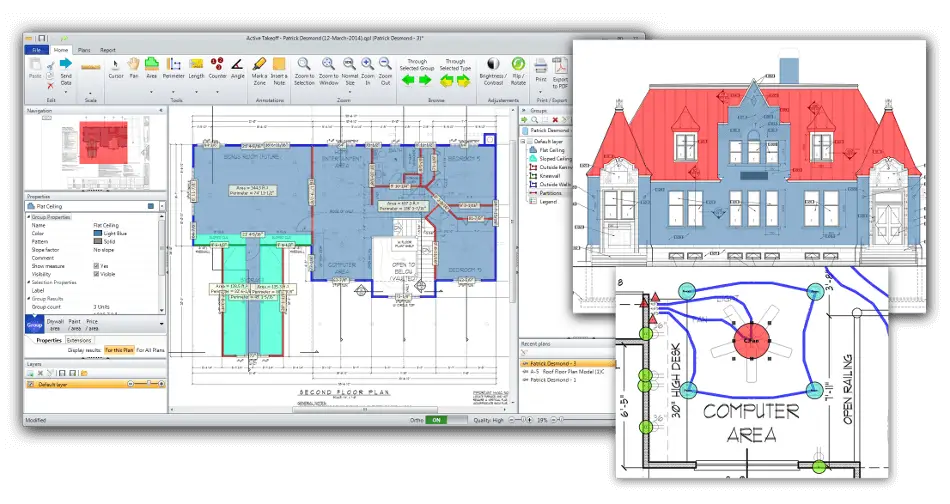
Active Takeoff delivers essential 2D takeoff capabilities without the overhead of larger, complex platforms.
Best For:
Small contractors or cost estimators looking for straightforward, budget-friendly software.
Key Features:
- Supports PDFs and scanned plans
- Auto-scaling and unit conversion
- Excel integration for cost tracking
Pricing:
One-time license fee of $898, with optional $99 annual maintenance.
6. CoConstruct: Built for Residential Builders and Remodelers
Overview:
CoConstruct is designed with custom home builders and remodelers in mind, combining estimating tools with robust client and project management features.
Best For:
Residential contractors looking for a platform that bridges internal workflows with client-facing communication.
Key Features:
- Single-entry estimating tied to budgets and proposals
- Client portal for approvals and selections
- QuickBooks integration for financial oversight
Pricing:
Starts at $49 per month.
Also Worth Considering
- Clear Estimates – Streamlined estimating with templated proposals. Starts at $79 per month.
- PlanSwift – Focused on quantity takeoff with strong measurement tools. Starts at $1,749 per year.
- Estimator360 – Cloud-based access with broad feature coverage. Starts at $269 per month.
Detailed Pricing Comparison
Choosing the right software isn’t just about price. This section compares plans, tiers, and cost structures to help you weigh investment vs long-term value.
Most software vendors provide free trials of 7 or 14 days so you can test drive key features and the learning curve.
Cost tip: Always consider integration, data security, indirect services, and how much you’ll save in labor, rework, and fewer missed opportunities. True value is about workflow fit and time saved, not the cheapest price tag.
Frequently Asked Questions
What are the must-have key features in modern construction cost estimating software?
Prioritize solutions with high customization, integration with project management and accounting software, a centralized price database, detailed reporting, and user-friendly collaboration tools. Look for estimation tools that adapt to the construction industry and your unique process.
How does construction estimating software help reduce errors and improve accuracy?
By handling all calculations, providing standardized templates, pulling from verified cost data, and offering real-time error checks (as with CostOS or Sage Estimating), construction estimating software minimizes mistakes that can cost you money. Many platforms now include automated digital takeoffs, further reducing potential errors.
Which estimation software options work for small contractors or remodelers?
Buildxact and Active Takeoff are top choices for smaller contractors. Remodelers may prefer all-in-one solutions like CoConstruct, which combine estimating, client communication, and job management. Clear Estimates is also affordable for individual contractors.
How do cost databases improve the estimating process?
Integrated databases ensure your estimates reflect current labor and material costs, adjust automatically with market and location changes, and eliminate hours of research. Data-driven decisions based on dynamic, centralized pricing lead to more accurate estimates.
Are free or trial versions available?
Yes. STACK offers a completely free version of their construction estimation software, with support and training at no extra cost. Most other providers have a 7- or 14-day free trial. Free versions let you test at your own pace, while paid options unlock more advanced features.
What is the role of cloud-based access?
Cloud-based access is standard for the best construction estimating software, enabling real-time collaboration, secure data access from any location, and instant software updates. You’ll always have the latest features and most current cost data.
How do I ensure the software matches my business needs?
Map out your pre construction process and estimation process before evaluating options. Make sure the estimating solution supports clear estimates for your project size, trades, and integration needs.
Are support services and comprehensive customer support included?
Most construction estimating software providers offer comprehensive customer support to assist users, including onboarding, troubleshooting technical issues, and ongoing training, for rapid adoption.
How to Select the Best Construction Estimating Software for Your Business
Step-By-Step Evaluation and Preconstruction Bidding Process
A comprehensive understanding of the preconstruction bidding process is necessary for choosing the right estimating solution. Use this plan to maximize your ROI:
- Form a cross-functional team – Involve cost estimators, project management, purchasing, and IT to capture all perspectives on the estimation lifecycle.
- Map out workflows – Document your existing estimating process and where breakdowns occur.
- Set feature priorities – Identify non-negotiable features, desired integrations, and scalability needs.
- Request targeted demos and free trials – Test software in real project scenarios. Free trials or STACK’s free version let you explore at your own pace.
- Assess integrations with other software – Make sure new tools integrate with current project management, accounting, and construction management software, avoiding parallel systems and manual double entry.
- Factor in total cost – Account for onboarding, training, support services, and expected productivity gains.
- Get feedback from industry peers – Real-world experiences about support, the learning curve, and day-to-day usability are invaluable.
Matching Construction Estimating Software to Your Company
- Industry-specific features – Use tools built for your field, with templates and databases tailored to commercial or specialty sectors.
- Flexibility and scalability – Make sure solutions grow with your company and workload.
- Collaboration and centralized database – Real-time data, shared cost database, and version tracking are essential for teams.
- Customizable reporting – Adapt reports for internal reviews, client meetings, or regulatory requirements.
- Historical data and benchmarking – Platforms that let you analyze estimates and use past data support smarter bidding.
- User friendly interface – The right interface shortens the learning curve and increases user adoption.
- Mobile support – Ensure your team can estimate, update costs, and review reports from any jobsite with a reliable internet connection.
- Comprehensive customer support – Quality onboarding and accessible resources minimize technical difficulties and training obstacles.
By investing the time up front and matching key features to your estimation framework, you’ll select a construction cost estimating software that empowers you to save time, enhance accuracy, deliver clear estimates, and drive your construction business forward.
Ready to Take the Next Step?
If you're ready to modernize your estimating process with the top cost estimating software for your business, explore Nomitech’s suite of products. You can also book a demo to see how CostOS stacks up against your current process. Every accurate estimate is a step closer to project success.





Stay Up to Date
Subscribe to our Newsletter today and receive the latest updates, trends, expert insights, and exclusive offers tailored to your specific industry.